Material selection is one of the most important decisions in kitchen gadget manufacturing. The right material determines not only a product’s durability and appearance but also its safety, functionality, manufacturing cost, and long-term performance.
For importers, wholesalers, retailers, and private label brands, understanding the strengths and limitations of different materials helps ensure that products meet customer expectations while remaining competitive in the marketplace.
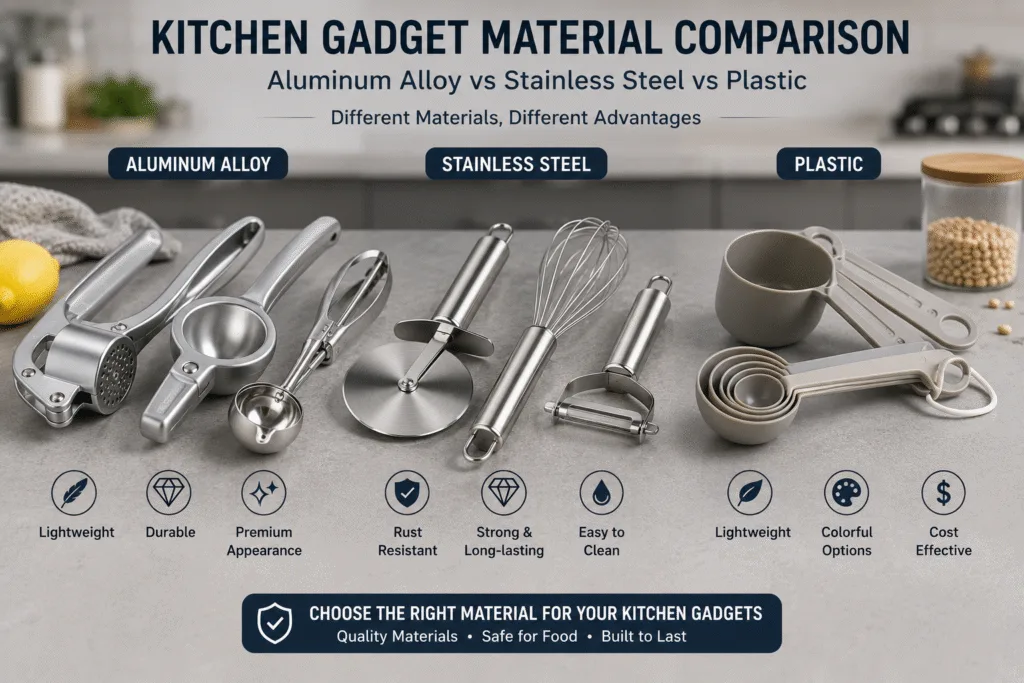
Among the most commonly used materials for kitchen gadgets are aluminum alloy, stainless steel, and food-grade plastics. Each offers unique advantages depending on the product application, production process, and target market.
This guide compares these materials to help buyers choose the most suitable option for their next sourcing project.
Why Material Selection Matters
The material used in a kitchen gadget affects nearly every stage of its lifecycle.
It influences:
- Product strength
- Weight
- Corrosion resistance
- Food safety
- Manufacturing efficiency
- Surface finish
- Product lifespan
- Retail pricing
- Customer satisfaction
Selecting the right material means balancing performance, cost, and user experience.
Aluminum Alloy Kitchen Gadgets
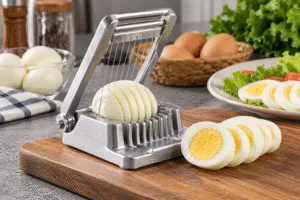
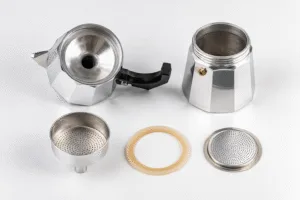
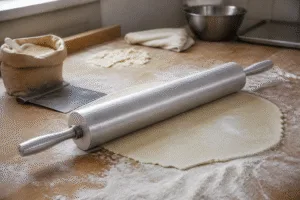
Aluminum alloy is widely used for premium kitchen tools because of its excellent balance between strength and lightweight performance.
Common aluminum kitchen gadgets include:
- Garlic presses
- Lemon squeezers
- Nutcrackers
- Ice cream scoops
- Meat tenderizers
- Pizza cutters
Advantages
- Lightweight yet durable
- Excellent die-casting performance
- Suitable for complex product shapes
- Good corrosion resistance after surface treatment
- Premium appearance
- Comfortable handling
Considerations
- Requires protective surface finishing
- Not suitable for all high-temperature applications
- Manufacturing quality depends on die-casting precision
For many premium kitchen gadgets, die-cast aluminum provides an excellent combination of durability, aesthetics, and production efficiency.
Stainless Steel Kitchen Gadgets
Stainless steel remains one of the most popular materials for food-contact components.
Typical applications include:
- Whisks
- Graters
- Peelers
- Pizza cutter blades
- Kitchen scissors
- Mixing tools
Advantages
- Outstanding corrosion resistance
- Excellent food safety
- High mechanical strength
- Easy to clean
- Long service life
Considerations
- Heavier than aluminum
- More difficult to manufacture complex shapes
- Higher machining costs for certain designs
Stainless steel is ideal for products requiring sharp edges, cutting performance, or maximum durability.
Food-Grade Plastic Kitchen Gadgets
Food-grade plastics are commonly used for lightweight accessories and economical kitchen products.
Typical products include:
- Measuring cups
- Measuring spoons
- Storage accessories
- Handles
- Clips
- Mixing bowls
Advantages
- Low manufacturing cost
- Lightweight
- Easy color customization
- Suitable for injection molding
- High production efficiency
Considerations
- Lower durability than metal
- May scratch over time
- Limited heat resistance depending on material type
Food-grade plastics work well when affordability and high-volume production are priorities.
Material Comparison
| Feature | Aluminum Alloy | Stainless Steel | Food-Grade Plastic |
|---|---|---|---|
| Weight | ★★★★★ | ★★★ | ★★★★★ |
| Durability | ★★★★☆ | ★★★★★ | ★★★ |
| Corrosion Resistance | ★★★★☆ | ★★★★★ | ★★★★ |
| Manufacturing Efficiency | ★★★★★ | ★★★ | ★★★★★ |
| OEM Customization | ★★★★★ | ★★★★ | ★★★★★ |
| Surface Appearance | ★★★★★ | ★★★★★ | ★★★★ |
| Production Cost | Medium | High | Low |
| Best For | Premium kitchen tools | Cutting & food-contact tools | High-volume consumer products |
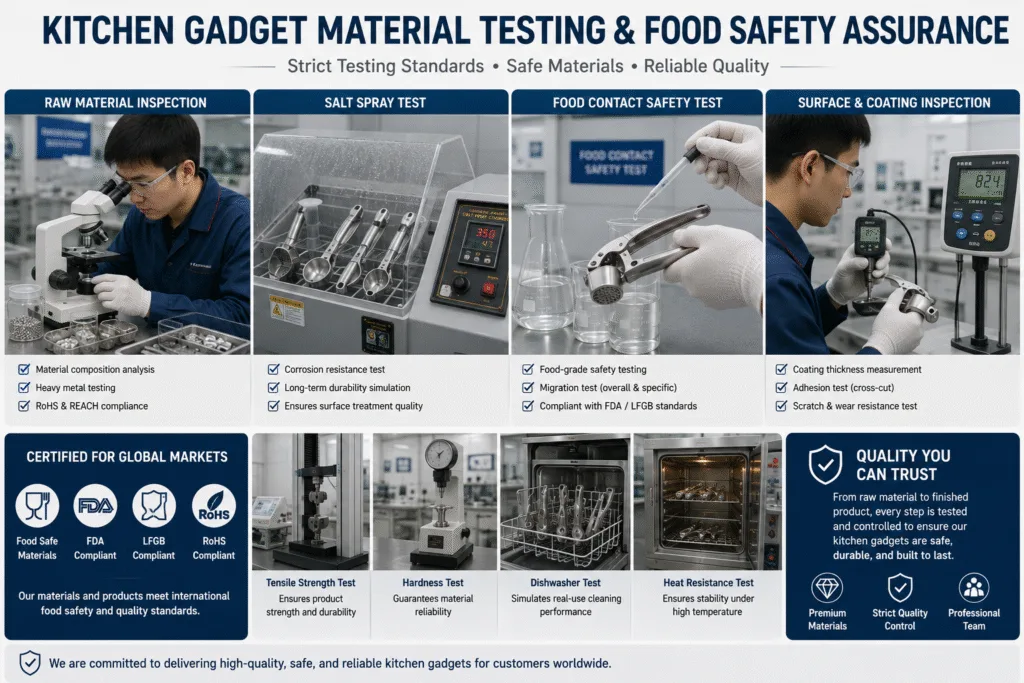
Food Safety Considerations
Food safety is essential for any kitchen gadget.
Manufacturers should ensure that materials comply with relevant regulations for food-contact products.
Important considerations include:
- Food-grade raw materials
- Heavy metal control
- Surface coating safety
- Corrosion resistance
- Easy-to-clean finishes
- Compliance with destination market regulations
Working with experienced manufacturers helps ensure products meet international quality and safety requirements.
Surface Finishing Options
Different materials support different finishing processes.
Aluminum Alloy
- Powder coating
- Anodizing
- Sandblasting
- Polishing
- Painting
Stainless Steel
- Mirror polishing
- Brushed finish
- Satin finish
- Electropolishing
Plastic
- Texture molding
- Gloss finish
- Soft-touch coating
- Color pigmentation
Surface finishing improves both appearance and durability.
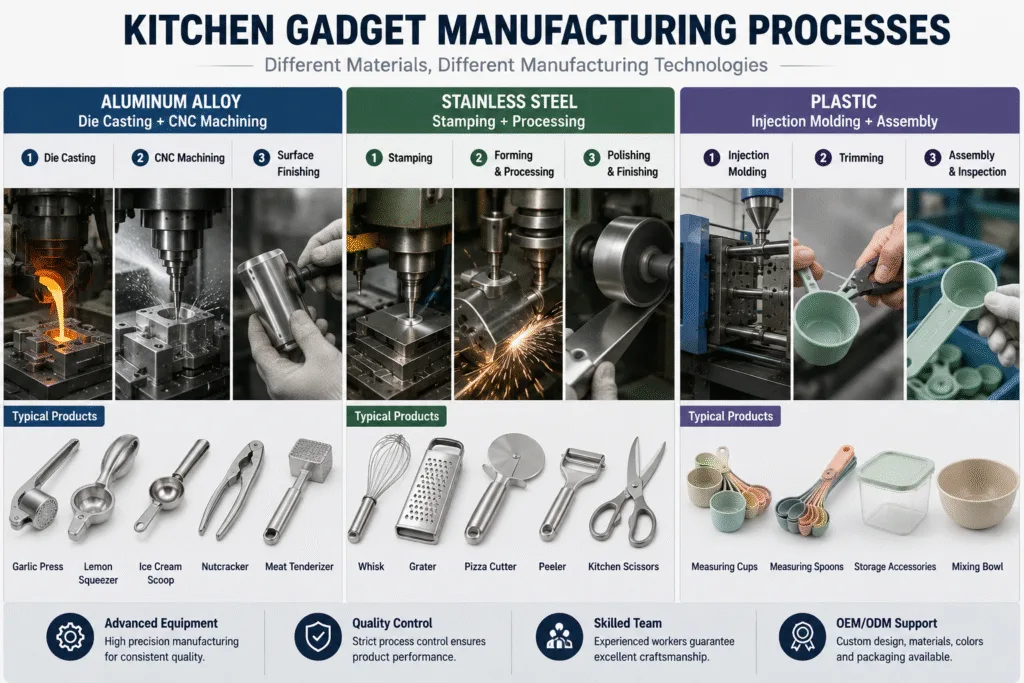
Manufacturing Processes
Different materials require different production technologies.
Aluminum Alloy
- Die casting
- CNC machining
- Surface finishing
- Assembly
Stainless Steel
- Stamping
- Laser cutting
- Welding
- Polishing
Plastic
- Injection molding
- Trimming
- Surface decoration
- Assembly
Understanding these manufacturing methods helps buyers estimate tooling costs, lead times, and production efficiency.
Which Material Is Best for OEM Projects?
There is no universal “best” material.
The ideal choice depends on:
- Product function
- Target market
- Customer expectations
- Budget
- Manufacturing volume
- Brand positioning
For premium kitchen gadgets requiring attractive designs and ergonomic performance, die-cast aluminum is often an excellent choice.
For products requiring cutting performance or maximum corrosion resistance, stainless steel remains the preferred solution.
For cost-sensitive, high-volume products, food-grade plastic offers significant manufacturing advantages.
How Manufacturers Select Materials
Professional manufacturers evaluate several factors before recommending a material.
Typical considerations include:
- Product application
- Mechanical strength
- Production volume
- Mold complexity
- Surface treatment requirements
- Retail price target
- Market regulations
- Customer branding goals
Material selection is often a collaborative process between engineers and buyers.
Common Material Selection Mistakes
Many buyers focus only on price.
Common mistakes include:
- Selecting the cheapest material regardless of performance.
- Ignoring long-term durability.
- Choosing unnecessary premium materials.
- Overlooking food-contact requirements.
- Not considering manufacturing methods.
- Failing to evaluate shipping weight.
The best material is one that balances quality, functionality, and total sourcing cost.
FAQ
Which material is best for premium kitchen gadgets?
Aluminum alloy and stainless steel are both excellent choices. Aluminum is ideal for lightweight die-cast products with ergonomic designs, while stainless steel excels in durability and corrosion resistance.
Is aluminum safe for kitchen gadgets?
Yes. High-quality aluminum alloy products with appropriate food-safe surface treatments are widely used in premium kitchenware and perform well in everyday applications.
Why are many kitchen gadgets made from stainless steel?
Stainless steel provides excellent corrosion resistance, strength, hygiene, and long service life, making it especially suitable for cutting and food-contact components.
When is plastic the better choice?
Food-grade plastic is ideal for lightweight, colorful, and cost-effective products produced in large quantities, particularly where high mechanical strength is not required.