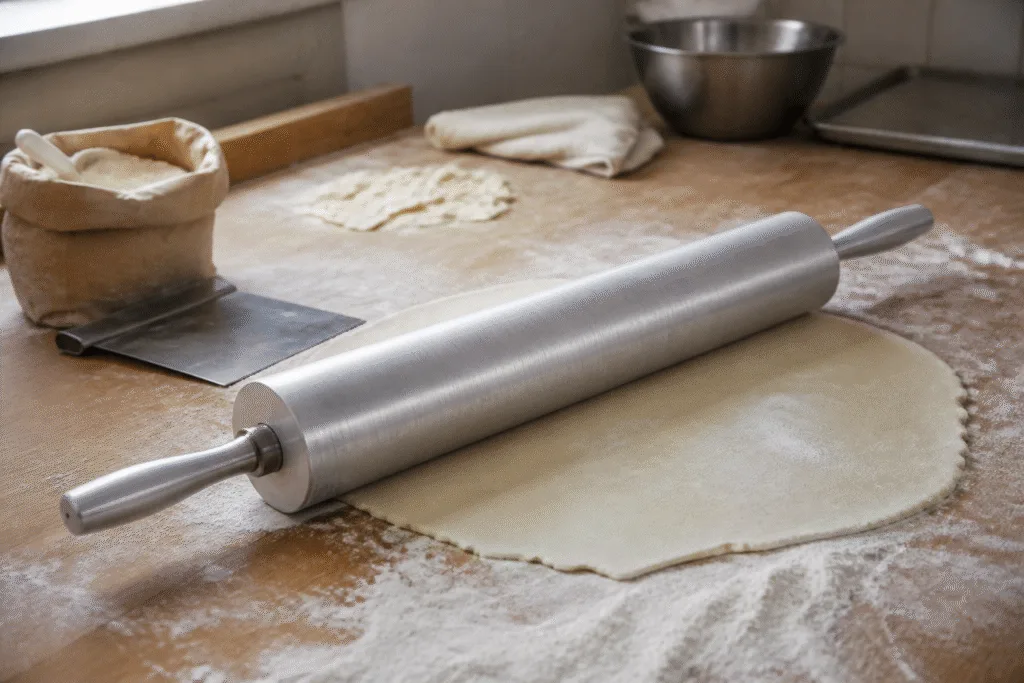
Aluminum rolling pins are a practical option for kitchenware distributors, baking supply retailers, and private label brands looking to expand their baking tool ranges. Their relatively lightweight construction, smooth surface, and potential for consistent manufacturing make them worth considering for different retail and food preparation applications.
However, not every aluminum rolling pin offers the same level of quality. Differences in dimensions, surface finish, construction, and manufacturing tolerances can affect how a product performs and how consistently it can be supplied in bulk.
For wholesale buyers, selecting the right product involves more than comparing unit prices. A rolling pin must meet the needs of its intended customers, maintain consistent quality across production batches, and arrive in packaging suitable for storage, transportation, and retail sale.
This guide explains the key factors buyers should evaluate when sourcing aluminum rolling pins, from material specifications and surface quality to sample testing, customization, and supplier communication.
Why Aluminum Rolling Pins Deserve Attention from Wholesale Buyers
The material and construction of a rolling pin influence its handling, appearance, durability, and market positioning. Aluminum rolling pins can be suitable for a range of home baking and general kitchen applications, depending on their design and finish.
Lightweight Construction and Practical Handling
Compared with some heavier rolling pin designs, aluminum models can offer a relatively lightweight option for everyday dough preparation. This may appeal to consumers who prefer a tool that is easy to lift, move, and store.
Nevertheless, weight alone does not determine product quality. Buyers should consider the balance between the rolling pin’s overall weight, dimensions, and intended use. A design that feels too light or poorly balanced may not meet the expectations of every customer segment.
Smooth Surfaces for Dough Preparation
A smooth rolling surface is an important consideration when evaluating aluminum rolling pins. Surface irregularities, rough edges, or inconsistent finishing may affect handling and make the product less attractive to buyers.
The actual performance also depends on the dough, preparation method, and whether flour or another suitable release method is used. Buyers should therefore evaluate the product through practical testing rather than relying only on its material description.
Opportunities for Retail and Private Label Products
Aluminum rolling pins can be considered for kitchenware assortments, baking accessory collections, and private label ranges. Depending on the manufacturer’s capabilities, buyers may be able to discuss product dimensions, surface treatments, branding, and packaging options.
These possibilities should be confirmed for each specific model. Not every manufacturer offers the same finishing processes or customization services.
6 Factors to Check When Sourcing Aluminum Rolling Pins
Before placing a bulk order, buyers should evaluate the product against a clear set of specifications. The following factors help establish whether a rolling pin is suitable for the intended market.
1. Material Specifications and Construction
The term “aluminum rolling pin” does not provide all the information needed to assess a product. Buyers should ask the supplier to identify the material grade or alloy specification, where applicable, and clarify how the product is manufactured.
Important questions include:
- What material is used for the main rolling body?
- Is the product a solid, hollow, or otherwise engineered construction?
- What are the product’s weight and dimensional tolerances?
- Are the handles integrated, attached, or designed as separate components?
- Are there any coatings or surface treatments?
The answers should be consistent with the product drawing, approved sample, and purchase specification. Buyers should avoid assuming that all aluminum products share the same mechanical properties or manufacturing quality.
2. Surface Finish and Edge Quality
Surface finish directly affects the product’s appearance and can influence customer perceptions of quality.
Inspect the rolling surface for visible scratches, dents, uneven polishing, discoloration, or other defects. Pay particular attention to the transitions between the rolling body and its ends or handles, if included.
Edges should be properly finished, without sharp burrs or rough areas that could cause discomfort during normal handling. If the product uses a coating or anodized finish, request the relevant finishing specifications and determine how the finish will be inspected.
For wholesale orders, the acceptance criteria should be documented before production. Terms such as “smooth finish” or “high quality” are too subjective unless supported by agreed inspection standards or an approved reference sample.
3. Dimensions, Weight, and Product Consistency
A rolling pin’s dimensions influence storage, packaging, shipping, and its suitability for different baking tasks.
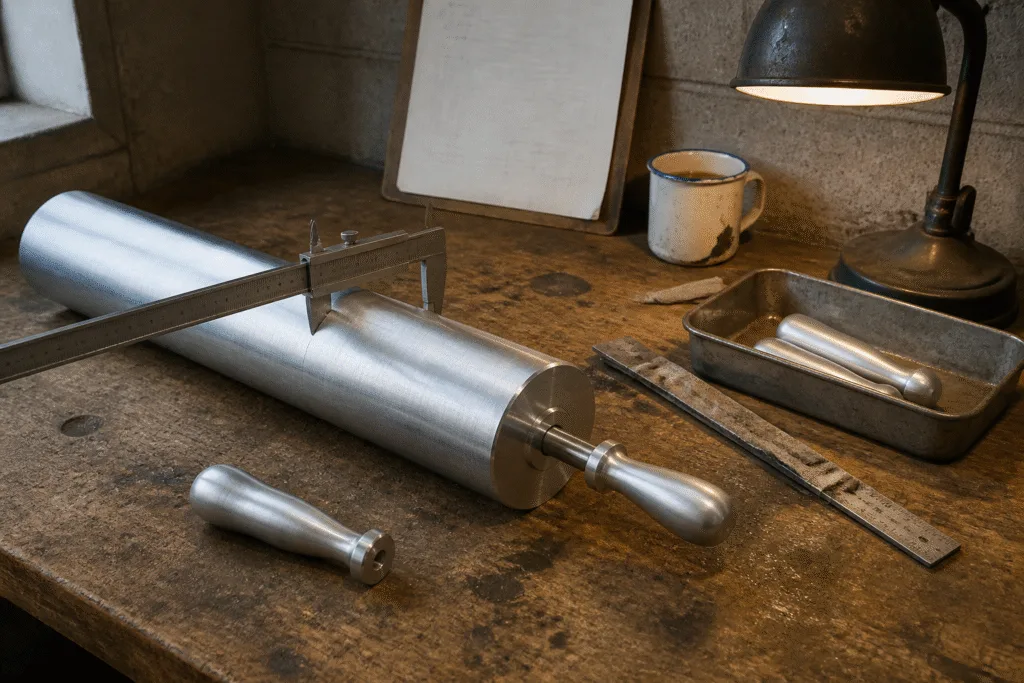
Buyers should confirm the overall length, rolling body length, diameter, handle dimensions where relevant, and product weight. If the item is intended for a particular retail segment, these specifications should align with the product’s positioning and expected use.
Consistency matters just as much as the initial measurements. A sample may meet the buyer’s requirements, but mass production must maintain the agreed dimensions and construction.
Request a technical drawing or specification sheet where available. For repeat orders, use the approved sample and documented specifications as the reference for quality checks.
4. Practical Performance and Ease of Cleaning
A rolling pin should be evaluated under realistic conditions rather than judged by appearance alone.
During sample testing, consider:
- Whether the tool is comfortable to grip and maneuver.
- Whether the rolling surface is even and free from noticeable defects.
- Whether the product is appropriately balanced for its intended application.
- Whether dough residue can be removed using the manufacturer’s recommended cleaning method.
- Whether repeated normal use produces visible damage or finish deterioration.
Cleaning instructions should be confirmed before the product is marketed. Buyers should not assume that every aluminum rolling pin is dishwasher-safe or suitable for every cleaning chemical. The recommended care method depends on the material, finish, construction, and any attached components.
5. Packaging and Transportation Protection
Even a well-made product can arrive with scratches or dents if its packaging does not provide adequate protection.
Ask how the rolling pin will be packed for individual retail sale, bulk shipment, and export transportation. Packaging options may include protective sleeves, individual cartons, inserts, or customized retail boxes, depending on the supplier’s capabilities and the buyer’s requirements.
For large orders, assess whether the packaging protects the product from movement and surface damage during handling. Also confirm carton dimensions, units per carton, gross weight, and any labeling requirements needed for warehousing or retail distribution.
Packaging should be reviewed as part of the complete product specification, not treated as a final detail after manufacturing.
6. Manufacturing Capability and Quality Control
A supplier’s ability to maintain consistent production is important when buyers need repeat orders or plan to build a long-term product line.
Ask how the manufacturer controls material selection, dimensions, surface finishing, assembly where applicable, and final inspection. The process should be appropriate for the actual product rather than presented as a generic quality statement.
Useful questions include:
- Are product specifications documented before production?
- How are dimensions and appearance checked?
- How are defective products identified and handled?
- Can the supplier maintain consistency between approved samples and bulk orders?
- Are inspection records or relevant quality documents available?
If a supplier offers OEM or ODM services, clarify which stages it handles directly and which processes are outsourced. This helps buyers understand production responsibility and how quality issues will be managed.
How to Test an Aluminum Rolling Pin Sample Before Ordering in Bulk
Sample approval is a critical step because product photographs and specification sheets cannot reveal every practical issue.
Before testing, prepare a checklist based on the requirements of your target market. Include dimensions, weight, surface appearance, handling, cleaning instructions, packaging, and any branding requirements.
Compare the Sample with the Specification
Measure the sample and compare the results with the supplier’s stated specifications. Record any differences and ask the supplier to explain deviations before approving the product.
Inspect the full surface under suitable lighting. Check the edges, ends, joints, and other areas where finishing or assembly issues may occur.
If the product is supplied with packaging, inspect the packaged unit as well as the rolling pin itself.
Conduct a Practical Use Test
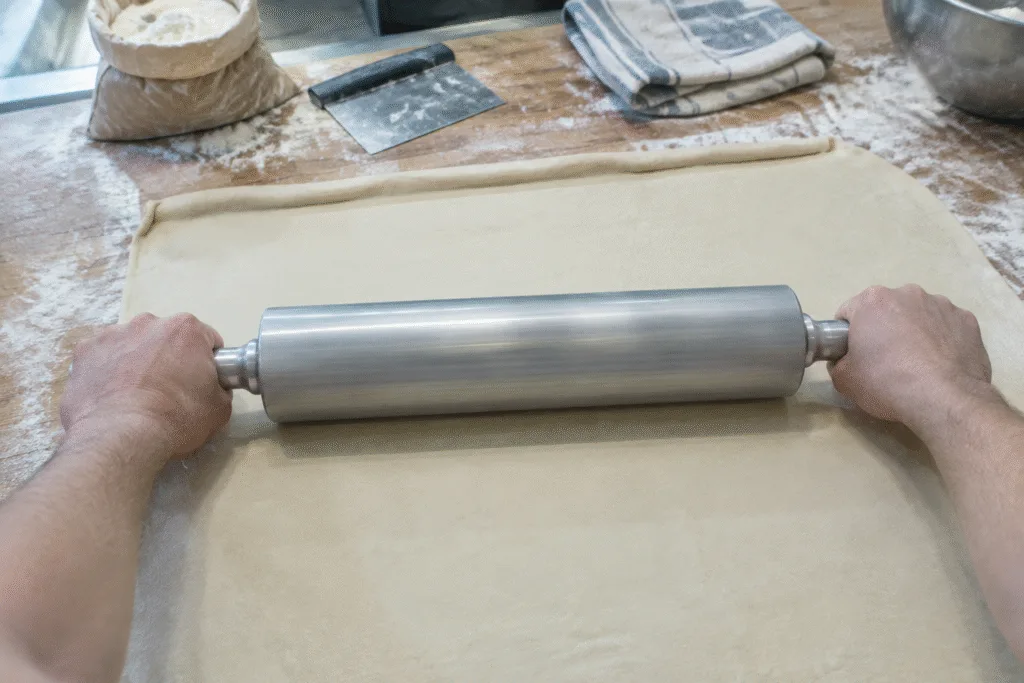
Use the sample to prepare a suitable type of dough under normal conditions. Observe how the rolling pin feels during use, whether the rolling surface appears even, and whether cleaning is straightforward.
A single test cannot establish long-term durability, but it can help identify obvious design, finishing, or handling issues. If durability is a major purchasing concern, discuss an appropriate test method with the supplier and agree on measurable acceptance criteria.
Approve a Reference Sample
Once the sample meets the agreed requirements, retain a reference sample and record its specifications. This creates a practical basis for communicating expectations during mass production and repeat orders.
Any later changes to dimensions, materials, finish, components, or packaging should be reviewed and approved before they are implemented.
What Wholesale Buyers Should Ask an Aluminum Rolling Pin Manufacturer
Before committing to an order, buyers should clarify the commercial and production details that affect cost, delivery, and product consistency.
Minimum Order Quantity and Pricing
Ask for the minimum order quantity and a quotation based on the required specifications. The quoted price may vary according to dimensions, material, finishing, packaging, order volume, and customization.
Compare quotations on an equivalent basis. A lower unit price may not represent better value if it excludes required packaging, uses different specifications, or involves additional costs that appear later.
Lead Time and Repeat Orders
Confirm the expected sample lead time, production lead time, and shipping arrangements. Ask how the supplier handles changes in demand, repeat orders, and potential delays.
For buyers with seasonal sales cycles, delivery planning is particularly important. Agree on production milestones and the information required to confirm an order.
OEM, Branding, and Packaging Options
Private label buyers may require a logo, branded packaging, product inserts, or specific retail presentation. Confirm which options are available for the selected rolling pin and whether they require additional tooling, setup fees, or minimum quantities.
Provide artwork, packaging dimensions, and labeling requirements early in the process. This reduces the risk of delays caused by incomplete specifications.
Communication and Documentation
A reliable manufacturing partner should be able to explain product specifications clearly and respond to questions about production, quality, and packaging.
Before ordering, confirm the agreed product details in writing. Depending on the destination market and product configuration, buyers may also need relevant material information, food-contact documentation, labeling details, or other supporting records. Requirements should be verified for the specific market and product rather than assumed to be identical everywhere.
Common Mistakes to Avoid When Buying Aluminum Rolling Pins Wholesale
Several avoidable mistakes can lead to quality problems or unexpected costs.
Choosing solely on unit price. Price comparisons are useful only when specifications, packaging, order quantities, and delivery terms are comparable.
Skipping sample approval. A sample allows buyers to assess handling, dimensions, surface quality, and packaging before making a larger commitment.
Leaving specifications unclear. Vague descriptions can lead to disagreements about acceptable appearance, product dimensions, or finish. Written requirements make expectations easier to verify.
Assuming all aluminum finishes perform the same way. Different materials and surface treatments may have different care requirements. Confirm the actual construction and recommended cleaning method.
Ignoring packaging until the order is ready to ship. Packaging can affect product protection, freight efficiency, and retail presentation. It should be discussed before production begins.
Failing to confirm customization details. Buyers should verify logo placement, artwork approval, packaging specifications, additional charges, and minimum quantities before approving a customized order.
Finding the Right Aluminum Rolling Pin for Your Product Range
The right aluminum rolling pin is not necessarily the cheapest or the most feature-rich option. It is the product that meets the requirements of the intended market and can be supplied consistently at a commercially viable cost.
For wholesale buyers, the evaluation should begin with material and construction, surface finish, dimensions, practical performance, and packaging. Sample testing then provides an opportunity to verify the product before the order moves into mass production.
Manufacturing capability and communication are equally important. Suppliers should understand the approved specifications, explain their quality-control process, and confirm the production and customization arrangements in writing.
For kitchenware distributors, baking supply retailers, and private label brands, this structured approach can make supplier comparisons more objective and reduce avoidable problems during procurement.
If you are evaluating aluminum rolling pins for a wholesale or private label range, define your product requirements first, request a sample, and confirm the complete specification before placing a bulk order.
Are aluminum rolling pins suitable for wholesale distribution?
Aluminum rolling pins can be suitable for kitchenware wholesalers, baking supply retailers, and private label brands. Buyers should evaluate the product’s construction, surface finish, dimensions, intended use, and packaging before selecting a model for bulk distribution.
What should buyers check when sourcing aluminum rolling pins in bulk?
Buyers should check material specifications, product dimensions, weight consistency, surface quality, cleaning instructions, packaging, minimum order quantity, lead time, and quality-control procedures. Reviewing a production sample before placing a bulk order can help identify potential issues early.
Can aluminum rolling pins be customized for private label brands?
Customization options depend on the manufacturer’s capabilities and the product design. Potential options may include product dimensions, surface finishing, logo application, and retail packaging. Buyers should confirm available options, minimum order quantities, setup costs, and production requirements with the supplier.
How can wholesale buyers evaluate the quality of an aluminum rolling pin?
Start by inspecting the rolling surface, edges, construction, and overall finish. Measure the product against its approved specifications and test it under normal baking conditions. For bulk orders, agree on written acceptance criteria and confirm that mass-produced units will match the approved sample.