The kitchen gadget industry has evolved far beyond producing simple household utensils. Today, it is a dynamic global market driven by changing consumer lifestyles, technological innovation, sustainable manufacturing, and growing demand for efficient food preparation.
From home cooks and professional chefs to retailers, wholesalers, and private label brands, the need for practical, durable, and innovative kitchen tools continues to increase worldwide.
For manufacturers and sourcing professionals, understanding industry trends is essential for developing competitive products and building long-term business success.
This article explores the current state of the global kitchen gadget industry, emerging market trends, manufacturing technologies, and future opportunities for businesses operating in this growing sector.
The Growing Global Kitchen Gadget Market
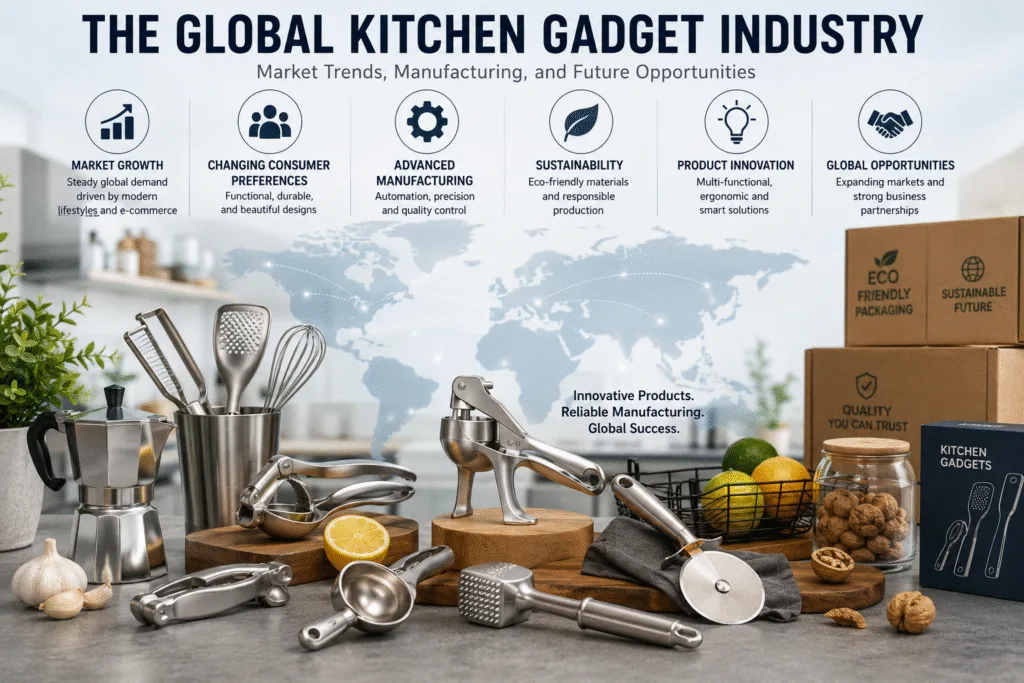
The kitchen gadget industry has experienced steady growth over the past decade.
Several factors continue to support market expansion:
- Increased interest in home cooking
- Growing popularity of healthy lifestyles
- Expansion of e-commerce
- Rising demand for premium kitchenware
- Consumer preference for time-saving tools
Markets in North America and Europe continue to lead demand for high-quality kitchen gadgets, while Asia-Pacific has become an important manufacturing and consumption hub.
Consumer Preferences Are Changing
Modern consumers are no longer purchasing kitchen gadgets based only on price.
Today’s buyers look for products that offer:
- Practical functionality
- Attractive design
- Long service life
- Comfortable ergonomics
- Easy cleaning
- Food-safe materials
- Sustainable production
Products that combine multiple functions while maintaining simplicity are becoming increasingly popular.
Manufacturing Is Becoming More Advanced
Kitchen gadget production has become significantly more sophisticated.
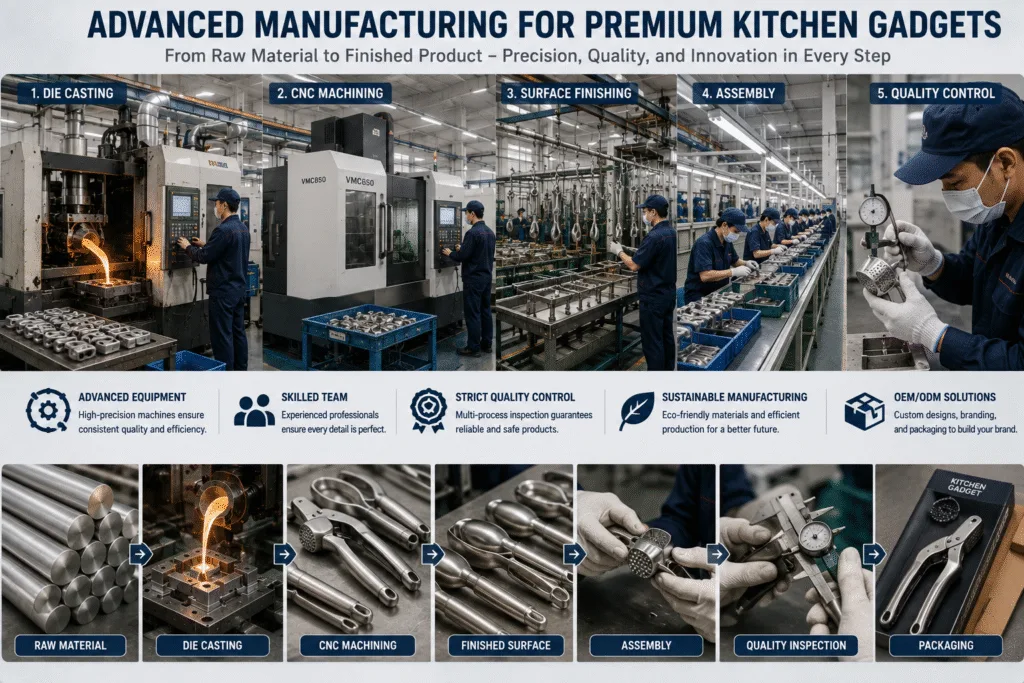
Modern factories now integrate technologies such as:
- Aluminum die casting
- CNC machining
- Robotic polishing
- Automated assembly
- Digital quality inspection
- Lean manufacturing
These technologies improve consistency, reduce production costs, and increase manufacturing efficiency.
Sustainability Is Becoming a Competitive Advantage
Environmental responsibility has become an important purchasing factor for both consumers and commercial buyers.
Manufacturers are increasingly adopting:
- Recyclable materials
- Eco-friendly packaging
- Energy-efficient production
- Waste reduction programs
- Long-lasting product designs
Rather than disposable products, many buyers now prefer durable kitchen gadgets designed for years of daily use.
Aluminum Kitchen Gadgets Continue to Gain Popularity
Among various manufacturing materials, aluminum alloy has become increasingly popular for premium kitchen gadgets.
Its advantages include:
- Lightweight construction
- Excellent strength
- Attractive appearance
- Comfortable handling
- Efficient die-casting production
- Flexible surface finishing
Many popular products—including garlic presses, lemon squeezers, nutcrackers, meat tenderizers, and ice cream scoops—are commonly manufactured using aluminum alloy.
Innovation Drives Product Development
Innovation is one of the strongest drivers of growth within the industry.
Manufacturers continue developing products featuring:
- Multi-functional designs
- Ergonomic handles
- Space-saving storage
- Improved user experience
- Modern aesthetics
- Better durability
Successful products solve real kitchen problems while remaining simple and intuitive to use.
Private Label and OEM Continue to Expand
More brands are choosing OEM and private label manufacturing to build unique product lines without investing in their own production facilities.
OEM partnerships allow businesses to customize:
- Product design
- Materials
- Colors
- Packaging
- Branding
This flexibility enables retailers and distributors to differentiate themselves in increasingly competitive markets.
Digital Manufacturing Improves Efficiency
Digital technologies are reshaping factory operations.
Many manufacturers now use:
- ERP production systems
- Production monitoring software
- Digital inventory management
- Barcode traceability
- Automated quality reporting
These improvements increase transparency while helping buyers monitor production more effectively.
Global Supply Chains Continue to Evolve
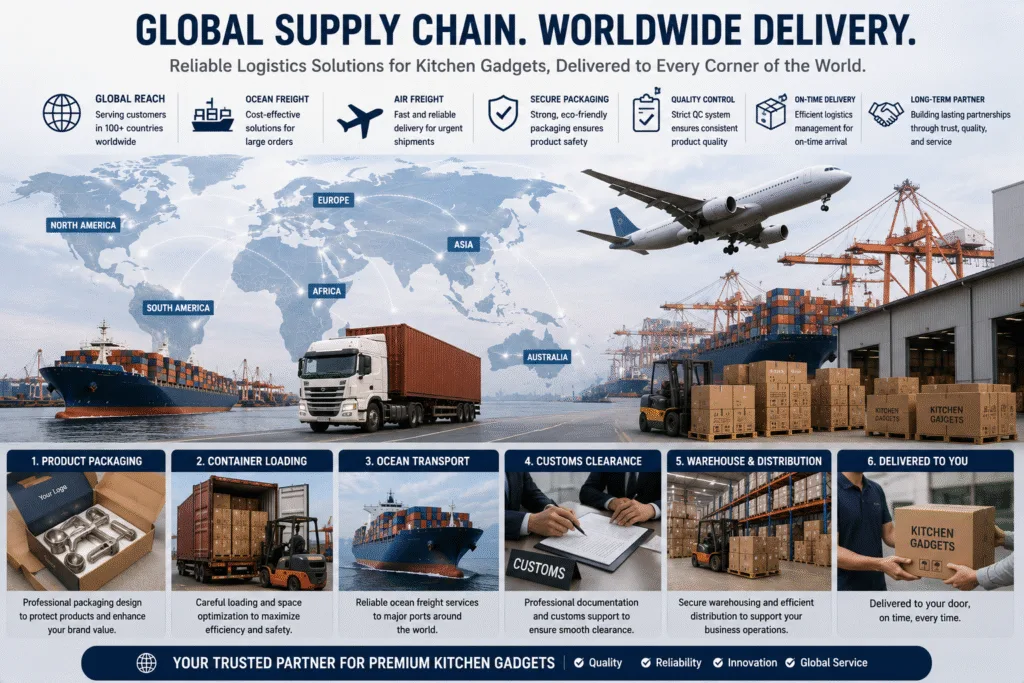
International sourcing has become more strategic than ever.
Successful buyers focus on:
- Supplier reliability
- Stable production capacity
- Risk management
- Diversified logistics
- Long-term partnerships
Rather than changing suppliers frequently, many brands prefer to establish stable manufacturing relationships that support consistent product quality.
Challenges Facing the Industry
Despite continued growth, manufacturers also face several challenges:
- Rising raw material costs
- Increasing labor expenses
- Environmental regulations
- Global logistics uncertainty
- Higher customer quality expectations
- Faster product development cycles
Companies that invest in automation, quality management, and innovation are better positioned to overcome these challenges.
Opportunities for Global Buyers
For importers, wholesalers, and retailers, today’s market offers numerous opportunities.
Growing product categories include:
- Premium kitchen tools
- Aluminum alloy gadgets
- Eco-friendly kitchenware
- Multi-functional cooking accessories
- Professional baking tools
- Coffee accessories
- Barbecue tools
Businesses that understand consumer trends and partner with experienced manufacturers are more likely to succeed in competitive international markets.
The Future of the Kitchen Gadget Industry
The future of the industry will likely be shaped by several long-term developments:
- Smarter manufacturing
- Sustainable materials
- AI-assisted product development
- Greater production automation
- Personalized product customization
- Stronger supply chain collaboration
Manufacturers that embrace innovation while maintaining consistent quality will remain competitive in the years ahead.
FAQ
Is the kitchen gadget industry still growing?
Yes. Demand for practical, durable, and innovative kitchen gadgets continues to increase globally, supported by changing lifestyles, e-commerce growth, and consumer interest in home cooking.
Why are aluminum kitchen gadgets becoming more popular?
Aluminum alloy offers an excellent combination of lightweight construction, durability, attractive appearance, and efficient manufacturing, making it suitable for many premium kitchen tools.
What do buyers value most today?
In addition to competitive pricing, buyers increasingly prioritize product quality, reliable delivery, food safety, sustainable manufacturing, and long-term supplier partnerships.
What trends will shape the industry?
Sustainability, automation, ergonomic design, premium materials, and digital manufacturing are expected to remain major drivers of industry development.