Table of Contents
Why Food Safety Matters in Kitchen Gadgets
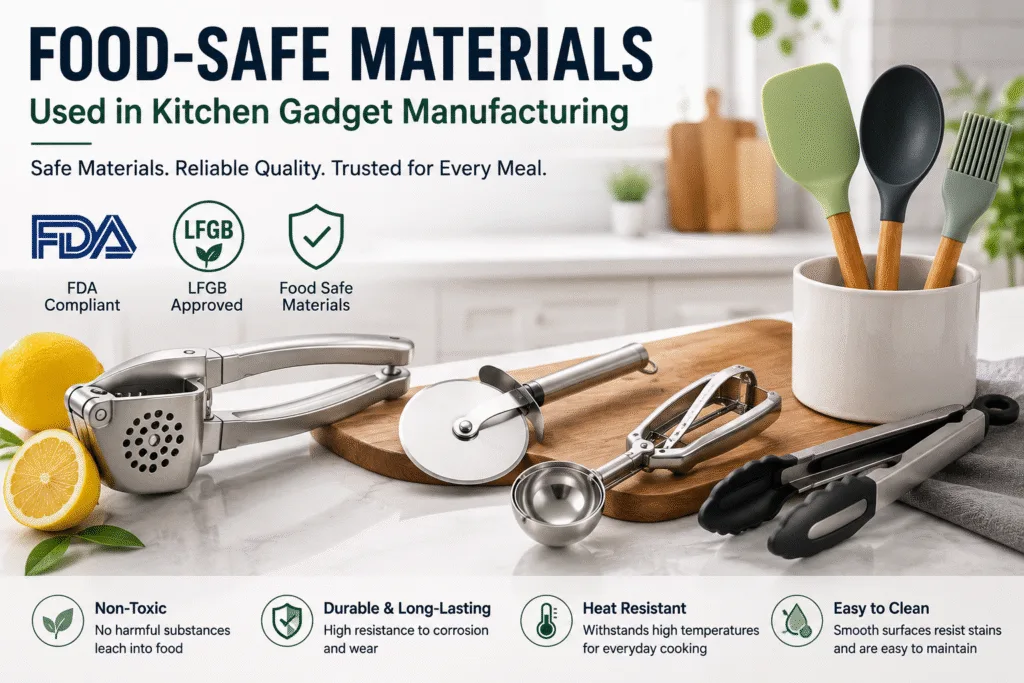
Food safety has become one of the most important considerations for importers, distributors, and private-label brands. Whether manufacturing lemon squeezers, pizza cutters, garlic presses, ice cream scoops, or nutcrackers, the materials used must be safe for direct or indirect food contact.
Consumers today are more aware of product safety than ever before. Governments and retailers also impose stricter regulations on food-contact products. As a result, choosing food-safe materials is no longer optional—it is a critical requirement for successful kitchen gadget manufacturing.
For buyers sourcing products internationally, understanding food-safe materials can help reduce compliance risks, improve product quality, and protect brand reputation.
What Are Food-Safe Materials?
Food-safe materials are materials that do not release harmful substances when they come into contact with food or beverages.
A food-safe material should:
- Resist corrosion and oxidation
- Withstand repeated use
- Remain stable under normal cooking conditions
- Not contaminate food
- Meet applicable food-contact regulations
Manufacturers must carefully select raw materials to ensure products meet the requirements of different export markets.
Common Food-Safe Materials Used in Kitchen Gadget Manufacturing
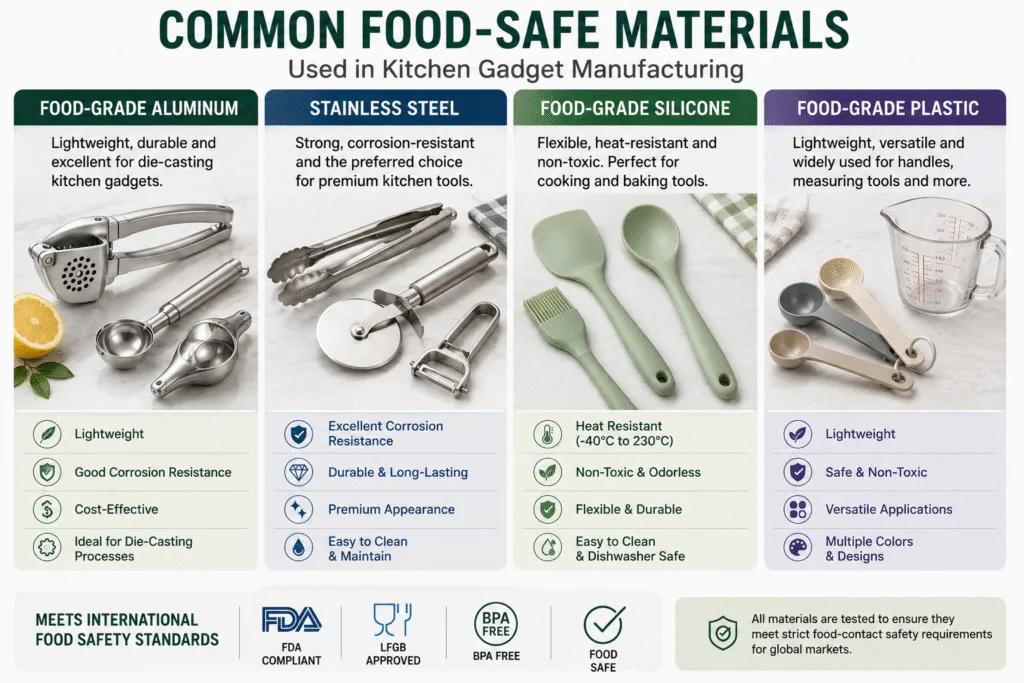
Food-Grade Aluminum
Aluminum remains one of the most widely used materials for kitchen gadgets due to its lightweight structure, durability, and excellent manufacturability.
Common applications include:
- Lemon squeezers
- Nutcrackers
- Ice cream scoops
- Garlic presses
Advantages include:
- Lightweight construction
- Good corrosion resistance when properly coated
- Cost-effective production
- Suitable for die-casting processes
Many premium aluminum kitchen gadgets also use powder coating or anodized finishes to improve durability and food-contact safety.
Stainless Steel
Stainless steel is often considered the gold standard for food-contact products.
Common applications include:
- Pizza cutters
- Peelers
- Kitchen tongs
- Measuring tools
Benefits include:
- Excellent corrosion resistance
- Long service life
- Premium appearance
- Easy cleaning and maintenance
For many commercial and professional applications, stainless steel remains the preferred material.
Food-Grade Silicone
Silicone is commonly used in accessories and heat-resistant kitchen tools.
Advantages include:
- Flexible structure
- Heat resistance
- Non-toxic composition
- Easy cleaning
Food-grade silicone is particularly popular in baking and cooking applications.
Food-Grade Plastics
Certain food-grade plastics are widely used for handles, measuring tools, and packaging components.
Popular materials include:
- PP (Polypropylene)
- ABS
- Tritan
These materials provide lightweight performance while meeting food-contact requirements when properly certified.
FDA vs LFGB: Understanding Food Safety Standards
Different markets require different compliance standards.
FDA Compliance
The FDA standard is commonly required for products sold in the United States.
FDA testing focuses on:
- Material composition
- Chemical migration limits
- Food-contact safety
LFGB Compliance
LFGB is one of the most recognized food-contact standards in Europe.
Compared with FDA requirements, LFGB testing is often considered more stringent.
Many international buyers request LFGB-compliant products to meet European market requirements.
Understanding these standards helps buyers communicate more effectively with manufacturers and avoid costly compliance issues.
How Manufacturers Verify Food Safety Compliance
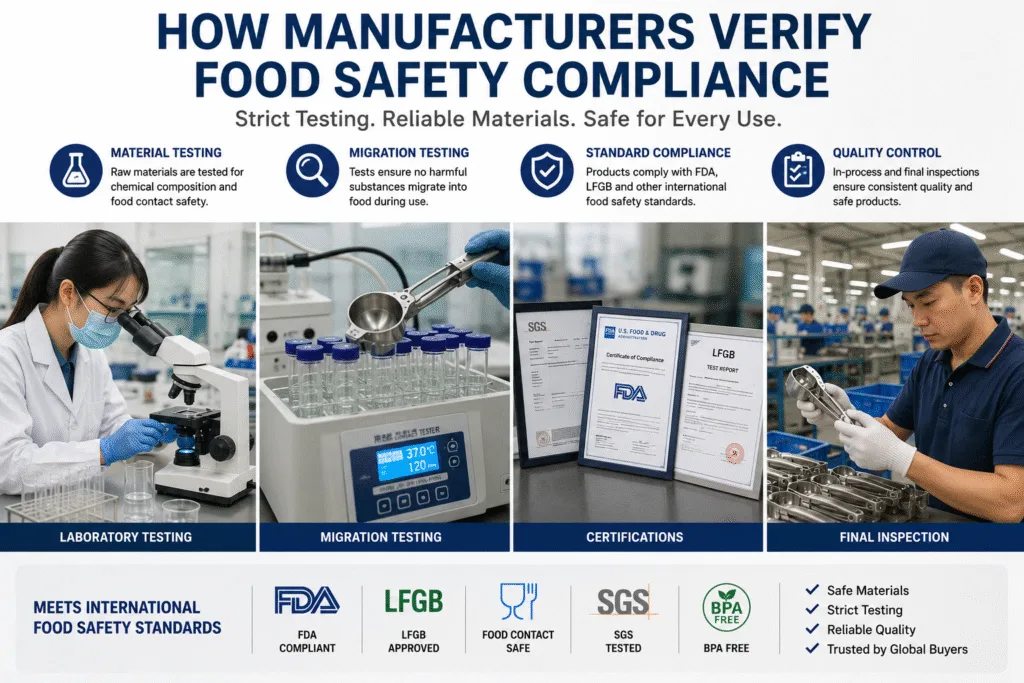
Reliable manufacturers implement multiple verification procedures.
Raw Material Verification
Approved suppliers provide documentation confirming material safety and compliance.
Production Process Control
Manufacturers monitor production processes to prevent contamination and maintain consistency.
Third-Party Testing
Independent laboratories may perform food-contact testing to verify compliance with international standards.
Quality Documentation
Professional suppliers maintain testing reports, material certifications, and inspection records for customer review.
How Buyers Can Evaluate Food-Safe Kitchen Gadgets
Before placing an order, buyers should evaluate:
- Material specifications
- Supplier certifications
- Testing reports
- Surface treatments
- Production processes
Requesting samples before mass production can help verify quality and safety requirements.
Buyers should also confirm whether products comply with the regulations of their target markets.
Common Food Safety Mistakes Buyers Should Avoid
Focusing Only on Price
Low-cost materials may increase food safety risks and create compliance issues.
Ignoring Material Certifications
Material documentation should always be verified before production begins.
Skipping Product Testing
Testing helps identify potential issues before products reach consumers.
Choosing Inexperienced Suppliers
Experienced manufacturers generally have stronger quality management systems and compliance knowledge.
FAQ
What is the safest material for kitchen gadgets?
Both food-grade aluminum and stainless steel are widely used and considered safe when manufactured according to international standards.
Is aluminum safe for food-contact products?
Yes. Properly coated or anodized food-grade aluminum is commonly used in kitchen gadget manufacturing.
What is the difference between FDA and LFGB?
FDA standards are primarily used in the United States, while LFGB standards are commonly required in Europe.
Why is material certification important?
Certification helps verify that materials meet food-contact safety requirements and applicable regulations.
How can I verify a supplier’s food safety compliance?
Request testing reports, material certifications, and information about quality control procedures.