Table of Contents
Why Aluminum Die Casting Is Important in Modern Kitchenware Manufacturing
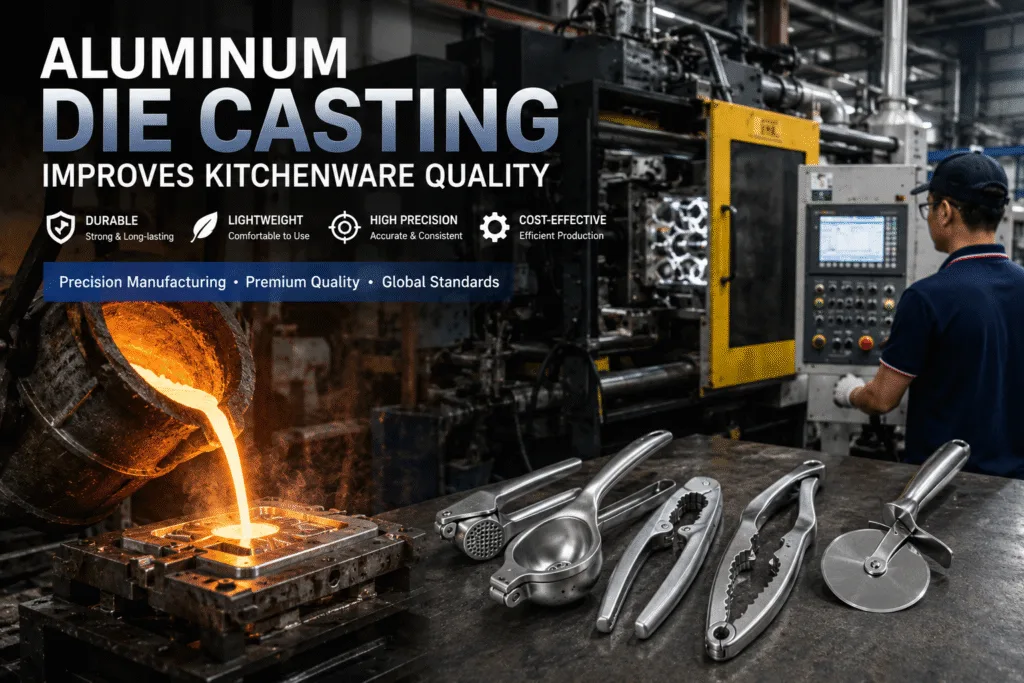
As global demand for durable and cost-effective kitchen tools continues growing, aluminum die casting has become one of the most widely used manufacturing methods in the kitchenware industry.
Many popular kitchen products, including garlic presses, lemon squeezers, nutcrackers, pizza cutters, and meat tenderizers, are produced using aluminum die-casting technology.
Compared with traditional manufacturing methods, aluminum die casting offers better production efficiency, stable product consistency, and greater flexibility for OEM customization.
For kitchenware brands, wholesalers, and private label buyers, understanding how aluminum die casting improves product quality is essential when selecting a reliable manufacturer.
Key Takeaways
- Aluminum die casting improves product consistency and durability.
- Die-cast kitchen tools are lightweight and cost-effective.
- The process supports efficient mass production.
- Aluminum products can achieve premium surface finishes.
- Die casting is widely used in OEM kitchenware manufacturing.
What Is Aluminum Die Casting?
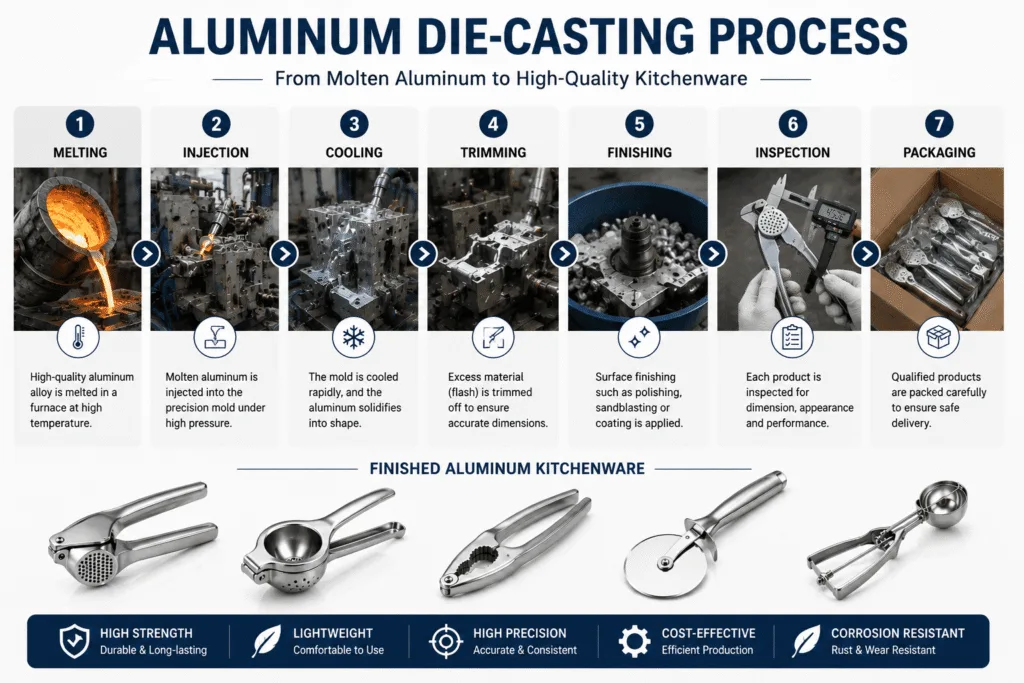
Aluminum die casting is a manufacturing process that injects molten aluminum into precision steel molds under high pressure.
After cooling and solidification, the finished product is removed from the mold and processed through polishing, coating, or assembly procedures.
This manufacturing method allows factories to produce kitchen tools with:
- Consistent dimensions
- Smooth surfaces
- Complex shapes
- Strong structural performance
Because the molds are highly precise, aluminum die casting is ideal for large-volume production with stable product quality.
How the Aluminum Die Casting Process Works
The standard aluminum die-casting process usually includes:
- Aluminum melting
- High-pressure injection
- Mold cooling
- Product trimming
- Surface finishing
- Quality inspection
- Packaging and assembly
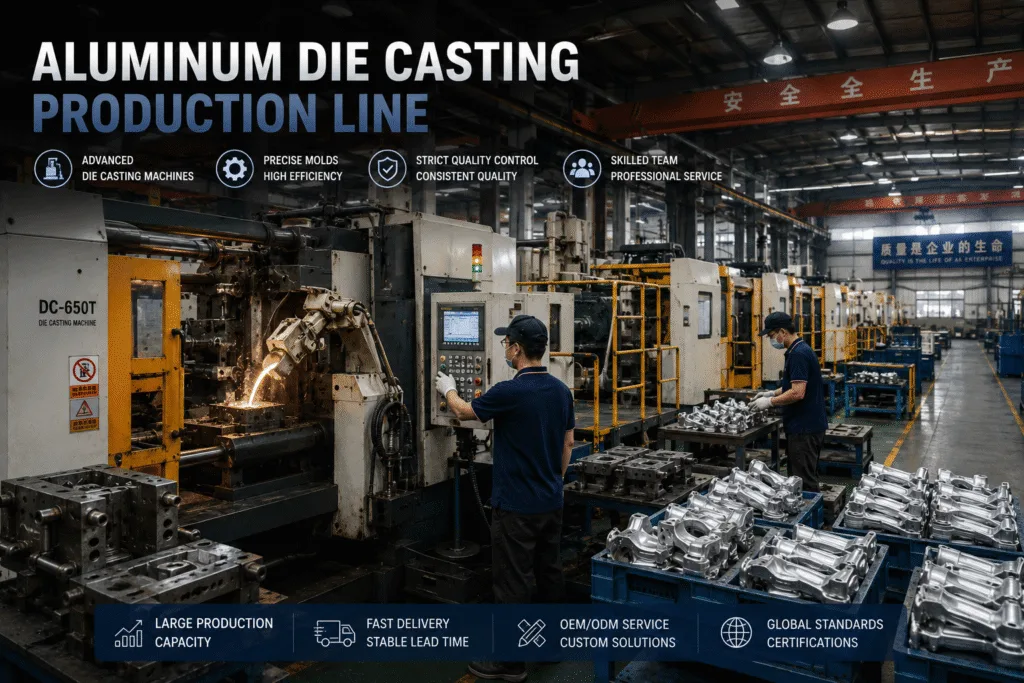
Professional kitchenware manufacturers use advanced die-casting machines to improve production accuracy and reduce product defects.
Why Aluminum Is Popular in Kitchenware Manufacturing
Aluminum is widely used in kitchenware because it provides an excellent balance between durability, weight, and manufacturing efficiency.
Compared with some heavier materials, aluminum products are easier to handle in daily kitchen use.
At the same time, aluminum supports efficient mass production and flexible surface treatments.
This makes aluminum especially suitable for OEM and ODM kitchenware projects.
Lightweight and Durable
One of the biggest advantages of aluminum kitchen tools is their lightweight structure.
Products such as garlic presses and lemon squeezers require comfortable handling during repeated use.
Aluminum provides good strength while maintaining lightweight performance, improving user experience and reducing hand fatigue.
Excellent Production Efficiency
Aluminum die casting supports high-volume manufacturing with stable production speed.
Because molds can be reused continuously, manufacturers can maintain consistent product quality while reducing long-term production costs.
This is especially important for wholesalers and importers requiring large-volume orders.
Flexible Surface Finishing
Aluminum products support multiple surface treatment options, including:
- Powder coating
- Polishing
- Sandblasting
- Electroplating
- Matte finishing
These surface treatments help brands create premium product appearances for different markets.
Common Kitchenware Products Made with Aluminum Die Casting
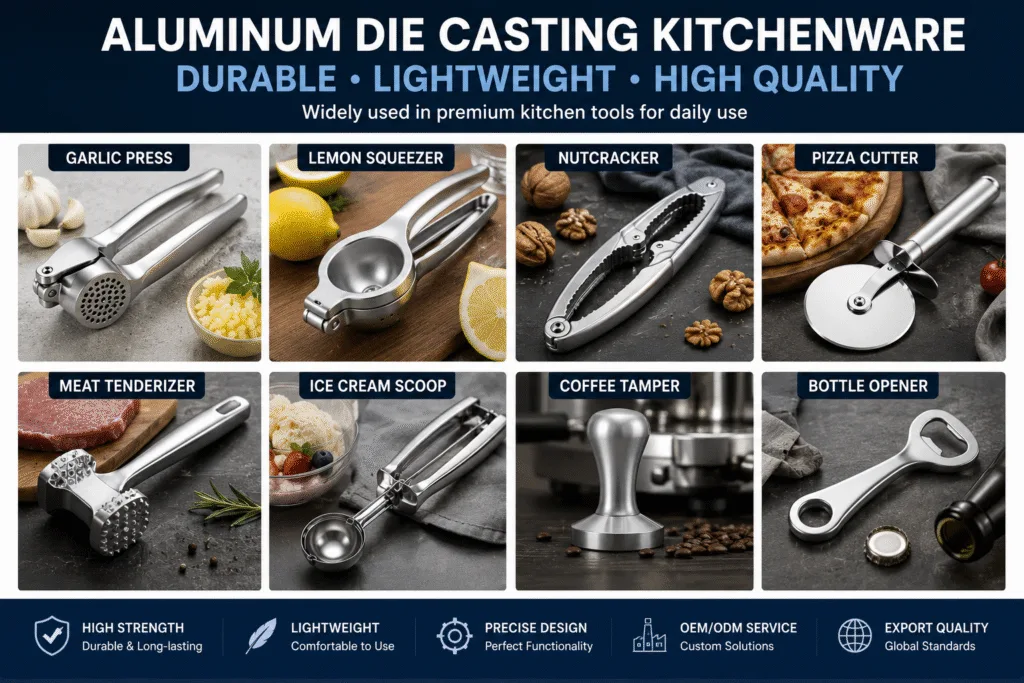
Aluminum die casting is widely used for various kitchen tools because it supports detailed product structures and strong durability.
Common die-cast kitchenware products include:
- Garlic presses
- Lemon squeezers
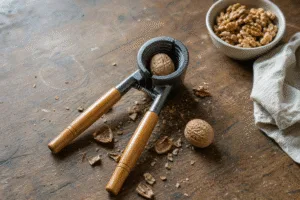
- Nutcrackers
- Meat tenderizers
- Pizza cutters
- Ice cream scoops
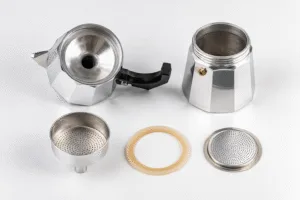
- Coffee accessories
Many private label kitchenware brands prefer die-cast aluminum products because they combine functionality with premium appearance.
Aluminum Die Casting vs Other Manufacturing Methods
Different manufacturing methods offer different advantages.
However, aluminum die casting is often preferred for kitchenware because it balances cost efficiency, durability, and design flexibility.
| Manufacturing Method | Advantages | Limitations |
|---|---|---|
| Aluminum Die Casting | High efficiency, durable, lightweight | Mold investment required |
| Stainless Steel Stamping | Strong corrosion resistance | Limited complex structures |
| Plastic Injection Molding | Low material cost | Lower durability |
| Manual Fabrication | Flexible small-volume production | Higher labor cost |
For OEM kitchenware manufacturing, aluminum die casting is often the best solution for large-scale production.
How Aluminum Die Casting Improves Product Quality
High-quality kitchenware requires more than attractive appearance.
Manufacturing precision directly affects:
- Product durability
- User experience
- Surface finish
- Structural stability
Aluminum die casting improves quality through precise mold control and stable production systems.
Better Product Consistency
Precision molds help ensure consistent product dimensions across large production batches.
This reduces assembly problems and improves overall product reliability.
Stronger Structural Performance
Die-cast aluminum products are less likely to deform during normal kitchen use.
This improves long-term durability and reduces customer complaints.
Improved Surface Appearance
Smooth product surfaces help manufacturers achieve better coating and polishing results.
This improves product appearance and perceived market value.
Why OEM Kitchenware Brands Prefer Aluminum Die Casting
OEM kitchenware projects often require customized product structures and premium surface finishes.
Aluminum die casting supports:
- Custom logos
- Private label branding
- Unique product shapes
- Premium coatings
- Large-scale production
Because of these advantages, many global kitchenware brands choose aluminum die-casting factories for long-term OEM cooperation.
Common Mistakes Buyers Make When Sourcing Die-Cast Kitchenware
Many buyers focus only on pricing without evaluating manufacturing capability.
This often creates long-term quality risks.
Choosing Factories Without Die-Casting Experience
Experienced die-casting manufacturers usually provide:
- Better mold precision
- More stable production
- Lower defect rates
- Stronger QC systems
Factory experience directly affects final product quality.
Ignoring Surface Finish Quality
Surface treatment quality strongly influences product appearance and durability.
Buyers should carefully evaluate:
- Coating consistency
- Polishing smoothness
- Scratch resistance
- Color uniformity
Skipping Product Testing
Professional manufacturers should support product testing and food-contact compliance, including:
- FDA
- LFGB
- SGS testing
Certification support is essential for international markets.
How to Choose a Reliable Aluminum Die Casting Manufacturer
Choosing the right manufacturer is critical for stable product quality and long-term cooperation.
Professional buyers should evaluate:
- Factory experience
- Die-casting capability
- QC systems
- Mold development ability
- Export experience
- Communication efficiency
Reliable manufacturers usually provide both OEM and ODM services with stable lead times and professional quality management.
FAQ
Why is aluminum die casting widely used in kitchenware manufacturing?
Because it offers high production efficiency, stable product quality, and lightweight durability.
Is die-cast aluminum safe for kitchen tools?
Yes. Food-grade aluminum kitchenware can comply with FDA and LFGB standards when produced correctly.
What products are commonly made with aluminum die casting?
Common products include garlic presses, lemon squeezers, nutcrackers, pizza cutters, and meat tenderizers.
Why do OEM brands prefer aluminum die casting?
Because it supports customization, premium surface finishes, and efficient mass production.
What surface treatments are available for die-cast kitchenware?
Common treatments include powder coating, polishing, sandblasting, and electroplating.