For buyers sourcing metal kitchen products, material selection and manufacturing process can have a major impact on product quality, cost, durability, and production consistency.
Die cast aluminum is widely used for products that require a combination of strength, relatively low weight, detailed shapes, and efficient volume production. For B2B buyers, however, choosing die cast aluminum is only the first step.
The manufacturer’s mold design, casting process, machining, surface finishing, assembly, and quality control all influence the final product.
This guide explains how die cast aluminum kitchenware is manufactured and what buyers should evaluate before placing a production order.
Why Is Die Cast Aluminum Used for Kitchenware?
Aluminum alloy offers several characteristics that make it suitable for many kitchen products.
It is relatively lightweight compared with many other metals while providing good structural strength. It can also be formed into detailed shapes through die casting, making it suitable for products with integrated handles, cavities, ribs, and other structural features.
For manufacturers, die casting can also provide consistent production for medium- and high-volume orders.
For B2B buyers, the main advantages can include:
- Relatively low product weight
- Good structural strength
- Detailed product geometry
- Consistent production
- Efficient volume manufacturing
- Multiple surface-finishing options
- Compatibility with different product designs
However, die casting is not automatically the best process for every kitchen product. Product geometry, production quantity, material requirements, and target cost should all be considered before selecting the manufacturing method.
Which Kitchen Products Are Suitable for Aluminum Die Casting?
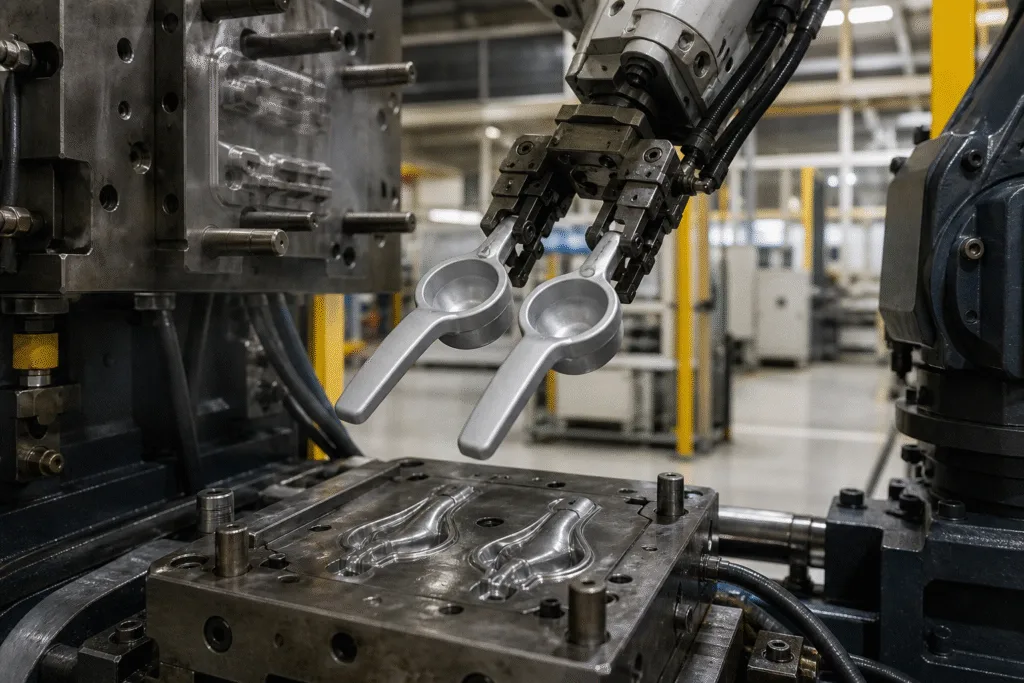
The process is particularly useful for kitchen products that require a relatively complex metal shape and repeatable production.
Garlic Presses
Aluminum garlic presses can be designed with integrated structural components and ergonomic handles.
Important manufacturing considerations include casting quality, handle strength, pressing geometry, dimensional consistency, and surface finishing.
Lemon Squeezers
Lemon squeezers are another suitable application for aluminum alloy die casting.
The casting process can create the main body and handle structure efficiently while allowing different surface treatments and branding options.
Walnut Crackers
Walnut crackers need to withstand repeated mechanical force.
For these products, the manufacturer must pay particular attention to structural strength, material selection, joint design, and dimensional accuracy.
Ice Cream Scoops
Aluminum ice cream scoops can be manufactured in different sizes and handle configurations.
The final product may require additional machining and surface finishing depending on the design and intended application.
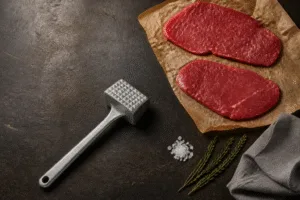
Meat Tenderizers
For aluminum meat tenderizers, the head geometry and handle structure need to provide sufficient strength during repeated use.
Weight distribution and grip design can also influence the final product experience.
Scoops and Food Preparation Tools
Various scoops and food preparation tools can also benefit from aluminum die casting when the product requires a durable metal structure and consistent dimensions.
How Is Die Cast Aluminum Kitchenware Manufactured?
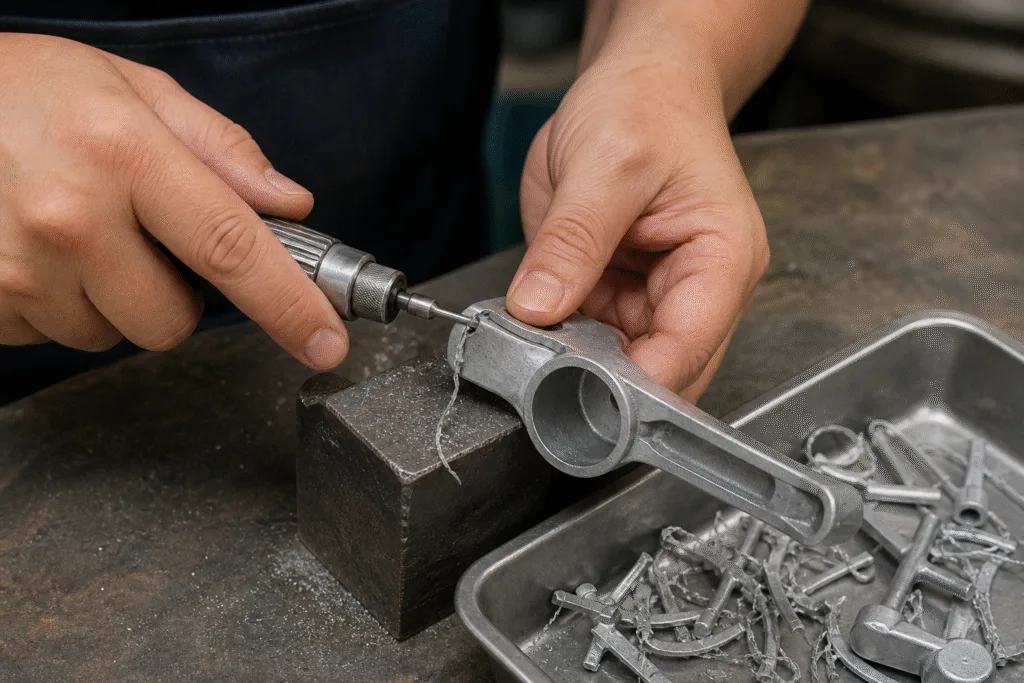
A typical production process involves several stages.
Mold Design and Development
The process begins with the mold.
Engineers need to consider product geometry, wall thickness, draft angles, filling behavior, cooling, ejection, and other manufacturing requirements.
A well-designed mold can improve dimensional consistency and reduce production problems.
For customized products, buyers should confirm whether the manufacturer can handle mold development directly or works with an external tooling supplier.
Aluminum Alloy Preparation
The selected aluminum alloy is prepared for the casting process.
Material selection should be based on the required product properties, manufacturing process, surface finish, and applicable market requirements.
For B2B projects, buyers should confirm the agreed material specification before mass production.
Die Casting
Molten aluminum alloy is injected into the mold under controlled conditions.
The metal fills the cavity and forms the required product geometry.
Production parameters such as injection speed, pressure, temperature, and cooling can influence the quality of the casting.
Consistent process control is therefore important for maintaining product quality across large production runs.
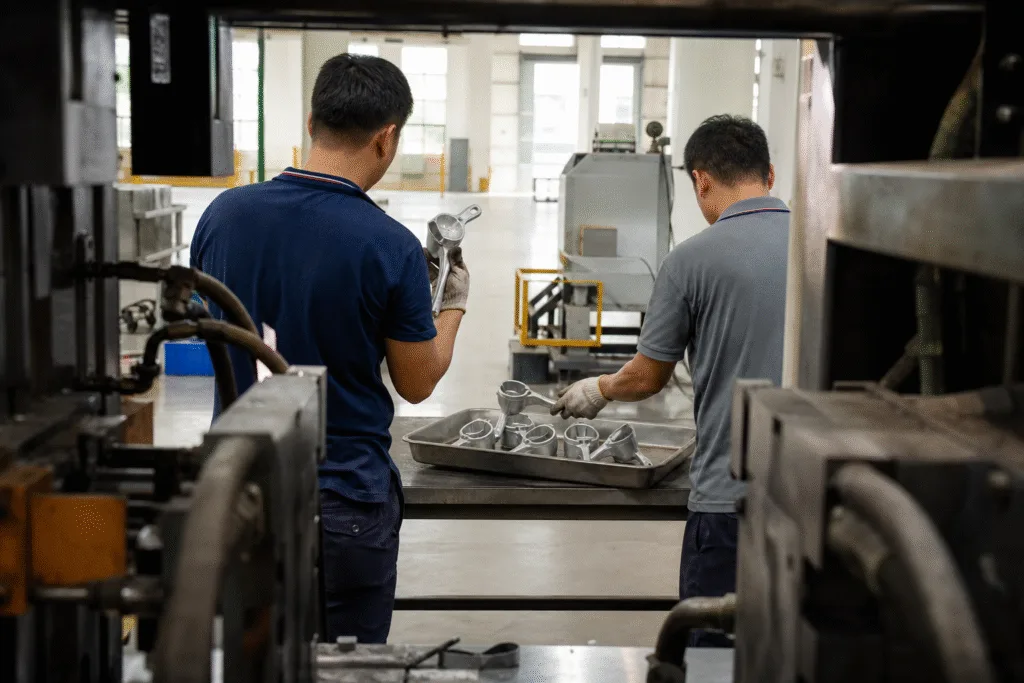
Trimming and Deburring
After casting, excess material such as runners, gates, and flash may need to be removed.
Edges and surfaces are also inspected and processed to achieve the required appearance and safety.
CNC Machining
Some die-cast components require additional machining.
CNC machining may be used when specific dimensions, holes, threads, flat surfaces, or other areas require greater precision than the casting process alone can provide.
The combination of die casting and machining allows manufacturers to balance production efficiency with dimensional accuracy.
Surface Finishing
After machining and preparation, the product can receive its specified surface treatment.
Depending on the product and material, possible finishes include polishing, brushing, coating, painting, or other treatments.
The selected finish affects both appearance and resistance to wear during normal use.
Assembly
Products containing multiple components are assembled after the individual parts have passed the required inspections.
Assembly quality is especially important for products with moving mechanisms, handles, fasteners, or functional components.
Quality Inspection
The finished products are inspected against the approved specifications.
Inspection may include dimensions, appearance, functionality, surface finish, assembly, packaging, and other agreed requirements.
What Makes a High-Quality Die Cast Aluminum Kitchen Product?
Good casting quality involves more than achieving the correct overall shape.
B2B buyers should pay attention to several factors.
Dimensional Consistency
Products manufactured in the same production batch should remain within the agreed dimensional tolerances.
Inconsistent dimensions can affect assembly, function, packaging, and customer experience.
Casting Surface
The casting surface should be evaluated for visible defects such as excessive roughness, cracks, cold shuts, or other abnormalities.
The acceptable level depends on the product design and specified finishing process.
Wall Thickness
Wall thickness needs to be appropriate for both structural requirements and the casting process.
Poorly designed wall thickness can contribute to defects, deformation, or inconsistent filling.
Mechanical Strength
Products that experience repeated force need sufficient structural strength.
This is particularly important for products such as garlic presses, walnut crackers, and meat tenderizers.
Functional Accuracy
A product may have a good appearance but still fail to perform correctly.
Functional testing should therefore be included when the product contains a mechanical or working component.
Common Defects in Aluminum Die Casting
Understanding common casting defects helps buyers communicate quality requirements more effectively.
Porosity
Porosity refers to small internal or surface voids that can occur during casting.
The level of concern depends on the product structure and application.
Flash
Flash is excess metal that can form along the mold parting line or other areas.
Excessive flash may require additional trimming and can affect the product’s appearance or safe handling.
Cold Shut
A cold shut can occur when separate flows of molten metal do not properly fuse during filling.
It may appear as a line or discontinuity on the casting surface.
Surface Defects
Uneven surfaces, marks, inclusions, or other casting abnormalities can affect the final appearance, especially when the product receives a polished or decorative finish.
Dimensional Variation
Variation between castings can create problems during assembly or functional use.
Process control and appropriate inspection are important for maintaining consistency.
Warping
Distortion can occur when a component does not cool or release from the mold as expected.
Mold design, cooling conditions, product geometry, and process parameters can all influence this issue.
How Surface Finishing Affects Aluminum Kitchenware
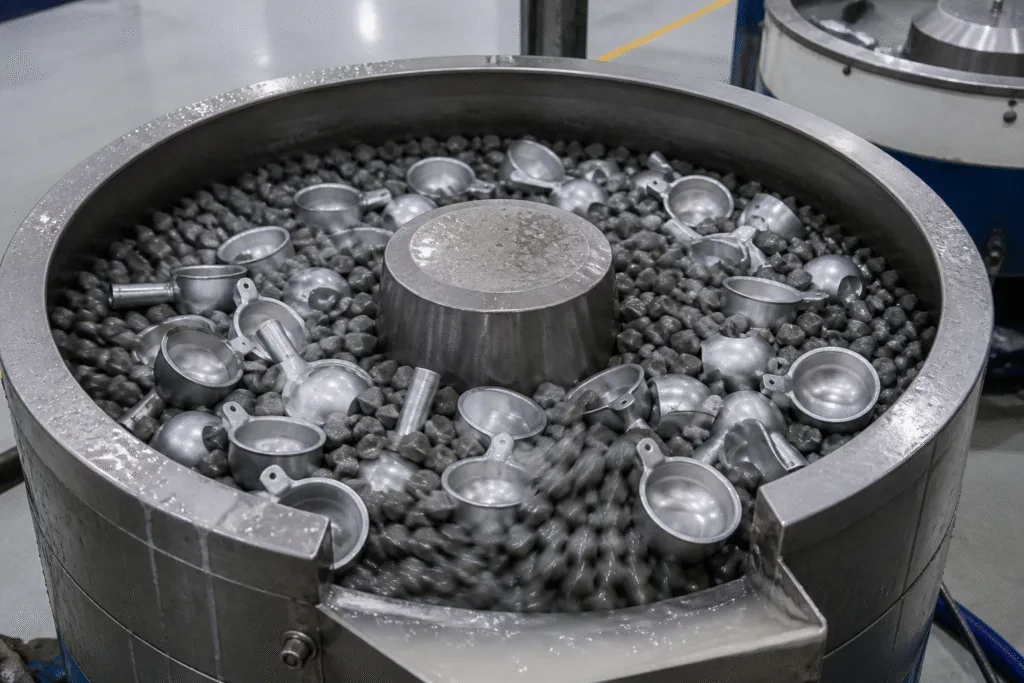
Surface finishing can change both the appearance and perceived quality of an aluminum product.
Polishing
Polishing can create a smooth and reflective appearance and is often used when a bright metallic finish is required.
Brushing
Brushed finishes create a directional surface texture and can provide a more understated appearance.
Coating and Painting
Coatings can provide different colors and visual effects while creating another layer of surface protection.
The suitability of a coating depends on the product, application, and applicable requirements.
Anodized Finishes
Anodizing can modify the surface properties and appearance of aluminum.
It may be considered when the product design and required performance are suitable for the process.
The surface finish should always be evaluated together with the intended use, cleaning conditions, durability requirements, and target market.
Die Casting vs Other Manufacturing Methods
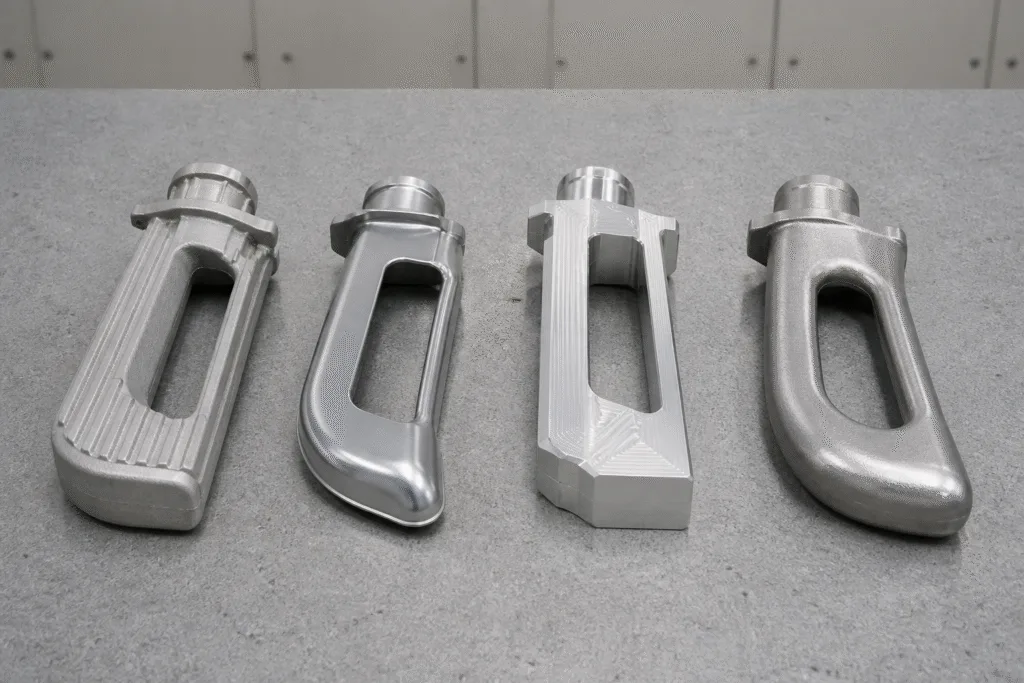
Not every metal kitchen product needs to be die cast.
| Manufacturing Process | Typical Application | Production Volume | Design Flexibility |
|---|---|---|---|
| Die Casting | Complex aluminum alloy components | Medium–High | High |
| Stamping | Sheet-metal components | High | Medium |
| CNC Machining | Precision metal components | Low–Medium | Very High |
| Forging | High-strength metal components | Medium–High | Medium |
Die casting is particularly attractive when a product requires a repeatable three-dimensional shape and the expected production quantity can justify tooling investment.
CNC machining may be more appropriate for low-volume production or components requiring extensive precision machining.
Stamping is generally more suitable for products made from sheet material.
The best manufacturing process depends on product geometry, quantity, material, required tolerances, and target cost.
What Affects the Cost of Die Cast Aluminum Kitchenware?
The factory price of a die-cast aluminum product is influenced by several factors.
Material Cost
Product weight and alloy specification directly affect material cost.
Mold Cost
New products generally require dedicated tooling.
The complexity of the mold, number of cavities, expected production volume, and product geometry can influence tooling cost.
Die Casting
Production parameters, machine requirements, cycle time, and product weight can all influence the manufacturing cost.
Machining
Additional CNC or other machining increases processing time and therefore affects the final price.
Surface Finishing
Different finishes require different processes and levels of processing.
Assembly
Products with multiple components require additional labor and production steps.
Packaging
Individual retail packaging, custom printing, inserts, and export cartons can all add to the total cost.
Order Quantity
Larger production quantities can distribute tooling and setup costs across more units and may improve manufacturing efficiency.
For this reason, buyers should compare the total project cost, rather than evaluating only the quoted unit price.
How to Choose a Die Cast Aluminum Kitchenware Manufacturer
A supplier’s website alone is not enough to evaluate manufacturing capability.
B2B buyers should examine several areas.
Mold Development Capability
Ask whether the manufacturer has in-house mold development and engineering support.
Direct control over tooling can simplify communication when product modifications are required.
Die-Casting Equipment
Check whether the manufacturer has suitable die-casting equipment for the products being sourced.
The supplier should understand the relationship between product size, structure, alloy, machine capacity, and production requirements.
Machining Capability
If the product requires CNC machining or other precision processing, confirm whether these operations are available within the manufacturer’s production system.
Surface Finishing
Ask which finishing processes can be controlled directly and which are outsourced.
The supplier should also have a system for checking finished surfaces against the approved sample.
Assembly and Packaging
A manufacturer that can manage assembly and packaging can simplify the supply chain and reduce the number of external production partners.
Quality Control
Ask how the manufacturer controls:
- Raw materials
- Casting
- Dimensions
- Surface finish
- Machining
- Assembly
- Function
- Packaging
- Final inspection
What Should B2B Buyers Ask Before Ordering?
Before placing an order, buyers should clarify the following:
- What aluminum alloy will be used?
- Is the mold developed in-house?
- What manufacturing process is used?
- What dimensional tolerances can be maintained?
- What casting defects are inspected?
- What surface finishes are available?
- What machining is required?
- What is the MOQ?
- How long will tooling take?
- How long will sampling take?
- What is the mass-production lead time?
- What quality-control procedures are used?
- Can the manufacturer provide production samples?
- What packaging options are available?
Getting these details confirmed before production reduces the risk of unexpected costs and specification changes later.
How Should Buyers Check Samples?
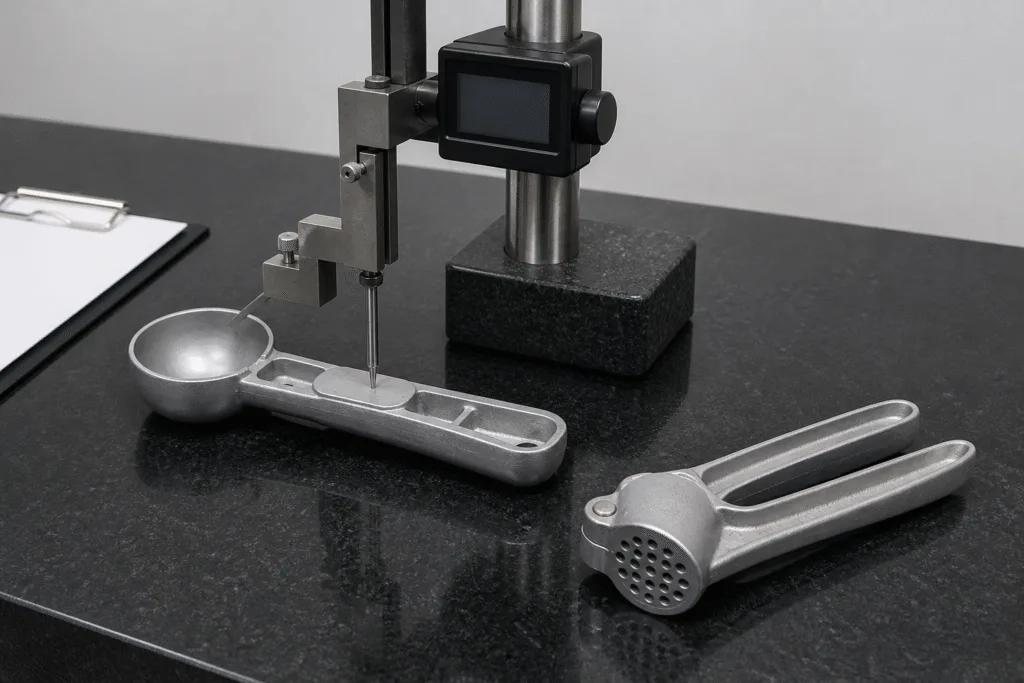
A sample should be evaluated against the actual requirements rather than judged only by appearance.
Check:
Dimensions
Measure important dimensions against the approved specifications.
Weight
Confirm whether the product weight is within the agreed range.
Surface
Inspect the finish for scratches, casting marks, uneven treatment, discoloration, or other visible problems.
Function
Use the product under realistic conditions to confirm that it performs as expected.
Assembly
Check joints, handles, fasteners, moving components, and other assembled parts.
Packaging
If the product is intended for retail, inspect the packaging at the sample stage rather than waiting until mass production.
The approved sample should become the reference standard for production.
Common Mistakes When Sourcing Die Cast Aluminum Kitchenware
Choosing Only by Unit Price
A low quotation does not always represent the lowest total cost.
Tooling, finishing, machining, defects, packaging, and logistics can significantly affect the final cost.
Selecting a Supplier Without Checking Manufacturing Capability
A supplier may sell aluminum products without actually controlling the manufacturing process.
For technically demanding projects, buyers should verify production and engineering capabilities.
Ignoring Tooling Requirements
Buyers should determine whether a new mold is required before finalizing the quotation.
Skipping Sample Approval
Mass production should not begin until the product specifications and sample have been properly reviewed.
Not Defining Quality Requirements
Terms such as “high quality” are too vague.
Buyers should define important dimensions, materials, surface requirements, functional standards, and acceptable quality levels.
Changing Specifications During Production
Late design changes can affect tooling, production schedules, and costs.
Specifications should be finalized before mass production whenever possible.
FAQ
What is die cast aluminum kitchenware?
Die cast aluminum kitchenware refers to kitchen products made from aluminum alloy using a die-casting process. Molten aluminum is injected into a reusable mold to create a specific product shape.
Is die casting suitable for kitchen products?
It can be suitable for many metal kitchen products that require repeatable shapes, structural strength, relatively low weight, and efficient volume production.
What kitchen products can be made using aluminum die casting?
Products such as garlic presses, lemon squeezers, walnut crackers, ice cream scoops, meat tenderizers, and various scoops can be produced using aluminum die-casting processes, depending on their design.
Does aluminum die casting require a mold?
Yes. Die casting requires a mold that defines the shape of the cast component. A new product design generally requires dedicated tooling.
Is die-cast aluminum lightweight?
Aluminum is relatively lightweight compared with many other metals. The final product weight depends on its dimensions, wall thickness, design, and alloy.
How do I choose an aluminum die-casting manufacturer?
Evaluate the supplier’s mold development, die-casting, machining, finishing, assembly, quality-control, sampling, and production capabilities rather than comparing unit prices alone.
What defects should buyers check in die-cast aluminum products?
Common areas to inspect include porosity, flash, cold shuts, surface defects, dimensional variation, warping, and other issues that could affect appearance or functionality.