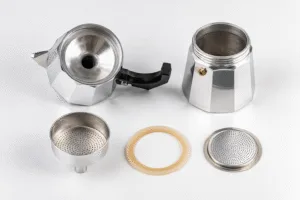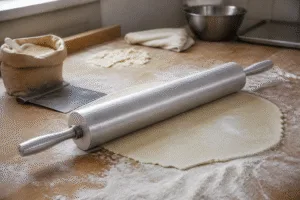
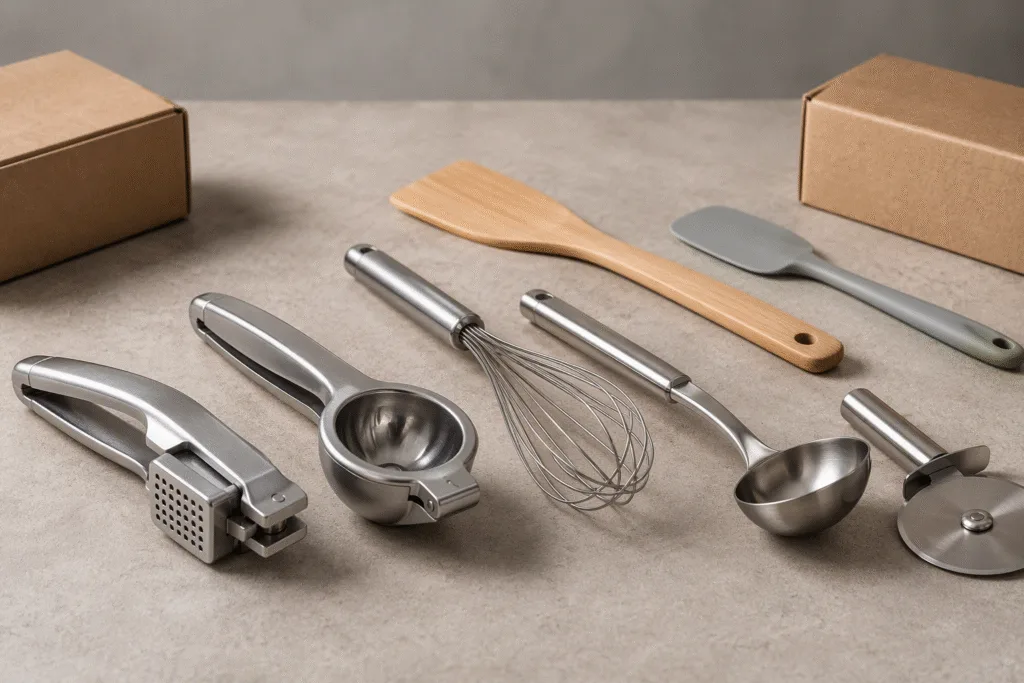
China remains an important sourcing market for kitchen utensils because buyers can access a wide manufacturing base, different materials, competitive production costs, and OEM capabilities.
However, successful sourcing is not simply about finding the lowest price. B2B buyers also need to evaluate manufacturing capability, product quality, tooling, communication, packaging, lead time, and total landed cost.
For importers, wholesalers, retailers, and private-label brands, knowing how to source kitchen utensils from China can make the difference between a reliable long-term supply chain and a costly purchasing problem.
Why Source Kitchen Utensils from China?
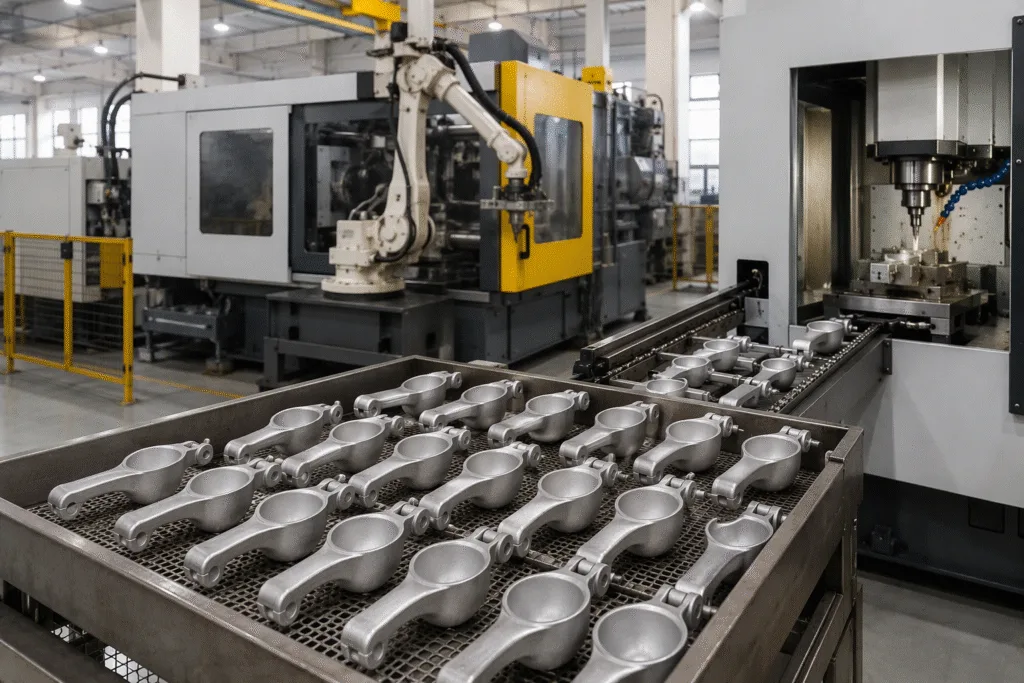
China has a large and mature manufacturing ecosystem for household and professional kitchen products.
Depending on the product category, buyers can source stainless steel, aluminum alloy, zinc alloy, plastic, silicone, wood, and composite kitchen utensils from different manufacturing regions.
For metal kitchen utensils, Chinese manufacturers may also provide processes such as:
- Die casting
- Stamping
- CNC machining
- Forging
- Polishing
- Surface finishing
- Assembly
- Packaging
Another advantage is the ability to combine manufacturing with OEM, ODM, branding, and packaging services.
For B2B buyers, this can simplify the supply chain when one manufacturer can manage several stages from product development to final shipment.
What Kitchen Utensils Can You Source from China?
Chinese manufacturers supply a broad range of kitchen utensils for retail, foodservice, hospitality, and household applications.
Aluminum Kitchen Utensils
Aluminum alloy is commonly used when buyers want products that combine relatively low weight with strength and durability.
Products such as lemon squeezers, garlic presses, scoops, meat tenderizers, and other hand tools can be manufactured using aluminum die-casting processes.
Garlic Presses
Garlic presses are suitable for both retail and private-label programs.
Buyers can source standard designs or discuss changes to handles, finishes, branding, and packaging depending on the supplier’s capabilities.
Lemon Squeezers
Aluminum lemon squeezers are another common B2B product.
When comparing suppliers, buyers should consider casting quality, handle strength, surface finish, dimensions, and functional performance.
Walnut Crackers
Walnut crackers require sufficient structural strength because the product must withstand repeated force.
Buyers should pay particular attention to the material, joint construction, handle design, and overall durability.
Ice Cream Scoops
Ice cream scoops can be sourced for household retail, foodservice, and commercial applications.
Important specifications may include scoop size, handle design, material, finish, and packaging.
Meat Tenderizers and Pizza Cutters
These products can also be sourced from Chinese manufacturers, with different combinations of materials, finishes, components, and packaging.
The right supplier depends on whether the buyer needs standard products or a customized product program.
How to Find Kitchen Utensils Suppliers in China
There are several ways to identify potential suppliers.
B2B Marketplaces
Online B2B marketplaces can provide a large number of potential suppliers and product options.
They are useful for initial market research, price comparisons, and identifying common product specifications.
However, a marketplace listing alone does not prove that a company is the actual manufacturer.
Google and Manufacturer Websites
Searching directly for terms such as “China kitchen utensils manufacturer” or a specific product plus “manufacturer” can help buyers discover factory websites.
A professional manufacturer website should provide useful information about products, manufacturing capabilities, materials, certifications, factory facilities, and contact information.
Industry Exhibitions
Trade exhibitions can provide an opportunity to meet suppliers directly and inspect physical products.
For buyers planning long-term sourcing programs, exhibitions can also make it easier to compare several suppliers within a short period.
Supplier Referrals
Industry contacts and existing business partners can sometimes provide useful supplier recommendations.
Regardless of how a supplier is found, buyers should still conduct their own verification before placing a significant order.
How to Tell a Factory from a Trading Company
One of the most important steps when sourcing from China is understanding who is actually manufacturing the products.
A trading company may have access to multiple factories and can be useful for buyers who need many unrelated product categories.
A direct manufacturer, however, may offer greater control when the project requires product development, tooling, technical communication, or consistent production.
| Factor | Manufacturer | Trading Company |
|---|---|---|
| Production | Usually in-house | Usually outsourced |
| Mold development | Often available | Usually outsourced |
| Engineering support | Direct | Depends on supplier |
| Customization | Often more flexible | Depends on factory |
| Quality control | Direct production control | Relies on manufacturing partners |
| Product knowledge | Direct | May vary |
| Communication | Direct with production | Through intermediary |
The right choice depends on the project.
For standard products, a trading company may be sufficient. For customized aluminum utensils or OEM projects, direct communication with a capable manufacturer can provide significant advantages.
What Should You Ask a Chinese Kitchen Utensils Supplier?
Before requesting a quotation, buyers should collect enough information to evaluate the supplier properly.
Useful questions include:
- Are you a manufacturer or trading company?
- Where is your factory located?
- What materials do you manufacture?
- Do you have in-house mold development?
- What manufacturing processes do you use?
- What is your MOQ?
- Can you provide samples?
- Can you customize the product?
- Can you add logos?
- What packaging options are available?
- Which markets do you export to?
- What quality-control procedures do you follow?
- What is the typical production lead time?
The goal is not simply to collect answers. Buyers should compare the answers across several potential suppliers.
How to Request a Quote from a Chinese Supplier
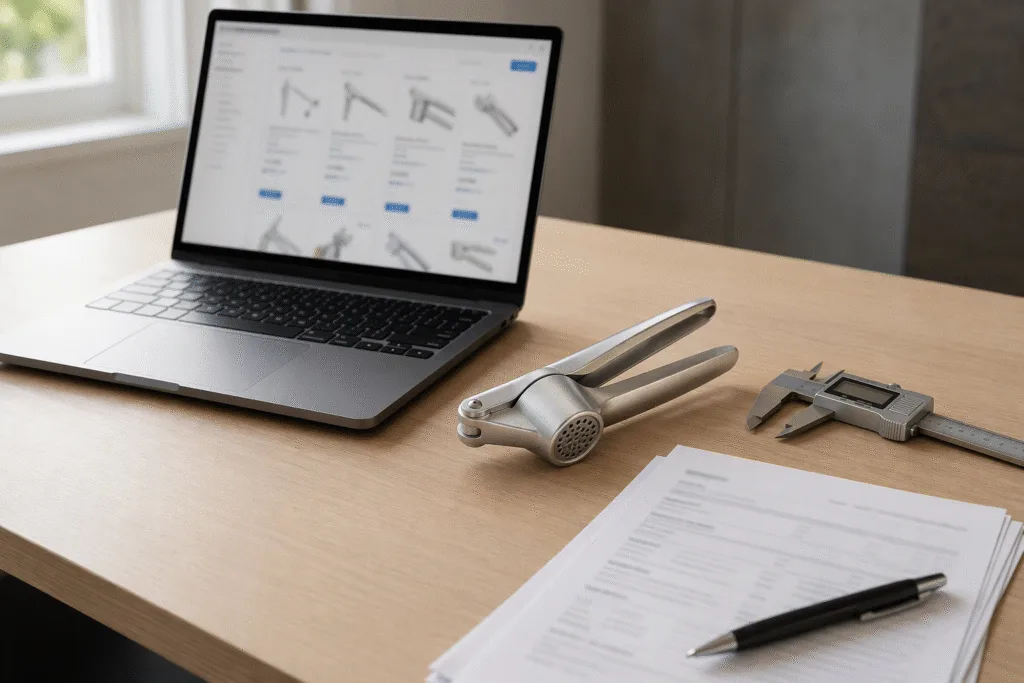
A common sourcing mistake is sending a very short message such as:
“Please send me your best price.”
This usually does not provide enough information for an accurate quotation.
A better RFQ should include:
- Product name
- Product reference or drawing
- Material
- Dimensions
- Estimated order quantity
- Surface finish
- Logo requirements
- Packaging requirements
- Target market
- Required documentation
- Expected delivery schedule
For example, an aluminum lemon squeezer quotation may depend on its dimensions, alloy specification, surface finish, logo method, packaging, order quantity, and shipping requirements.
The more complete the specification, the easier it is to compare quotations accurately.
How to Compare Kitchen Utensils Suppliers
Price should be only one part of the supplier evaluation.
A useful comparison should include:
Manufacturing Capability
Check whether the supplier has the equipment and production processes required for your products.
Product Quality
Review samples rather than relying only on product photographs.
Customization Capability
If your business requires private labeling or product modifications, confirm what the manufacturer can actually support.
Quality Control
Ask how raw materials, production, finishing, assembly, and final products are inspected.
MOQ
A supplier with a slightly higher unit price may still be more suitable if its MOQ and production conditions better match your business.
Lead Time
Confirm both sample lead time and mass-production lead time.
Communication
Clear communication is especially important when specifications, packaging, or product modifications are involved.
Export Experience
Experience with international buyers can help reduce problems with documentation, packaging, labeling, and shipping.
How to Check a Chinese Kitchen Utensils Factory
Before placing a large order, buyers should verify that the supplier’s claimed capabilities match its actual operations.
Depending on the order size, verification may include:
- Factory photographs and videos
- Business information
- Production equipment
- Manufacturing processes
- Quality-control facilities
- Product samples
- Production capacity
- Existing export markets
- Certifications and test reports
- Factory audit
For larger or long-term programs, an independent factory audit or inspection can provide additional assurance.
The key objective is to understand who produces the product, how it is produced, and how quality is controlled.
How Does the Sample Process Work?
Samples are an important part of B2B sourcing because product photographs cannot show every manufacturing detail.
A typical process is:
Product Requirement → Supplier Selection → Sample Request → Sample Production → Buyer Evaluation → Specification Confirmation → Final Sample Approval
Buyers should check:
- Dimensions
- Weight
- Material
- Function
- Surface finish
- Assembly
- Logo
- Packaging
- Overall appearance
If the product will be sold under a private label, packaging and branding should also be reviewed before mass production.
The approved sample should become the reference standard for the production order.
How to Control Quality When Sourcing from China
Quality control should begin before mass production rather than only after the products are finished.
Material Inspection
Confirm that the supplied material matches the agreed specification.
Dimensional Inspection
Measure critical dimensions to ensure consistency between samples and production.
Functional Testing
Test the actual function of the utensil under realistic conditions.
Surface Inspection
Look for scratches, casting defects, uneven finishing, discoloration, or other appearance problems.
Assembly Inspection
For products containing multiple components, check joints, moving parts, fasteners, and overall assembly.
Packaging Inspection
Verify product labels, logo placement, packaging materials, barcodes, carton markings, and quantities.
For aluminum die-cast utensils, particular attention should be given to casting quality, surface consistency, dimensional accuracy, and functional performance.
What Certifications and Standards Should Buyers Consider?
Requirements depend on the destination market, product type, materials, and intended application.
European and U.S. buyers should identify applicable food-contact, material, chemical, labeling, and packaging requirements before production.
Instead of assuming that every kitchen utensil requires the same certification, buyers should provide the manufacturer with the exact destination market and product specifications.
The supplier can then determine which documentation or testing may be applicable.
How Much Does It Cost to Source Kitchen Utensils from China?
The factory unit price is only one part of the total sourcing cost.
A buyer’s overall cost may include:
Product Cost + Tooling + Branding + Packaging + Inspection + Freight + Import Costs
Other factors can also affect pricing:
- Material
- Product weight
- Manufacturing process
- Order quantity
- Surface finish
- Packaging
- Customization
- Shipping method
This is why comparing suppliers only by unit price can lead to the wrong purchasing decision.
A better approach is to estimate the total landed cost of the product.
Shipping Kitchen Utensils from China
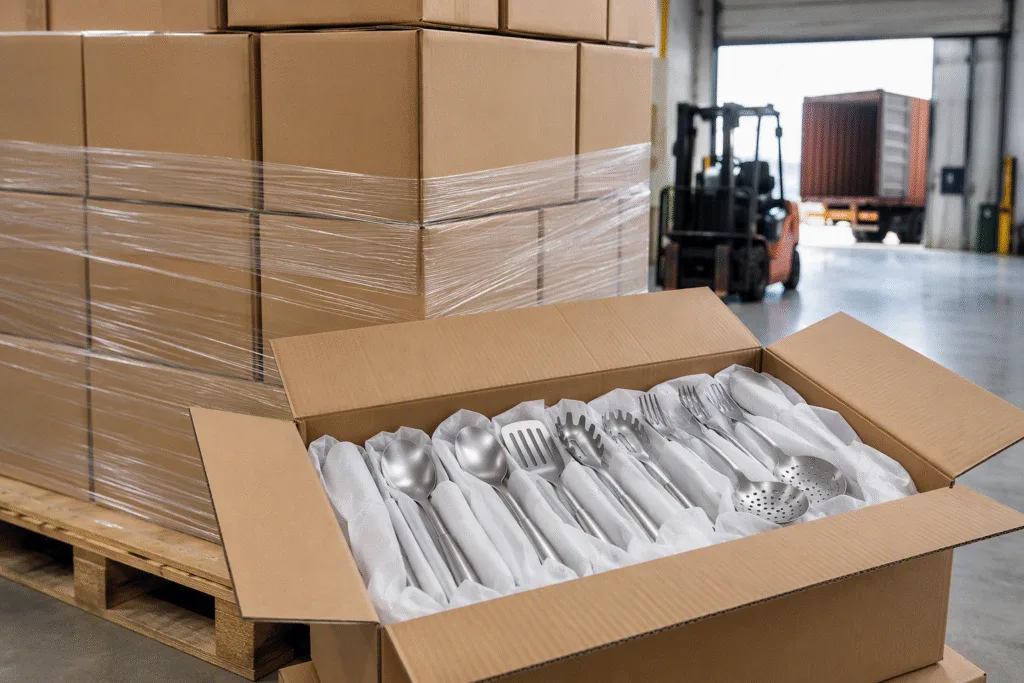
Once production is completed, buyers also need to consider international logistics.
Common commercial terms include:
- EXW
- FOB
- CIF
- DDP
The most suitable option depends on the buyer’s logistics capabilities, destination, order size, and preferred level of control.
Before shipment, buyers should also confirm:
- Carton dimensions
- Carton weight
- Packing quantity
- Shipping marks
- Commercial invoice
- Packing list
- Required shipping documents
- Delivery schedule
Good export packaging is particularly important for metal kitchen utensils because products can be scratched or damaged if they are not properly protected during transportation.
Common Mistakes When Sourcing Kitchen Utensils from China
Choosing Only by Lowest Price
The cheapest quotation may not provide the lowest total cost.
Poor quality, high defect rates, or inconsistent production can create additional expenses.
Assuming Every Supplier Is a Factory
A professional website or marketplace listing does not automatically mean the company owns production facilities.
Skipping Samples
A sample provides an opportunity to identify problems before mass production.
Not Confirming Material Specifications
Material requirements should be documented clearly before production.
Ignoring Packaging
Retail packaging and export packaging can significantly affect both cost and product condition.
Changing Specifications After Approval
Late changes can create additional costs and production delays.
Not Planning Quality Control
Quality requirements should be established before the production order rather than after problems appear.
A Practical Process for Sourcing Kitchen Utensils from China
A structured sourcing process can reduce unnecessary risk.
Step 1: Define Your Requirements
Determine product type, material, dimensions, quantity, packaging, target market, and expected price range.
Step 2: Find Potential Suppliers
Use manufacturer websites, B2B marketplaces, exhibitions, and industry contacts.
Step 3: Verify Supplier Capability
Determine whether the company is a manufacturer, trading company, or combination of both.
Step 4: Request Quotations
Send the same specifications to several suppliers so their quotations can be compared fairly.
Step 5: Evaluate Samples
Check product quality, dimensions, function, finish, and packaging.
Step 6: Confirm Specifications
Finalize material, dimensions, branding, packaging, quantity, price, and delivery terms.
Step 7: Place the Order
Confirm the purchase order and agreed production conditions.
Step 8: Monitor Production
Maintain communication with the supplier and monitor the agreed production schedule.
Step 9: Conduct Quality Inspection
Inspect products during or after production according to the agreed quality requirements.
Step 10: Arrange Shipment
Confirm final quantities, packaging, documents, and shipping arrangements before dispatch.
Frequently Asked Questions
Is China a good place to source kitchen utensils?
China offers a broad manufacturing base for kitchen utensils, including aluminum, stainless steel, zinc alloy, plastic, and other materials. The suitability of a supplier depends on its product expertise, quality, manufacturing capability, and ability to meet the buyer’s requirements.
How do I find a kitchen utensils manufacturer in China?
Buyers can search manufacturer websites, B2B platforms, trade exhibitions, and industry referrals. Potential suppliers should then be verified through samples, factory information, production capabilities, and quality-control processes.
How do I verify a Chinese kitchen utensils factory?
Depending on the order size, verification can include reviewing business information, production equipment, factory facilities, samples, certifications, export experience, and factory-audit reports.
What is the MOQ for kitchen utensils from China?
MOQ varies according to the product, material, manufacturing process, customization, and packaging requirements. Standard products usually offer more flexibility than products requiring new tooling or custom packaging.
Can I customize kitchen utensils from a Chinese manufacturer?
Yes. Depending on the manufacturer, buyers may customize dimensions, materials, surface finishes, colors, logos, packaging, components, and product structures.
How long does it take to manufacture kitchen utensils in China?
Lead time depends on the product, order quantity, customization, tooling requirements, and production schedule. Buyers should confirm both sample and mass-production lead times before placing an order.
How do I control quality when sourcing from China?
Start by defining specifications and quality requirements, approve samples before production, maintain production communication, and conduct appropriate inspections before shipment.