Table of Contents
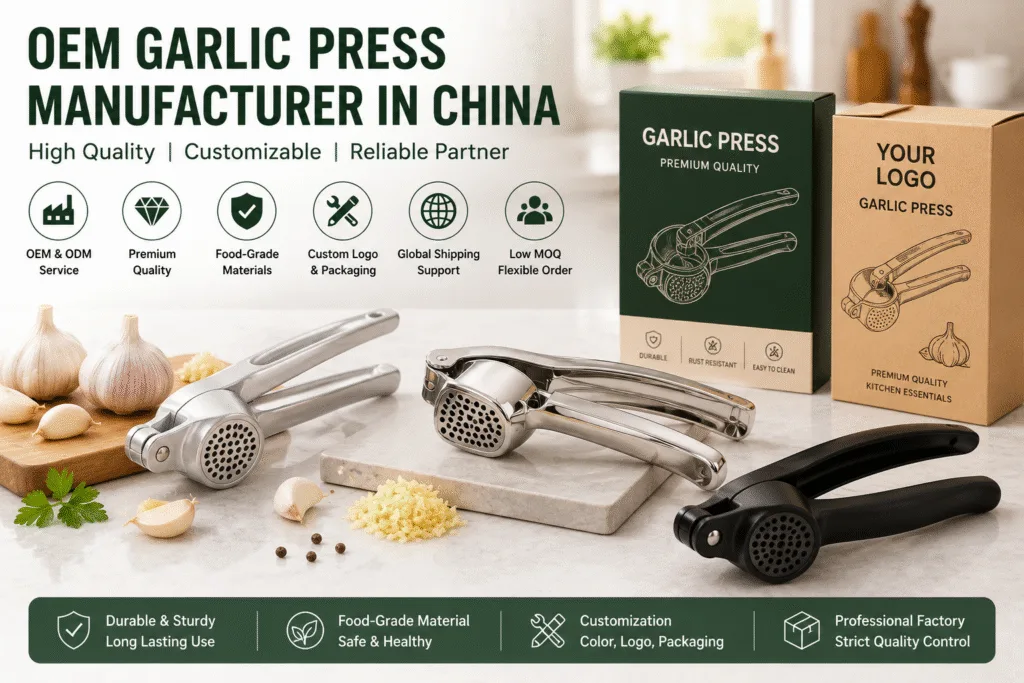
Why Garlic Presses Remain a Best-Selling Kitchen Gadget
Garlic presses have remained one of the most popular kitchen gadgets for decades. They help users prepare fresh garlic quickly and consistently, making them a practical tool for both home kitchens and commercial food service environments.
As consumers continue to seek convenience in food preparation, demand for durable and easy-to-use garlic presses remains strong. For wholesalers, distributors, and private-label brands, garlic presses offer an attractive opportunity due to their broad market appeal and relatively low production cost.
China has become a major manufacturing hub for garlic presses, providing buyers with access to experienced suppliers, flexible OEM services, and competitive pricing.
Common Types of Garlic Presses
Before selecting a supplier, buyers should understand the different types of garlic presses available in the market.
Aluminum Garlic Press
Aluminum garlic presses are widely used because they are lightweight, durable, and cost-effective.
Advantages include:
- Lightweight construction
- Affordable manufacturing costs
- Easy handling
- Suitable for powder-coated finishes
Stainless Steel Garlic Press
Stainless steel models are often positioned as premium products.
Benefits include:
- Superior corrosion resistance
- Long service life
- Modern appearance
- Easy cleaning
Heavy-Duty Garlic Presses
Heavy-duty models are designed for commercial kitchens and professional users.
These products typically feature reinforced structures and larger pressing chambers.
Multi-Function Garlic Presses
Some manufacturers offer models that include additional functions such as garlic slicing, peeling, or cleaning tools.
OEM Customization Options for Garlic Presses
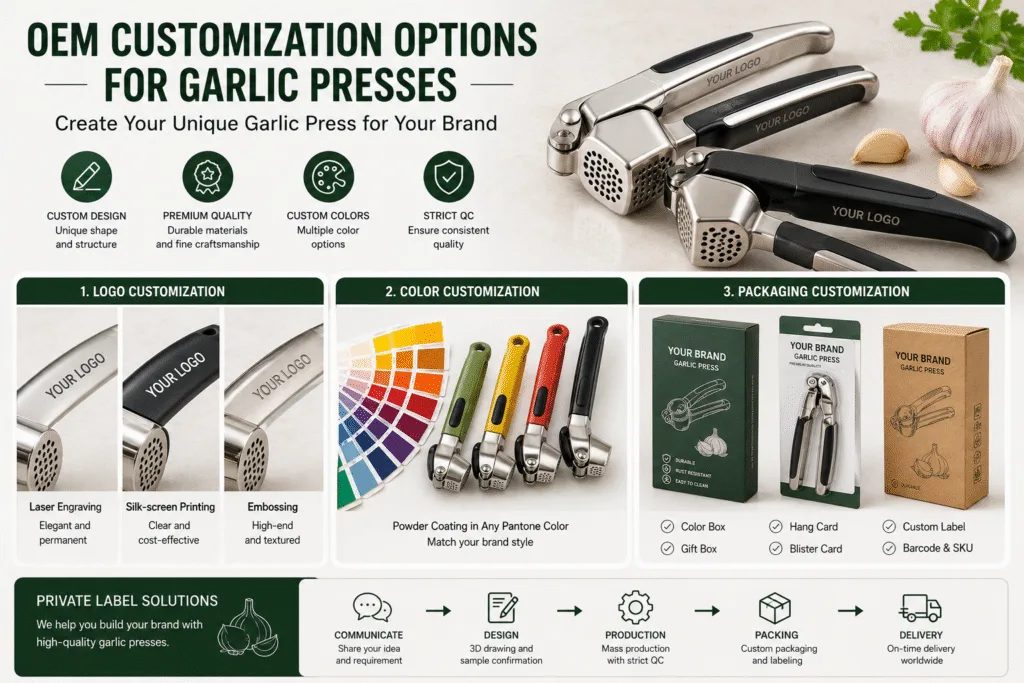
Many brands choose OEM manufacturing to create products that stand out in competitive markets.
Logo Customization
Manufacturers can apply customer logos through:
- Laser engraving
- Silk-screen printing
- Embossing
Color Customization
Powder coating and custom surface finishes allow brands to create unique product appearances.
Packaging Customization
Common packaging options include:
- Retail color boxes
- Gift boxes
- Hang cards
- Barcode labeling
Product Design Customization
Experienced suppliers can modify dimensions, handle designs, and structural details to meet customer requirements.
Materials Used in Garlic Press Manufacturing
The material used in a garlic press directly impacts durability, appearance, and customer satisfaction.
Food-Grade Aluminum
Food-grade aluminum is one of the most commonly used materials in garlic press manufacturing.
Advantages include:
- Lightweight performance
- Cost-effective production
- Excellent die-casting compatibility
- Strong structural integrity
Stainless Steel
Stainless steel offers excellent durability and corrosion resistance, making it ideal for premium product lines.
Food-Safe Surface Treatments
Surface treatments such as powder coating and anodizing can improve both appearance and food-contact safety.
Buyers should always request material specifications and compliance documentation before placing orders.
How to Evaluate a Garlic Press Manufacturer
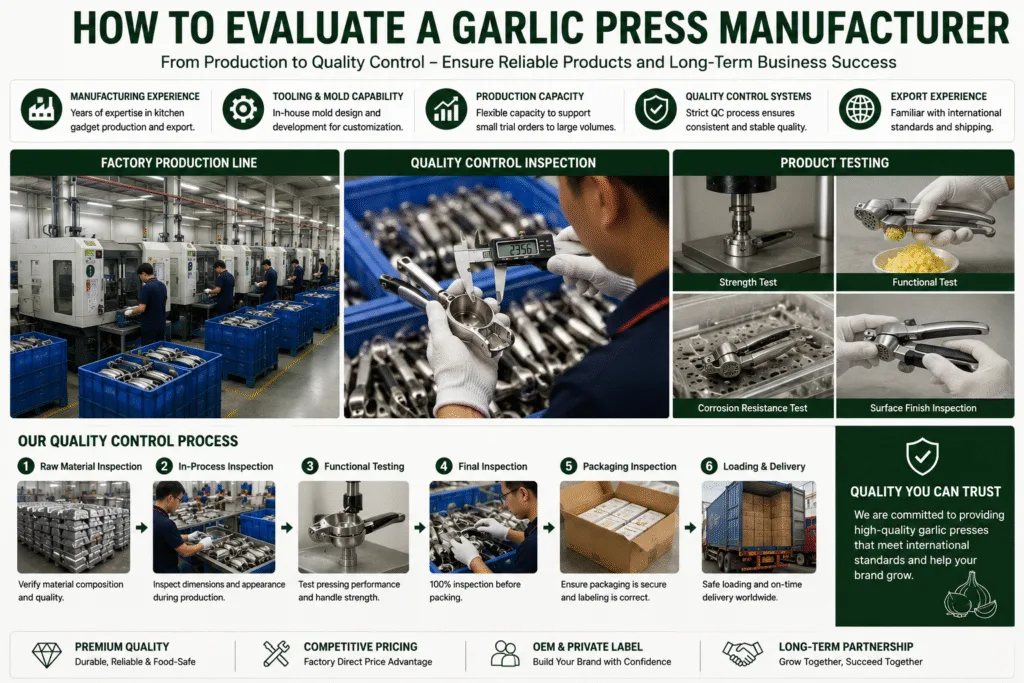
Selecting the right supplier requires careful evaluation beyond pricing.
Manufacturing Experience
Look for suppliers with proven experience in kitchen gadget manufacturing and international exports.
Tooling and Mold Development Capabilities
Manufacturers with in-house tooling capabilities can support faster product development and more efficient production.
Production Capacity
Suppliers should be able to support both small trial orders and large-volume production runs.
Quality Control Systems
Reliable manufacturers implement inspections throughout production to maintain consistency and reduce defects.
Export Experience
Experienced exporters are often better prepared to handle packaging requirements, certifications, and logistics arrangements.
Common Quality Tests for Garlic Presses
Professional manufacturers perform multiple inspections before shipment.
Strength Testing
Verifies structural durability under repeated use.
Functional Testing
Ensures garlic can be pressed efficiently without damaging the product.
Surface Finish Inspection
Checks for scratches, coating defects, and appearance issues.
Corrosion Resistance Testing
Confirms material performance under normal kitchen conditions.
Packaging Inspection
Ensures products are securely packaged for transportation and retail distribution.
Benefits of Working with an OEM Garlic Press Supplier
Partnering with an experienced OEM manufacturer provides several advantages.
These include:
- Product differentiation
- Stronger brand identity
- Better profit margins
- Flexible customization options
- Reliable production support
OEM manufacturing allows brands to develop unique products that better meet customer expectations.
Frequently Asked Questions
What is the best material for a garlic press?
Both food-grade aluminum and stainless steel are widely used. The best choice depends on your target market and product positioning.
Can I add my logo to a garlic press?
Yes. Most OEM manufacturers provide logo customization services through engraving, printing, or embossing.
What is the typical MOQ for OEM garlic presses?
MOQ requirements vary depending on product design, customization level, and packaging requirements.
How long does production take?
Production timelines depend on order quantity and customization requirements.
Can manufacturers provide FDA or LFGB documentation?
Many experienced suppliers can provide testing reports and compliance documentation for export markets.