For a growing kitchenware brand, buying an existing product and adding a logo is not always enough. When a product needs a different structure, size, mechanism, material, or appearance, OEM manufacturing can provide much greater control over the final product.
However, OEM is not automatically the best option for every buyer.
New tooling, product development, sampling, testing, and production planning can increase the initial investment. For smaller businesses or products with uncertain demand, a standard product or private-label program may be more practical.
The key question is not simply what OEM means. It is when OEM kitchenware manufacturing makes commercial sense and what a buyer needs to prepare before development begins.
What Is OEM Kitchenware Manufacturing?
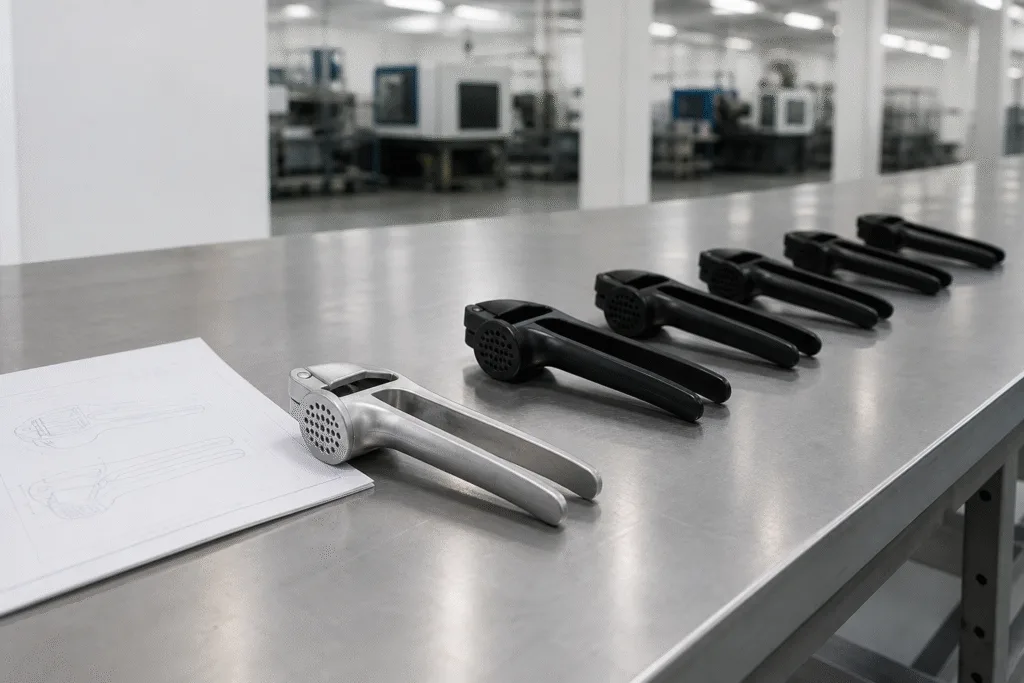
OEM kitchenware manufacturing means a manufacturer produces kitchen products according to specifications provided or approved by a brand or buyer.
Depending on the project, the buyer may provide a complete product design, technical drawings, samples, or only the basic product requirements.
The manufacturer may then handle:
- Engineering evaluation
- Mold development
- Prototype or sample production
- Material selection
- Die casting or other manufacturing processes
- Machining
- Surface finishing
- Assembly
- Quality control
- Packaging
- Mass production
The level of responsibility can vary between projects.
For a simple OEM project, the manufacturer may mainly produce a buyer’s established design. For a new product, the manufacturer may work with the buyer throughout the engineering and tooling process.
When Should a Brand Choose OEM Manufacturing?
OEM is generally more suitable when a buyer needs control over the actual product rather than only its branding.
When Existing Products Are Not Enough
If standard products already available in the market meet your requirements, developing a new OEM product may not provide enough additional value.
But if existing products have problems with dimensions, functionality, ergonomics, appearance, or manufacturing quality, OEM development can provide a way to address those limitations.
When Product Differentiation Matters
Brands competing only through price can be vulnerable to similar products from other suppliers.
A unique product structure, handle design, size, mechanism, or functional feature can create greater differentiation.
OEM is particularly relevant when the product itself is part of the brand’s competitive advantage.
When Order Volume Supports Development Costs
OEM projects may involve tooling and engineering expenses before mass production begins.
The larger the expected production volume, the easier it can be to spread these development costs across individual units.
For this reason, buyers should estimate expected annual demand before deciding whether a new OEM project is commercially reasonable.
When a Product Will Be Sold Long Term
If a product is expected to remain in a brand’s product line for several years, investing in dedicated development may make more sense than repeatedly purchasing similar standard products.
Long-term product programs can justify the additional investment required for tooling and engineering.
OEM vs Private Label vs Custom Manufacturing
These manufacturing models are related but serve different purposes.
| Model | Existing Product | Product Modification | New Mold | Branding | Best For |
|---|---|---|---|---|---|
| Wholesale | Yes | No | No | Limited | Fast purchasing |
| Private Label | Yes | Limited | Usually No | Yes | Brand development |
| Custom | Usually | Yes | Sometimes | Yes | Product differentiation |
| OEM | Not necessarily | Extensive | Often | Yes | Unique product development |
Private label generally focuses on putting a brand’s identity onto an existing product.
Custom manufacturing involves modifying an existing product to meet specific requirements.
OEM manufacturing can involve developing a product according to the buyer’s technical requirements, including new tooling and production processes.
The right option depends on the level of control the buyer needs and the expected commercial return.
What Can Be Developed Through OEM Kitchenware Manufacturing?
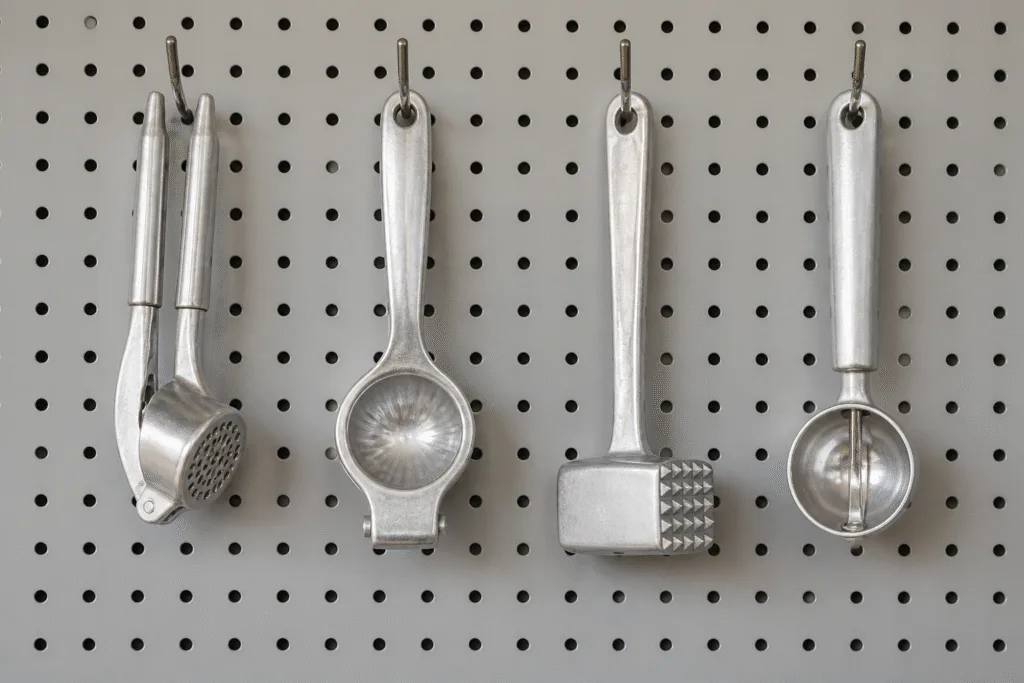
OEM development can cover many parts of a kitchen product.
Product Dimensions
Dimensions can affect usability, packaging, shipping cost, and production requirements.
A buyer may specify:
- Overall length
- Width
- Height
- Product weight
- Handle dimensions
- Working-head dimensions
- Capacity
For metal products, dimensional changes may also affect mold design and casting performance.
Material Selection
Material affects strength, weight, durability, appearance, and production cost.
Depending on the product, manufacturers may work with:
- Aluminum alloy
- Zinc alloy
- Stainless steel
- Engineering plastics
- Composite materials
For die-cast kitchen products, aluminum alloy can be useful when the product needs a combination of low weight, strength, and efficient mass production.
Product Structure
OEM development may involve changes to the actual structure of the product.
This can include:
- Handle construction
- Working mechanism
- Connection points
- Moving components
- Product thickness
- Internal cavities
- Functional surfaces
Structural changes should be evaluated by an engineer before tooling begins.
Handle Design
The handle is particularly important for hand-operated kitchen products.
Buyers may specify:
- Handle shape
- Grip dimensions
- Surface texture
- Weight distribution
- Material
- Ergonomic features
For products such as garlic presses, lemon squeezers, and meat tenderizers, handle design can directly affect user comfort and operating force.
Surface Finish
The final appearance can be customized through different finishing processes.
Depending on the material and application, options may include:
- Polishing
- Brushing
- Matte finishing
- Coating
- Anodizing
- Custom colors
The selected finish should be evaluated for appearance, durability, cleaning requirements, and applicable food-contact considerations.
Branding and Packaging
OEM projects can also include brand-specific logos and packaging.
Possible options include:
- Laser engraving
- Embossed logos
- Printed logos
- Custom product labels
- Retail boxes
- Hang cards
- Gift packaging
- Export cartons
Branding is normally easier to change than the physical structure of the product.
OEM Kitchenware Materials and Manufacturing Processes
A manufacturer’s production capability has a major influence on the success of an OEM project.
Aluminum Alloy Die Casting
Aluminum die casting is suitable for producing metal components with repeatable shapes and relatively efficient mass production.
The process involves injecting molten aluminum alloy into a mold under controlled pressure.
For kitchen products, die casting can be used for components such as:
- Garlic press bodies
- Lemon squeezer components
- Ice cream scoop bodies
- Meat tenderizer heads
- Other metal kitchen tools
Product design must account for factors such as wall thickness, draft angles, shrinkage, ejection, and mold structure.
Zinc Alloy Manufacturing
Zinc alloy can also be used for certain kitchen products and components where weight, casting characteristics, and surface appearance are important considerations.
The appropriate material should be selected according to the product’s functional requirements rather than simply its appearance.
CNC Machining and Secondary Processing
Some OEM products require additional machining after casting or forming.
CNC machining can be used to achieve more precise dimensions or create specific functional surfaces.
Other secondary processes may include drilling, trimming, polishing, and assembly.
Surface Finishing
Finishing is an important part of the manufacturing process because it affects both appearance and product protection.
The manufacturer should confirm the required finish during the sample-development stage rather than leaving it until mass production.
How OEM Kitchenware Product Development Works
A well-managed OEM project normally follows a defined development process.
Step 1: Define Product Requirements
The buyer should provide as much information as possible, including:
- Product application
- Target market
- Dimensions
- Material
- Expected quantity
- Target price
- Functional requirements
- Packaging
- Branding
Step 2: Design Review
The manufacturer evaluates the design from a production perspective.
Potential issues involving material, structure, tooling, assembly, or manufacturing cost should be identified before production begins.
Step 3: Engineering Evaluation
Engineers determine whether the proposed design can be manufactured efficiently and consistently.
For die-cast products, this stage is particularly important because product geometry directly affects mold design and casting quality.
Step 4: Mold Development
If existing tooling cannot be used, a new mold may need to be developed.
The mold should be designed around the final approved product specifications.
Step 5: Prototype or Sample
A sample is produced for evaluation.
The buyer should check dimensions, weight, appearance, function, finish, and assembly.
Step 6: Sample Testing
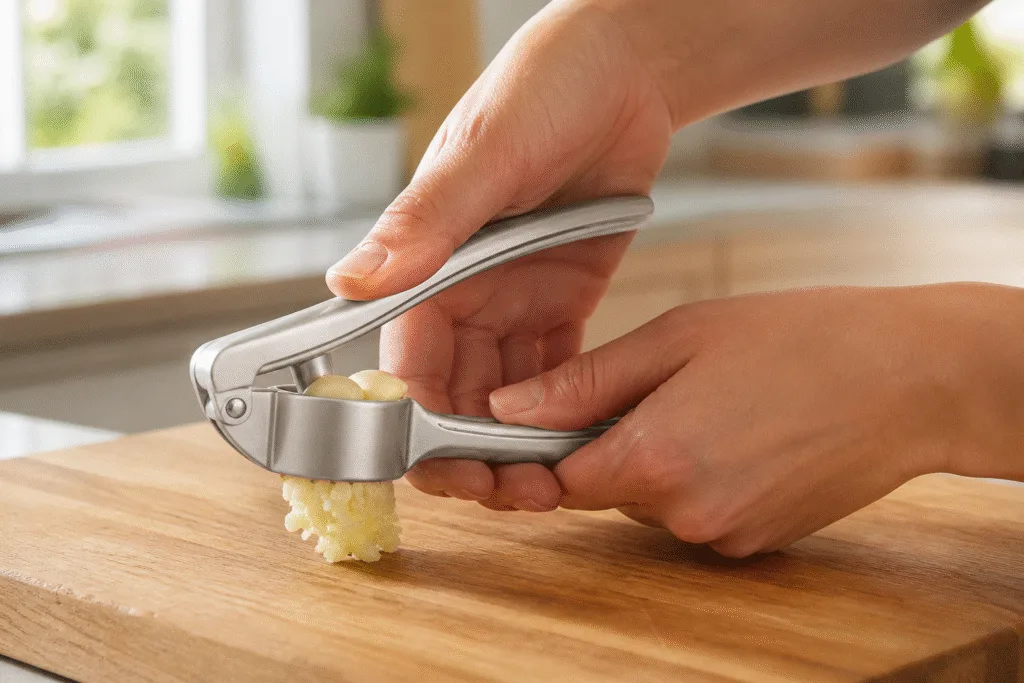
The product should be tested under realistic conditions.
Problems discovered at this stage are generally easier and less expensive to correct than problems discovered after mass production begins.
Step 7: Specification Approval
Once the buyer approves the sample, the final specifications should be documented.
The approved sample should become the reference standard for production.
Step 8: Mass Production
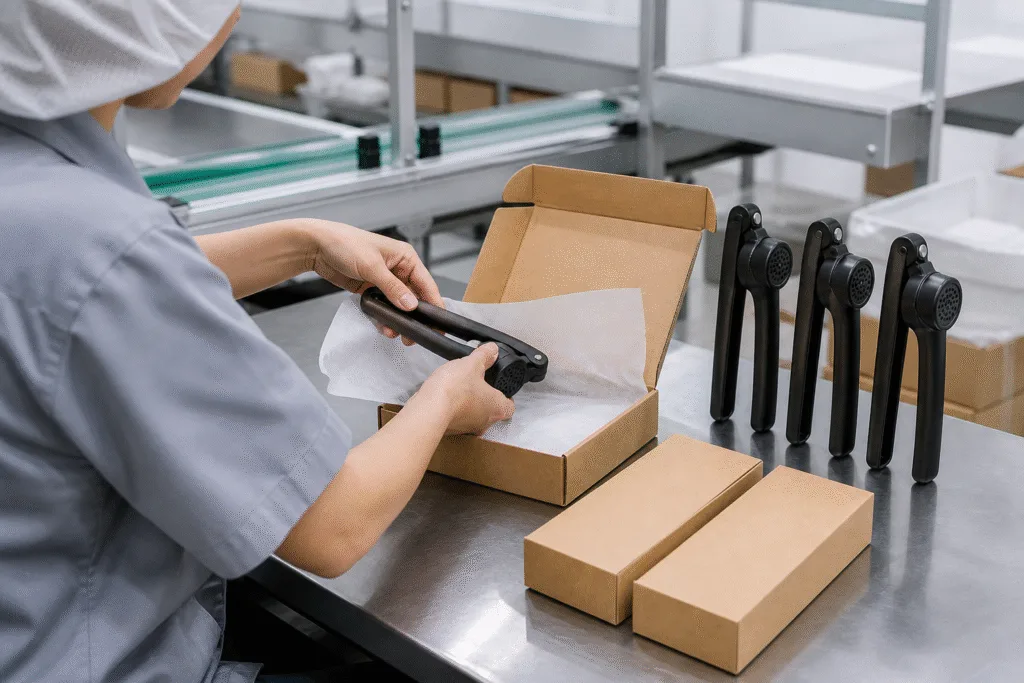
After approval, the manufacturer moves into production according to the agreed quantity and schedule.
Step 9: Quality Control
Production should be checked against the approved specifications.
Step 10: Packaging and Shipment
Finished products are packaged according to the agreed retail and export requirements before shipment.
What Should B2B Buyers Prepare Before Starting an OEM Project?
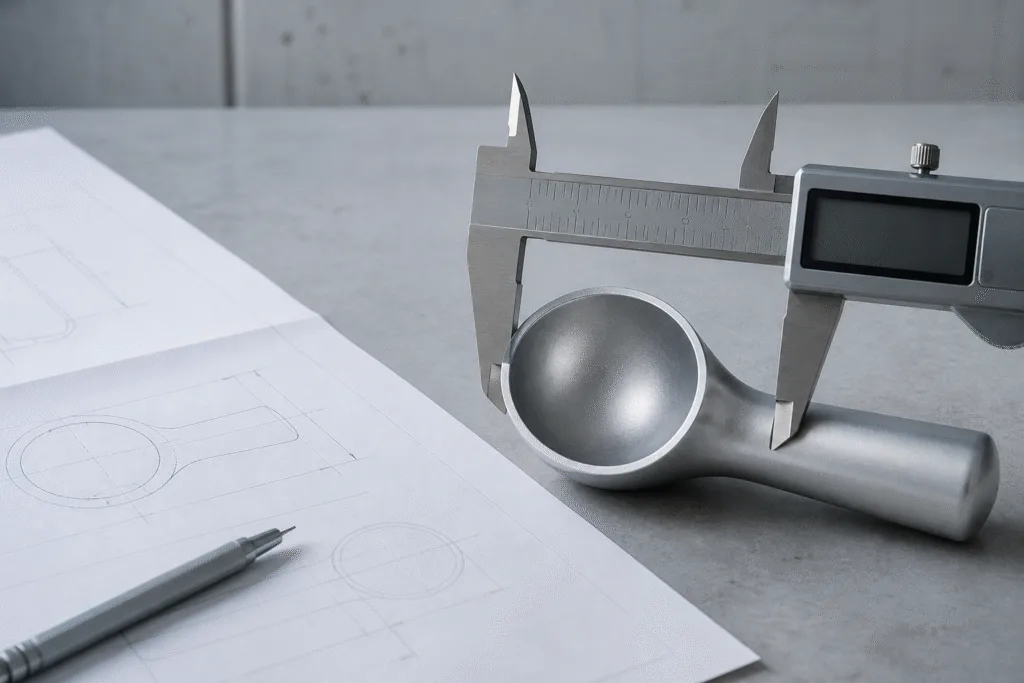
Good preparation can significantly reduce development problems.
Ideally, buyers should provide:
- Product drawings
- 3D files
- Product dimensions
- Material requirements
- Functional specifications
- Surface finish
- Logo requirements
- Packaging requirements
- Target market
- Estimated order volume
- Target price
Not every buyer will have complete technical drawings.
In that situation, it is important to find out whether the manufacturer can provide engineering support and help convert the product concept into a manufacturable design.
How Much Does OEM Kitchenware Manufacturing Cost?
OEM costs vary significantly from one project to another.
The total development cost may include:
Product Development + Mold + Material + Processing + Surface Finish + Assembly + Packaging + Inspection
Several factors can influence the final price.
Product Complexity
More complex structures generally require more engineering and more complicated tooling.
Mold Design
New tooling can represent a significant initial investment, especially when the product contains complex structures or multiple components.
Material
Material type, product weight, and material usage all influence unit cost.
Order Quantity
Larger production volumes can reduce the tooling cost per unit and may improve manufacturing efficiency.
Surface Finish
Special finishing processes can add processing costs.
Packaging
Custom packaging, inserts, labels, and retail boxes can also affect the overall project cost.
For B2B buyers, the correct comparison is not simply the lowest unit price.
The more useful metric is the total project cost and expected cost per finished product over the planned production volume.
How Long Does OEM Kitchenware Development Take?
There is no universal OEM development timeline.
An existing product with limited modifications may move relatively quickly.
A new product requiring engineering, new molds, multiple samples, and testing will naturally take longer.
The main factors include:
- Design complexity
- Mold development
- Material
- Number of components
- Sampling requirements
- Testing
- Buyer approval speed
- Production capacity
Buyers should establish a development schedule before committing to a launch date.
How to Choose an OEM Kitchenware Manufacturer
OEM manufacturing requires more than the ability to produce a standard product.
Mold Development Capability
A manufacturer with strong mold-development capabilities can evaluate product designs and manage tooling more efficiently.
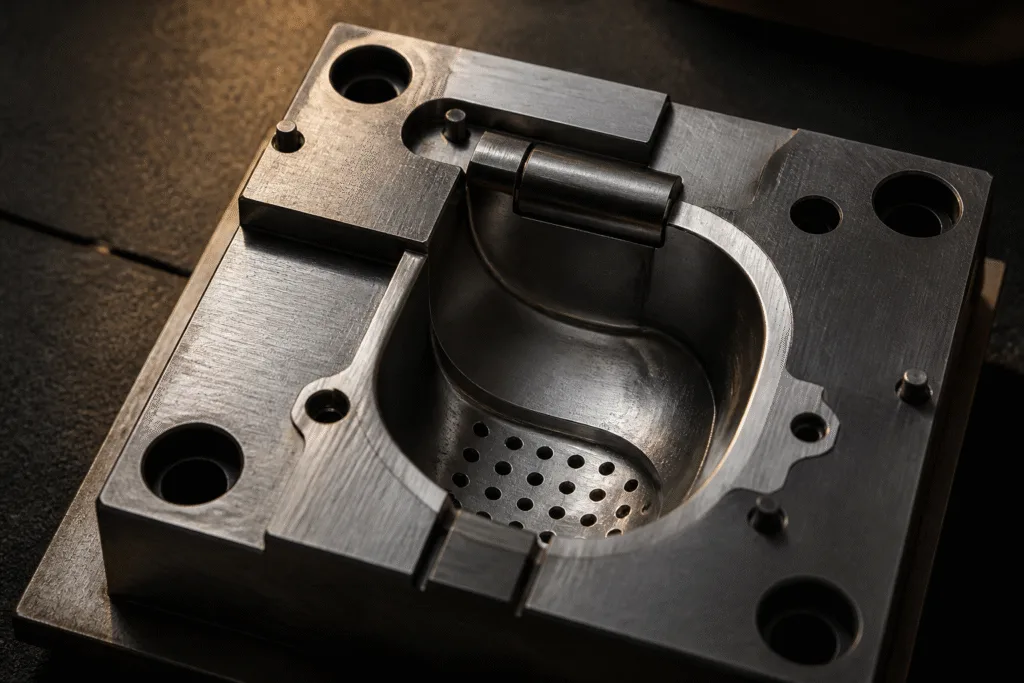
Engineering Support
An experienced engineering team can identify potential manufacturing problems before tooling begins.
Manufacturing Equipment
The manufacturer should have suitable production equipment for the required materials and processes.
For aluminum die-cast products, buyers should understand what die-casting capacity and secondary-processing capabilities are available.
Sampling Capability
A reliable supplier should have a clear process for developing, modifying, and approving samples.
Quality Control
Quality control should cover raw materials, production, finishing, assembly, and final inspection.
Assembly Capability
If a product contains multiple components, in-house or well-controlled assembly capability can help maintain consistency.
Packaging Capability
OEM programs often require custom packaging, so packaging coordination should be considered part of the supplier evaluation.
Export Experience
Experience with international customers can help reduce problems involving documentation, packaging, shipping, and market-specific requirements.
OEM Examples for Metal Kitchen Products
OEM development can be applied to many types of metal kitchen products.
OEM Garlic Press
An OEM garlic press may involve customized handle geometry, pressing chamber dimensions, surface finishing, branding, and packaging.
If the buyer changes the internal mechanism or major structural components, new tooling may be required.
OEM Lemon Squeezer
A lemon squeezer can be developed around specific fruit sizes, handle dimensions, pressing geometry, material, and surface treatment.
The manufacturer should evaluate the design for both usability and casting requirements.
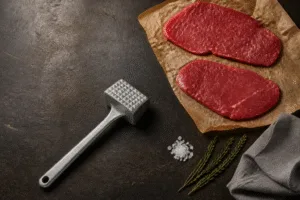
OEM Meat Tenderizer
For a meat tenderizer, important considerations include head weight, head geometry, handle design, balance, and structural strength.
The final design should be tested before mass production.
OEM Ice Cream Scoop
An ice cream scoop can be developed around specific scoop dimensions, handle design, material, surface finish, and packaging requirements.
Foodservice buyers may prioritize durability and repeated-use performance, while retail brands may place greater emphasis on appearance and packaging.
Common OEM Kitchenware Manufacturing Mistakes
Starting Tooling Before Finalizing the Design
Changing the design after mold production begins can create additional cost and delay.
Choosing Only by Unit Price
A supplier with a low initial quotation may not provide the best overall development cost.
Not Defining Material Specifications
Material requirements should be agreed upon before production.
Skipping Prototype Testing
A product may look correct while still having functional or structural problems.
Changing Specifications After Sample Approval
Late changes can affect tooling, production scheduling, and quality consistency.
Underestimating Packaging Requirements
Packaging should be considered early, especially for retail products.
Not Defining Quality Standards
Quality requirements should be documented before mass production begins.
Ignoring the Total Development Cost
Tooling, samples, packaging, inspection, and engineering can all contribute to the final project cost.
When Is OEM Not the Right Choice?
OEM manufacturing is not always necessary.
A buyer may be better suited to private label or standard wholesale when:
- The product already meets market requirements
- The expected order quantity is small
- The market has not been tested
- Only branding needs to be changed
- The buyer needs a product quickly
- The expected sales volume cannot justify tooling costs
For a new brand testing its first products, starting with an existing design and adding branding may reduce risk.
Once demand has been validated, developing a dedicated OEM product may become more attractive.
FAQ
What is OEM kitchenware manufacturing?
OEM kitchenware manufacturing involves producing kitchen products according to specifications established or approved by a buyer. Depending on the project, it can include engineering, tooling, sampling, manufacturing, finishing, assembly, and packaging.
What is the difference between OEM and private label kitchenware?
Private label generally uses an existing product with the buyer’s branding. OEM can involve much greater control over product design, structure, materials, tooling, and manufacturing specifications.
Does OEM kitchenware require a new mold?
Not always. If an existing product and mold meet the buyer’s requirements, new tooling may not be necessary. New or significantly modified product structures often require new tooling.
How much does OEM kitchenware manufacturing cost?
Costs depend on product complexity, material, tooling, order quantity, finishing, packaging, testing, and other requirements. Buyers should evaluate the total development and production cost rather than unit price alone.
What is the MOQ for OEM kitchenware?
MOQ varies by manufacturer and project. Products requiring new molds and significant development generally require higher production volumes to make the initial investment commercially reasonable.
How long does OEM kitchenware development take?
The timeline depends on design complexity, tooling, sampling, testing, buyer approvals, and production capacity. Existing products with limited changes can generally move faster than completely new product developments.
Can aluminum kitchenware be manufactured through OEM?
Yes. Aluminum alloy can be used for various OEM kitchen products, particularly products manufactured through die casting. The product design should be evaluated for casting, tooling, finishing, and functional requirements before production.
How do I choose an OEM kitchenware manufacturer?
Evaluate the manufacturer’s engineering capability, mold development, production equipment, sampling process, quality control, assembly, packaging, and export experience. For complex projects, direct manufacturing capability is particularly important.
Conclusion
OEM kitchenware manufacturing gives B2B brands greater control over the products they sell.
It can be the right choice when standard products cannot meet market requirements, when product differentiation is important, or when a brand expects sufficient long-term sales volume to justify development and tooling costs.
However, OEM should not be selected simply because it sounds more customized.
The decision should be based on product requirements, expected volume, development costs, tooling investment, production capability, and long-term commercial value.
For buyers developing aluminum kitchen products, a manufacturer with engineering, mold development, die-casting, finishing, assembly, quality control, and packaging capabilities can simplify the development process and reduce communication between multiple suppliers.
The most successful OEM projects begin with a clear product specification, realistic commercial expectations, thorough sample approval, and a manufacturer capable of turning the design into consistent mass production.