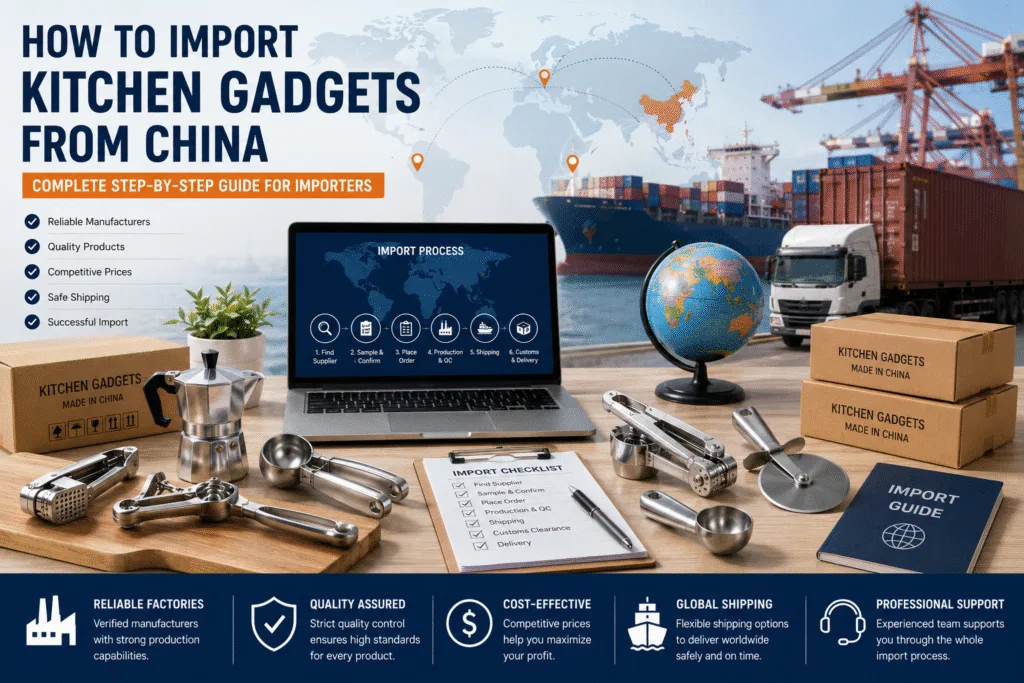
China is one of the world’s largest suppliers of kitchen gadgets, serving importers, wholesalers, retailers, e-commerce brands, and hospitality businesses across global markets. From aluminum alloy garlic presses and lemon squeezers to pizza cutters and ice scoops, Chinese manufacturers provide a wide range of products with flexible OEM and private-label services.
However, successful importing involves much more than finding a supplier with a competitive price. Buyers must understand supplier selection, product development, quality control, shipping terms, customs procedures, and logistics planning.
This guide explains the complete import process to help you reduce risks and build a reliable supply chain.
Why Import Kitchen Gadgets from China?
China has developed one of the world’s most efficient manufacturing ecosystems for kitchenware.
Key advantages include:
- Competitive manufacturing costs
- Advanced production technology
- Mature supply chains
- Experienced OEM manufacturers
- Large production capacity
- Global export experience
These strengths make China a preferred sourcing destination for kitchen gadget brands worldwide.
Step 1: Define Your Product Requirements
Before contacting suppliers, prepare a detailed product specification.
Include information such as:
- Product dimensions
- Materials
- Surface finish
- Packaging requirements
- Brand logo
- Color options
- Quantity
- Target market
Clear specifications help manufacturers provide more accurate quotations and reduce misunderstandings later.
Step 2: Find Reliable Manufacturers
Finding the right supplier is one of the most important stages of the import process.
Evaluate manufacturers based on:
- Years of experience
- Manufacturing capability
- OEM services
- Export experience
- Production capacity
- Quality management
- Customer communication
Whenever possible, work directly with manufacturers rather than intermediaries to improve communication and quality consistency.
Step 3: Request Product Samples
Never place a large order without evaluating samples first.
Samples allow buyers to assess:
- Material quality
- Product appearance
- Dimensions
- Functionality
- Surface finishing
- Packaging quality
If adjustments are needed, discuss them before mass production begins.
Step 4: Confirm OEM & Private Label Requirements
Most kitchen gadget manufacturers support OEM production.
Typical customization options include:
- Laser logo engraving
- Custom colors
- Retail packaging
- User manuals
- Barcode labels
- Gift boxes
- Carton printing
Confirm all customization details in writing before production starts.
Step 5: Negotiate MOQ, Pricing & Payment Terms
Price should be evaluated together with quality and service.
Important topics include:
- Minimum Order Quantity (MOQ)
- Unit pricing
- Tooling costs
- Sample costs
- Payment methods
- Production lead time
A slightly higher price from an experienced manufacturer may provide better long-term value than the lowest quotation.
Step 6: Approve the Pre-Production Sample
Before mass production begins, request a final pre-production sample.
Check:
- Dimensions
- Logo placement
- Surface finish
- Product function
- Packaging
- Color consistency
Once approved, this sample becomes the production reference.
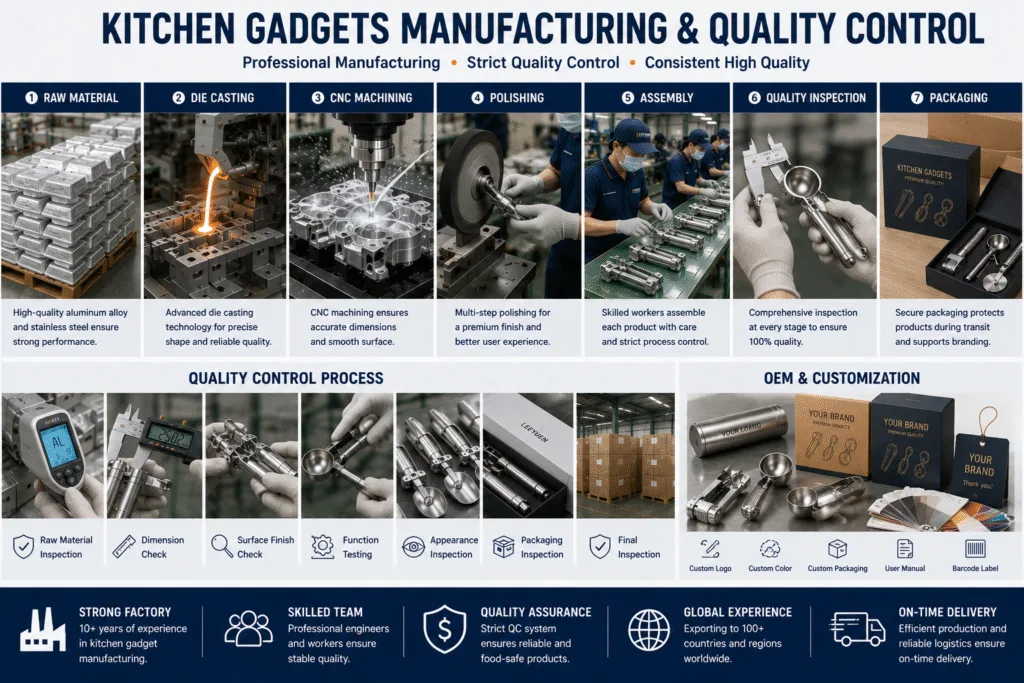
Step 7: Monitor Production & Quality Control
Professional manufacturers perform inspections throughout production rather than only before shipment.
Quality inspections may include:
- Raw material inspection
- Die-casting inspection
- CNC machining inspection
- Surface finish inspection
- Assembly inspection
- Functional testing
- Packaging inspection
Regular communication with your supplier helps ensure production stays on schedule.
Step 8: Choose the Right Shipping Terms
Understanding Incoterms helps avoid unexpected costs.
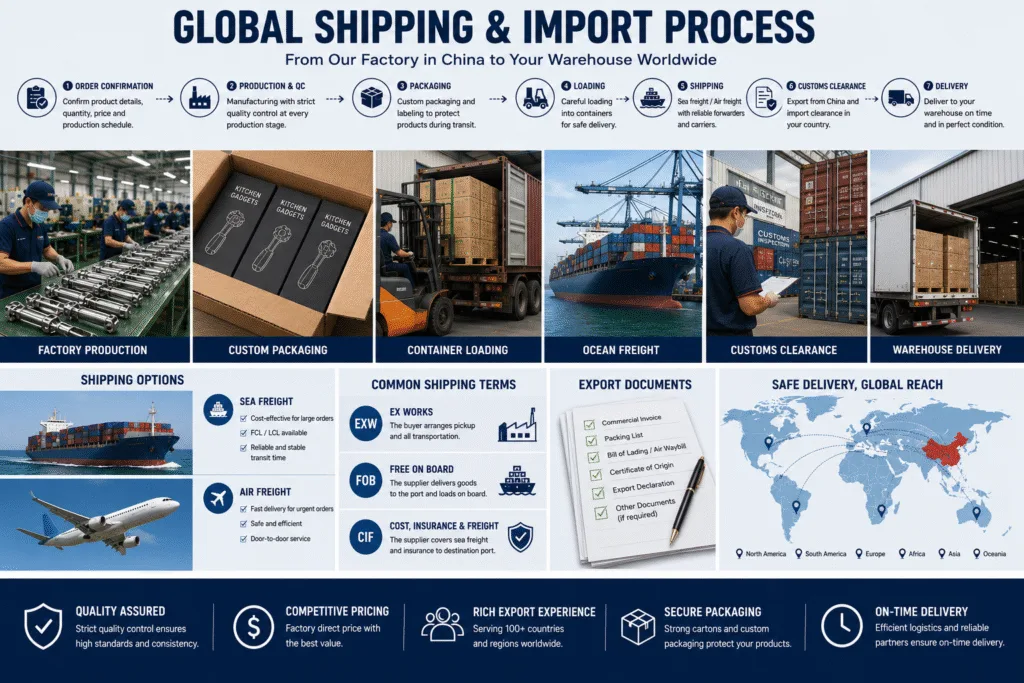
Common options include:
EXW (Ex Works)
The buyer arranges transportation from the factory.
FOB (Free On Board)
The supplier delivers the goods to the port and loads them onto the vessel.
CIF (Cost, Insurance and Freight)
The supplier covers ocean freight and insurance to the destination port.
Discuss shipping responsibilities carefully before confirming the order.
Step 9: Arrange Logistics & Customs Clearance
After production is completed, organize transportation and customs documentation.
Typical documents include:
- Commercial Invoice
- Packing List
- Bill of Lading or Air Waybill
- Certificate of Origin (if required)
- Other documents required by the destination country
Working with an experienced freight forwarder can simplify this process.
Step 10: Inspect Goods Upon Arrival
When the shipment arrives, inspect the products promptly.
Check:
- Quantity
- Packaging condition
- Product quality
- Functionality
- Branding accuracy
Address any issues with the supplier as soon as possible.
Common Mistakes to Avoid
Many importing problems can be prevented by avoiding these common mistakes:
- Selecting suppliers based only on price
- Skipping sample approval
- Ignoring quality inspections
- Failing to confirm packaging details
- Choosing inappropriate shipping terms
- Allowing insufficient production time
- Poor communication during production
Planning ahead reduces risks and improves sourcing success.
FAQ
Is it better to buy directly from a manufacturer?
In many cases, yes. Working directly with a manufacturer can improve communication, product consistency, and customization options.
What is the typical MOQ?
MOQ varies depending on the product, production process, and level of customization. Always confirm the minimum order quantity before placing an order.
Should I request product samples?
Yes. Samples help verify product quality, workmanship, and functionality before committing to mass production.
Which shipping term is most commonly used?
FOB is widely used in international trade, but the most suitable Incoterm depends on your logistics arrangements and business needs.