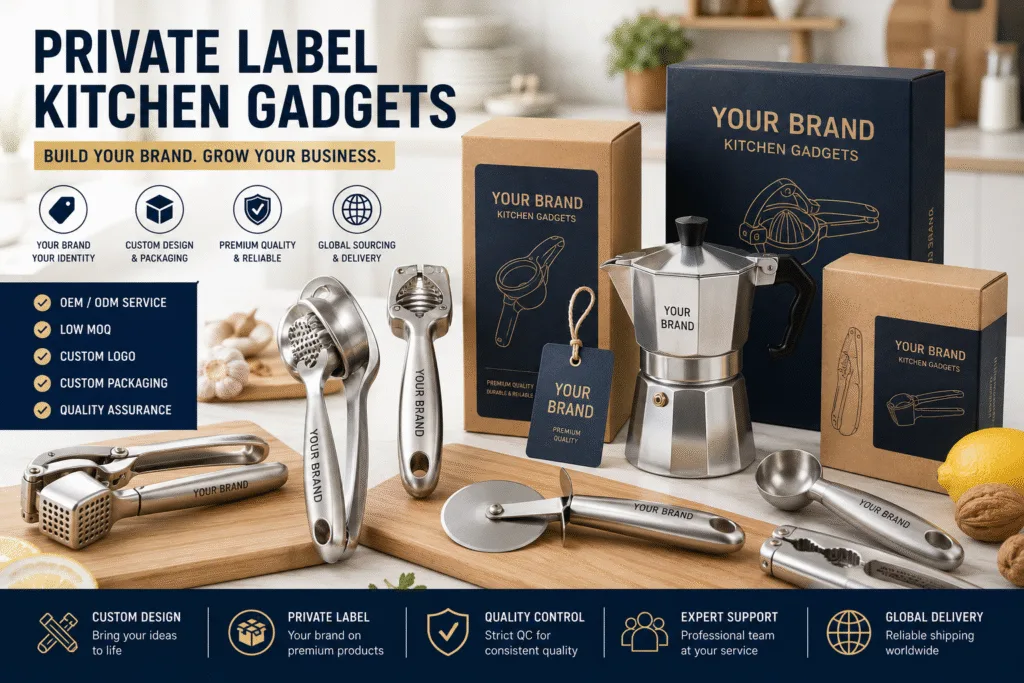
Private label kitchen gadgets have become one of the fastest-growing opportunities in the global kitchenware market. More retailers, distributors, Amazon sellers, and e-commerce brands are choosing to launch their own branded products instead of selling generic items.
Working with an experienced OEM manufacturer allows businesses to customize products, packaging, and branding while maintaining product quality and competitive pricing. Whether you are starting a new kitchenware business or expanding an existing product line, understanding the private label process is essential for long-term success.
This guide explains how private label kitchen gadgets are developed, what to consider before launching a brand, and how to choose the right manufacturing partner.
What Are Private Label Kitchen Gadgets?
Private label kitchen gadgets are products manufactured by a supplier but sold under your own brand name.
Unlike generic products, private label products can be customized with:
- Company logo
- Brand colors
- Retail packaging
- User manuals
- Barcode labels
- Product inserts
- Surface finishes
Customers recognize your brand instead of the manufacturer, helping you build long-term customer loyalty.
Why Choose Private Label Kitchen Gadgets?
Private label products provide several advantages for growing businesses.
Build a Strong Brand Identity
Creating your own brand helps customers remember your products and increases brand recognition over time.
A recognizable brand also allows businesses to expand product categories more easily.
Improve Profit Margins
Private label products generally offer higher profit potential than reselling generic products.
By controlling branding and pricing, companies can create greater value while reducing direct price competition.
Differentiate Your Products
Custom designs, packaging, and branding help products stand out in crowded online marketplaces and retail stores.
Small design improvements can create a stronger customer experience and improve repeat purchases.
Choosing the Right Kitchen Gadgets
Not every product is suitable for private labeling.
Popular private label kitchen gadgets include:
- Garlic Presses
- Lemon Squeezers
- Pizza Cutters
- Ice Cream Scoops
- Ice Scoops
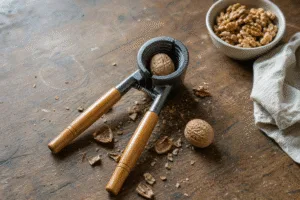
- Nutcrackers
- Vegetable Peelers
- Meat Tenderizers
When selecting products, consider:
- Market demand
- Production cost
- Product durability
- Ease of shipping
- Long-term sales potential
Finding a Reliable OEM Manufacturer
Your manufacturing partner directly affects product quality and customer satisfaction.
Evaluate manufacturers based on:
- Manufacturing experience
- OEM capabilities
- Mold development
- Production capacity
- Quality control
- Export experience
- Communication efficiency
Factories with integrated production systems usually provide better consistency throughout the project.
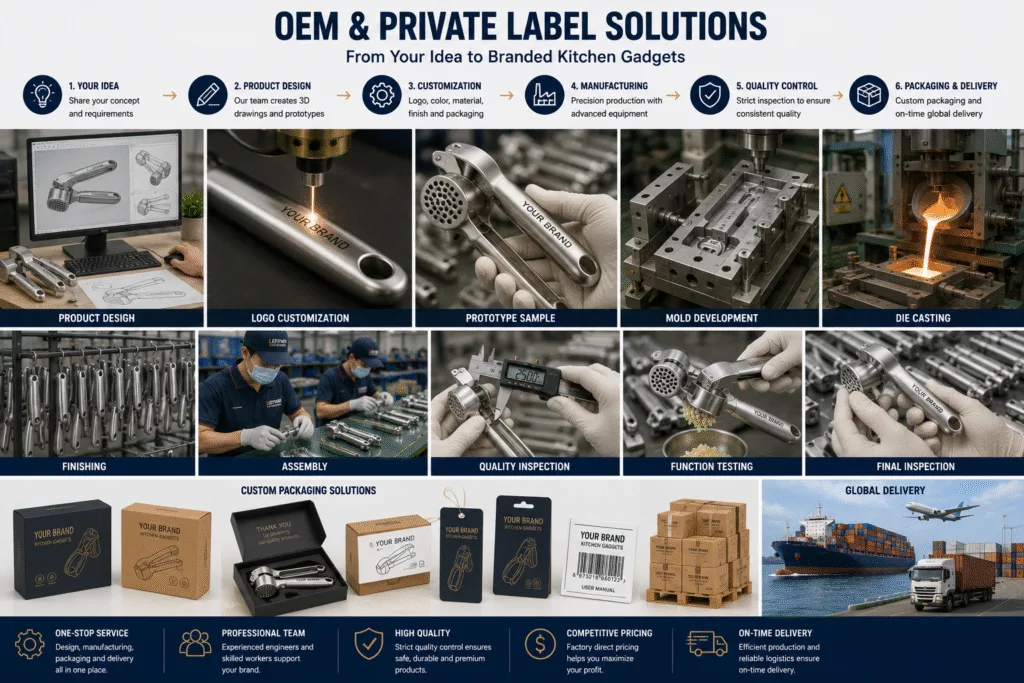
Product Design & Customization
One of the biggest advantages of private labeling is product customization.
Manufacturers often provide:
- Product color customization
- Surface treatment options
- Handle design modifications
- Logo engraving
- Product size adjustments
- Material recommendations
Good design not only improves appearance but also enhances functionality and user experience.
Logo Branding Options
There are several ways to display your brand on kitchen gadgets.
Common methods include:
- Laser engraving
- Pad printing
- Screen printing
- Embossed logos
- Molded logos
The most suitable method depends on the product material and desired appearance.
Custom Packaging Solutions
Packaging is often the first thing customers notice.
Professional manufacturers usually offer:
- Color boxes
- Gift boxes
- Kraft packaging
- Eco-friendly packaging
- Instruction manuals
- Product inserts
- Barcode labels
- Master cartons
Well-designed packaging increases perceived product value and strengthens brand identity.
Quality Control Throughout Production
Private label products should maintain consistent quality from the first order to future production runs.
Reliable manufacturers inspect:
- Raw materials
- Mold accuracy
- Die-cast components
- CNC machining
- Surface finishing
- Assembly
- Packaging
Consistent quality protects your brand reputation and reduces customer complaints.
MOQ and Pricing Considerations
Minimum Order Quantity (MOQ) depends on:
- Product type
- Customization level
- Packaging requirements
- Production process
While lower MOQs reduce initial investment, larger orders often achieve better unit pricing.
Discuss production costs and tooling fees before confirming the project.
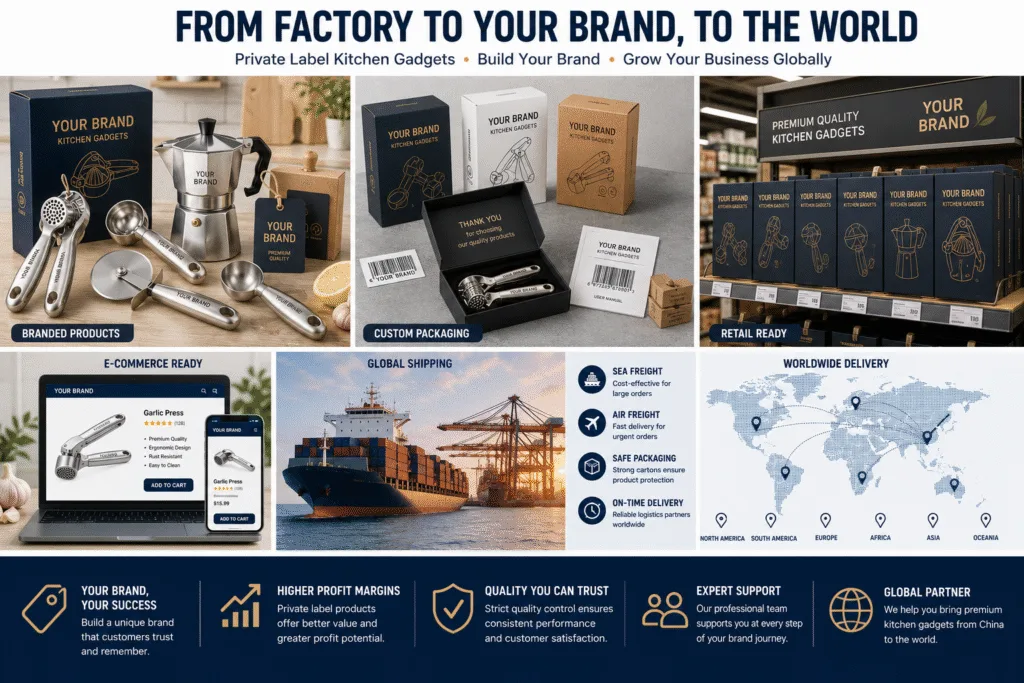
Preparing Your Brand for Market
Launching a private label product involves more than manufacturing.
Successful brands also invest in:
- Product photography
- Marketing materials
- Instruction manuals
- Social media promotion
- E-commerce listings
- Customer support
A complete branding strategy helps products stand out in competitive markets.
Common Mistakes to Avoid
Many new private label brands experience unnecessary challenges.
Common mistakes include:
- Choosing suppliers based only on price
- Skipping sample approval
- Ignoring packaging quality
- Failing to register trademarks
- Poor communication during development
- Overlooking quality inspections
Planning every stage carefully improves product consistency and customer satisfaction.
FAQ
What is the difference between OEM and private label?
OEM manufacturing focuses on producing products according to the customer’s specifications. Private label refers to selling those products under your own brand. Many manufacturers provide both services.
Can I customize the packaging?
Yes. Most professional manufacturers offer custom packaging, logo printing, color boxes, and barcode labeling.
Do I need a large MOQ?
MOQ varies by product and customization requirements. Discuss the minimum order quantity with your manufacturer before production.
Is private labeling suitable for Amazon sellers?
Yes. Private label products allow Amazon sellers to establish unique brands and reduce direct competition with generic listings.