Table of Contents
Why Nutcrackers Continue to Be a Best-Selling Kitchen Gadget
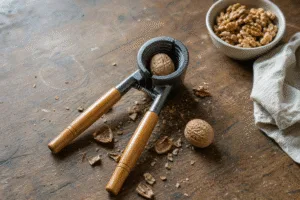
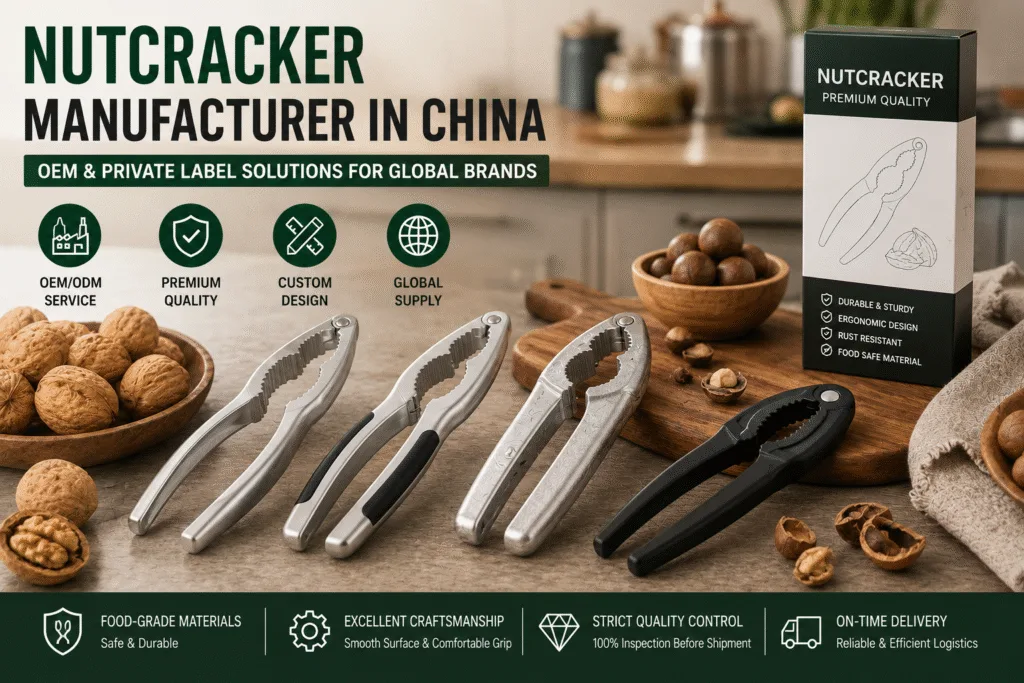
Nutcrackers are essential kitchen gadgets designed to crack hard-shell nuts quickly and safely. Whether used for walnuts, pecans, almonds, hazelnuts, or even seafood such as crab and lobster, high-quality nutcrackers remain in demand among retailers, supermarkets, kitchenware brands, and food service businesses.
As consumers increasingly prefer durable and ergonomic kitchen tools, importers and private-label brands are seeking reliable manufacturers that can provide consistent product quality, flexible OEM services, and competitive pricing.
China has become one of the world’s leading manufacturing centers for aluminum alloy kitchen gadgets, offering mature production capabilities, cost-effective solutions, and extensive export experience.
Common Types of Nutcrackers
Understanding different product designs helps buyers select the right product for their target markets.
Aluminum Alloy Nutcrackers
Die-cast aluminum alloy nutcrackers are among the most popular products due to their lightweight construction, excellent strength, and cost-effective manufacturing.
Advantages include:
- Durable structure
- Comfortable grip
- Lightweight design
- Excellent corrosion resistance
Heavy-Duty Nutcrackers
Heavy-duty models are designed to crack larger or harder nuts with minimal effort.
These products are commonly used in commercial kitchens and specialty food stores.
Seafood Crackers
Some manufacturers also produce seafood crackers suitable for lobster, crab, and shellfish.
These products often share similar production processes with traditional nutcrackers.
Ergonomic Nutcrackers
Ergonomic handle designs improve comfort and reduce hand fatigue, making them increasingly popular in premium product lines.
OEM & Private Label Customization Options
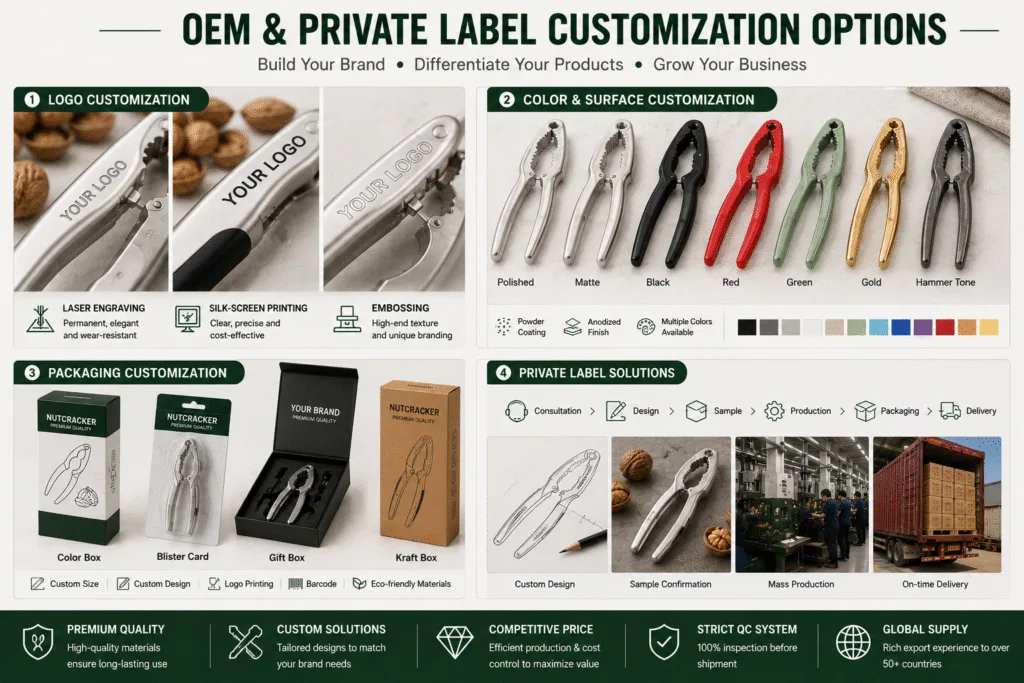
Professional manufacturers provide comprehensive OEM services to help brands develop unique kitchen gadgets.
Logo Customization
Manufacturers typically offer:
- Laser engraving
- Silk-screen printing
- Embossed logos
Surface Finish Customization
Surface finishes may include:
- Powder coating
- Polishing
- Matte finishing
- Custom colors
Packaging Customization
Packaging solutions include:
- Retail color boxes
- Gift packaging
- Hanging cards
- Barcode labels
- Eco-friendly packaging
Product Design Customization
Experienced manufacturers can modify handle shapes, jaw sizes, spring structures, and overall dimensions according to customer requirements.
Materials Used in Nutcracker Manufacturing
Material selection directly influences product durability, food safety, and customer satisfaction.
Die-Cast Aluminum Alloy
Aluminum alloy remains the preferred material for premium nutcrackers because it offers:
- High strength
- Lightweight performance
- Excellent die-casting capability
- Attractive surface finishes
Stainless Steel Components
Some models use stainless steel springs or reinforced parts to improve durability and product lifespan.
Food-Safe Surface Treatments
Professional manufacturers apply food-safe coatings and finishing processes that enhance appearance while complying with international food-contact requirements.
Buyers should always request material specifications and compliance documentation before placing production orders.
How to Choose the Right Nutcracker Manufacturer
Selecting the right supplier requires evaluating more than just pricing.
Manufacturing Experience
Choose manufacturers with extensive experience in producing kitchen gadgets for international markets.
In-House Mold Development
Suppliers with in-house tooling capabilities can accelerate product development while maintaining consistent quality.
Production Capacity
Reliable factories should be capable of supporting both trial orders and large-scale production.
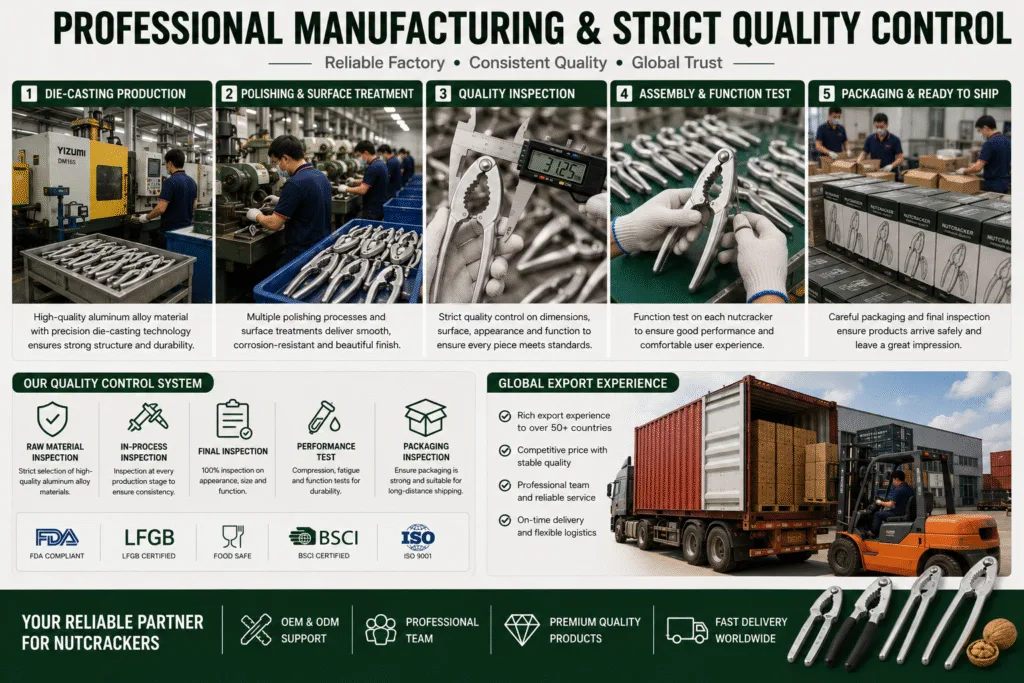
Quality Control Systems
Professional manufacturers implement inspections throughout every stage of production, from raw material inspection to final packaging.
Export Experience
Suppliers with international export experience are better prepared to meet packaging standards, certification requirements, and global shipping regulations.
Common Quality Tests for Nutcrackers
Quality testing helps ensure consistent product performance.
Compression Strength Testing
Verifies the product can withstand repeated cracking without deformation.
Fatigue Testing
Confirms the product maintains structural integrity after continuous use.
Corrosion Resistance Testing
Ensures long-term durability in kitchen environments.
Surface Finish Inspection
Checks for scratches, coating defects, and appearance consistency.
Packaging Inspection
Confirms products are properly protected during transportation and retail display.
Benefits of Working with an OEM Nutcracker Manufacturer
Partnering with an experienced OEM manufacturer provides significant business advantages.
These include:
- Custom product development
- Flexible private-label solutions
- Stable production quality
- Competitive manufacturing costs
- Reliable delivery schedules
- Professional export support
Working with a trusted manufacturing partner helps brands build stronger market competitiveness while reducing sourcing risks.
FAQ
What material is best for a nutcracker?
Die-cast aluminum alloy is widely preferred because it combines durability, lightweight performance, and cost-effective production.
Can I customize my logo?
Yes. Most OEM manufacturers support laser engraving, silk-screen printing, and embossed logos.
What is the typical MOQ?
Minimum order quantities vary depending on product design, customization level, and packaging requirements.
Can manufacturers provide FDA or LFGB reports?
Many experienced suppliers can provide compliance documentation and third-party testing reports for export markets.
How long does production take?
Lead times depend on order quantity, customization requirements, and tooling complexity.