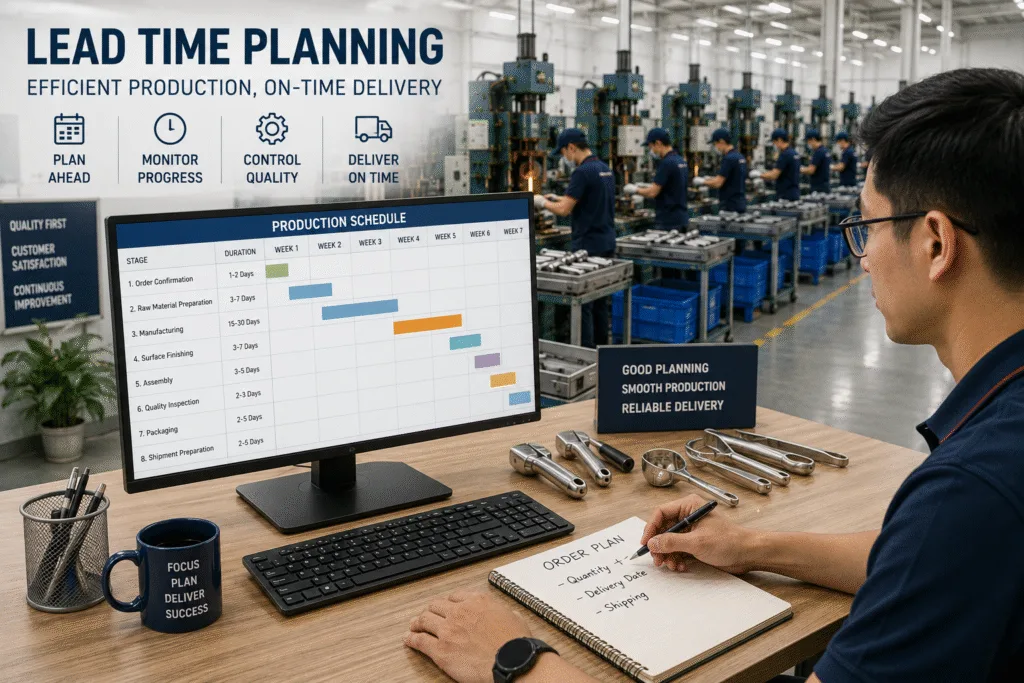
Lead time is one of the most critical factors in global sourcing. Even if a manufacturer offers competitive pricing and excellent product quality, delayed production can result in missed sales opportunities, inventory shortages, and dissatisfied customers.
For importers, wholesalers, distributors, and private label brands, understanding how lead time works is essential for building a reliable supply chain. Production schedules are influenced by many factors, including product complexity, order quantity, material availability, customization requirements, and seasonal demand.
This guide explains how kitchen gadget lead time is calculated, what affects manufacturing schedules, and how buyers can plan production more efficiently while minimizing delivery risks.
What Is Lead Time?
Lead time refers to the total amount of time required to complete an order from confirmation to shipment.
A typical kitchen gadget production schedule includes:
- Order confirmation
- Material purchasing
- Mold preparation (if required)
- Manufacturing
- Surface finishing
- Assembly
- Quality inspection
- Packaging
- Export preparation
- Shipment
Understanding each stage helps buyers create realistic purchasing plans.
Typical Lead Time for Kitchen Gadgets
Although production schedules vary by product and factory capacity, most standard kitchen gadgets follow a similar timeline.
| Production Stage | Typical Time |
|---|---|
| Order Confirmation | 1–2 days |
| Raw Material Preparation | 3–7 days |
| Manufacturing | 15–30 days |
| Assembly | 3–5 days |
| Quality Inspection | 2–3 days |
| Packaging | 2–5 days |
| Shipment Preparation | 2–5 days |
Actual lead times may vary depending on customization and order volume.
Factors That Affect Lead Time
Several variables determine how quickly an order can be completed.
Order Quantity
Larger production volumes generally require more manufacturing time.
However, larger orders may also improve production efficiency because equipment setup occurs only once.
Product Complexity
Simple kitchen gadgets usually require shorter production schedules than products involving multiple components, precision machining, or complex assembly.
Products with customized structures often require additional engineering verification.
Material Availability
Lead time depends heavily on raw material inventory.
Materials commonly used for kitchen gadgets include:
- Aluminum alloy
- Stainless steel
- Plastic accessories
- Silicone components
Unexpected shortages may delay production.
OEM & Private Label Requirements
Customized orders usually require additional preparation.
Examples include:
- Logo engraving
- Custom colors
- Retail packaging
- User manuals
- Barcode labels
- Surface treatments
These extra processes increase production time compared with standard products.
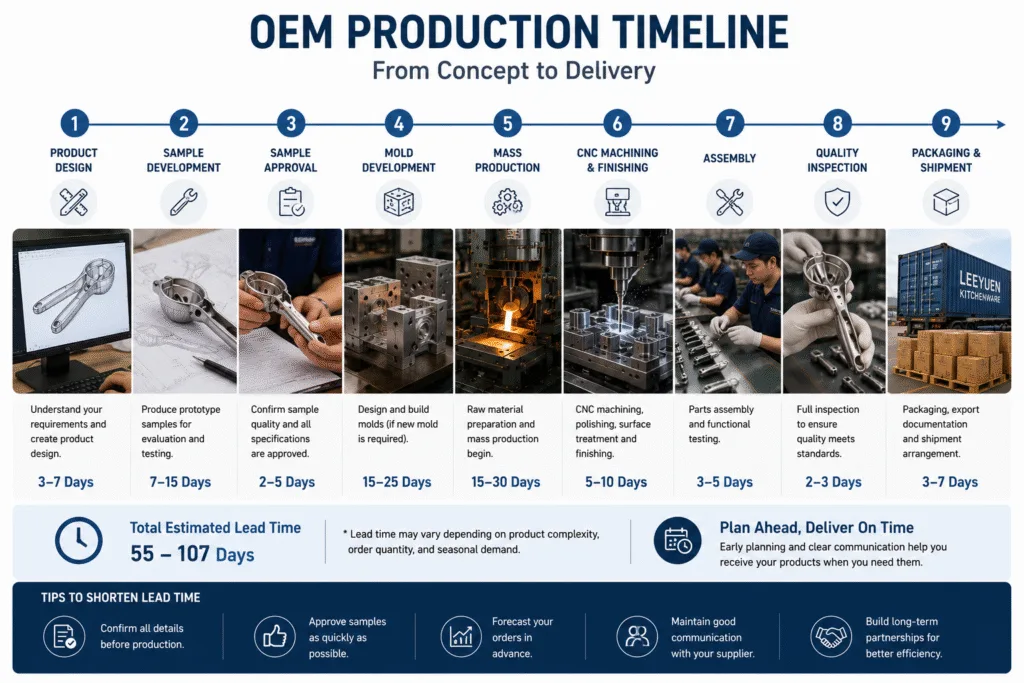
Production Timeline for OEM Projects
OEM projects usually involve several additional stages before mass production.
A typical timeline includes:
- Product design confirmation
- Engineering review
- Prototype development
- Sample approval
- Mold preparation (if necessary)
- Mass production
- Quality inspection
- Packaging
- Shipment
Planning these stages early helps avoid unnecessary delays.
Peak Season vs Off-Season Production
Production schedules often change throughout the year.
During peak purchasing seasons, manufacturers receive higher order volumes, resulting in longer production queues.
Common busy periods include:
- Before Chinese New Year
- Major holiday purchasing seasons
- Retail promotional periods
- End-of-year inventory preparation
Placing orders in advance helps secure production capacity.
How to Reduce Lead Time
Although some delays are unavoidable, buyers can improve delivery efficiency by following several best practices.
Confirm Product Specifications Early
Frequent design changes after production begins often delay manufacturing.
Finalize specifications before placing the order.
Approve Samples Quickly
Prompt sample evaluation allows production to begin sooner.
Clear communication between buyers and manufacturers helps avoid repeated revisions.
Forecast Future Orders
Sharing purchasing forecasts allows manufacturers to prepare materials and production schedules in advance.
Long-term planning improves production stability.
Simplify Customization
Standard finishes and existing molds usually reduce production time compared with fully customized products.
Build Long-Term Partnerships
Manufacturers often prioritize repeat customers with stable purchasing plans.
Long-term cooperation improves scheduling flexibility and communication efficiency.
Common Causes of Production Delays
Several factors can extend production schedules.
These include:
- Late design approval
- Material shortages
- Engineering changes
- Peak season demand
- Packaging revisions
- Shipping disruptions
- Unexpected quality issues
Identifying potential risks early allows both parties to prepare contingency plans.
Lead Time vs Delivery Time
Many buyers confuse production lead time with shipping time.
These are different concepts.
Lead Time refers to manufacturing and order preparation.
Delivery Time refers to transportation from the factory to the final destination.
International shipping methods also affect total delivery time.
For example:
- Express shipping is faster but more expensive.
- Air freight balances speed and cost.
- Ocean freight offers lower costs but longer transit times.
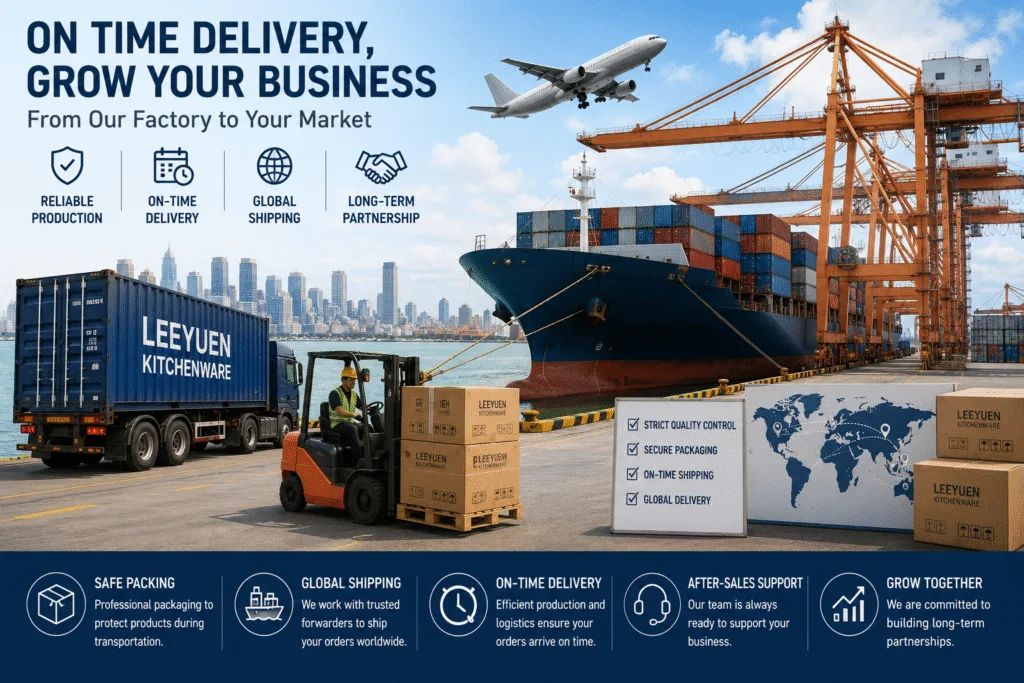
Buyers should calculate the complete supply chain timeline rather than focusing only on factory production.
Planning Orders for Seasonal Demand
Retail businesses often experience predictable demand peaks.
To avoid stock shortages:
- Estimate seasonal sales in advance.
- Place production orders early.
- Allow additional time for shipping and customs clearance.
- Maintain safety inventory for best-selling products.
Proper planning reduces supply chain risks during busy seasons.
Questions to Ask Your Manufacturer About Lead Time
Before confirming an order, consider asking:
- What is the estimated production lead time?
- Are raw materials currently in stock?
- How long will sample approval take?
- Can production capacity support future growth?
- What happens if unexpected delays occur?
- How often will production progress be updated?
Clear communication helps build realistic expectations.
Common Mistakes Buyers Should Avoid
Many production delays occur because of poor planning.
Avoid these common mistakes:
- Waiting until inventory is almost depleted.
- Requesting major design changes after production begins.
- Ignoring peak production seasons.
- Underestimating shipping time.
- Choosing the lowest price regardless of production capacity.
- Failing to communicate demand forecasts.
Proactive planning is the most effective way to reduce delays.
FAQ
How long does it usually take to manufacture kitchen gadgets?
Standard products often require several weeks for production, while customized OEM projects generally take longer because of design confirmation, sampling, and additional manufacturing processes.
Does OEM production increase lead time?
Yes. OEM projects usually involve product customization, logo application, packaging development, or mold preparation, all of which add time before mass production.
Can manufacturers reduce lead time?
In many cases, yes. Early planning, fast sample approval, standardized product specifications, and long-term cooperation can help shorten production schedules.
Should I place orders before peak season?
Yes. Ordering in advance gives manufacturers more flexibility and reduces the risk of production bottlenecks during busy periods.