Table of Contents
Why Choosing the Right Kitchen Gadget Supplier Matters
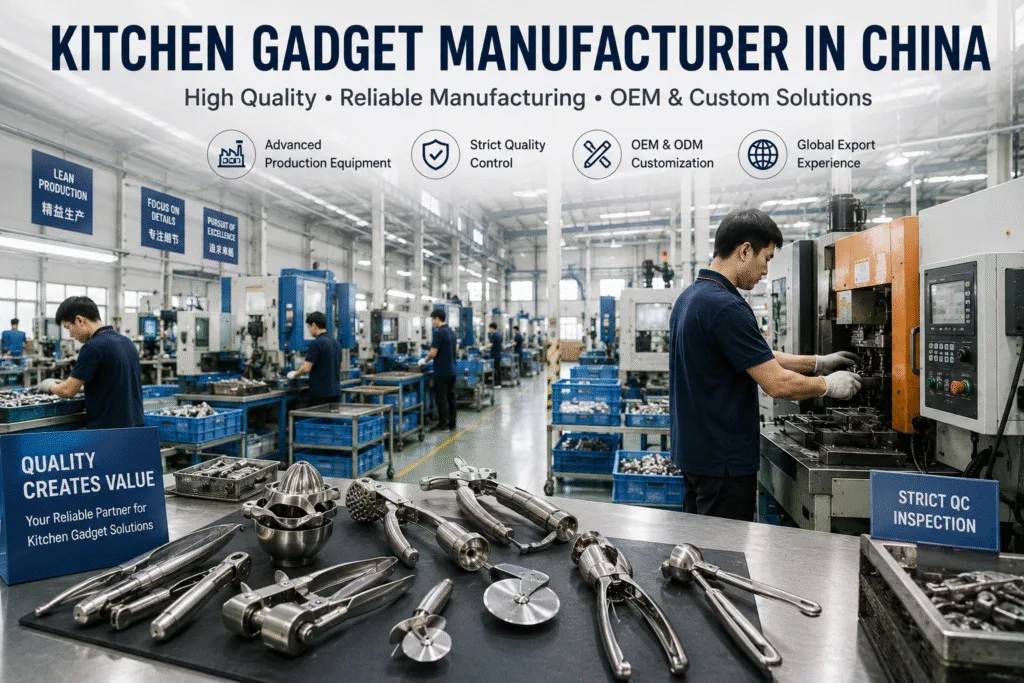
China has become one of the world’s leading manufacturing centers for kitchen gadgets. From garlic presses and lemon squeezers to pizza cutters and ice cream scoops, thousands of suppliers offer similar products. However, not all suppliers provide the same level of quality, service, and manufacturing capability.
Choosing the right supplier can help buyers:
- Ensure consistent product quality
- Reduce sourcing risks
- Improve delivery reliability
- Support OEM and customization projects
- Build long-term business growth
For importers and private brands, selecting the right manufacturing partner is often more important than finding the lowest price.
Manufacturer vs Trading Company: Understanding the Difference
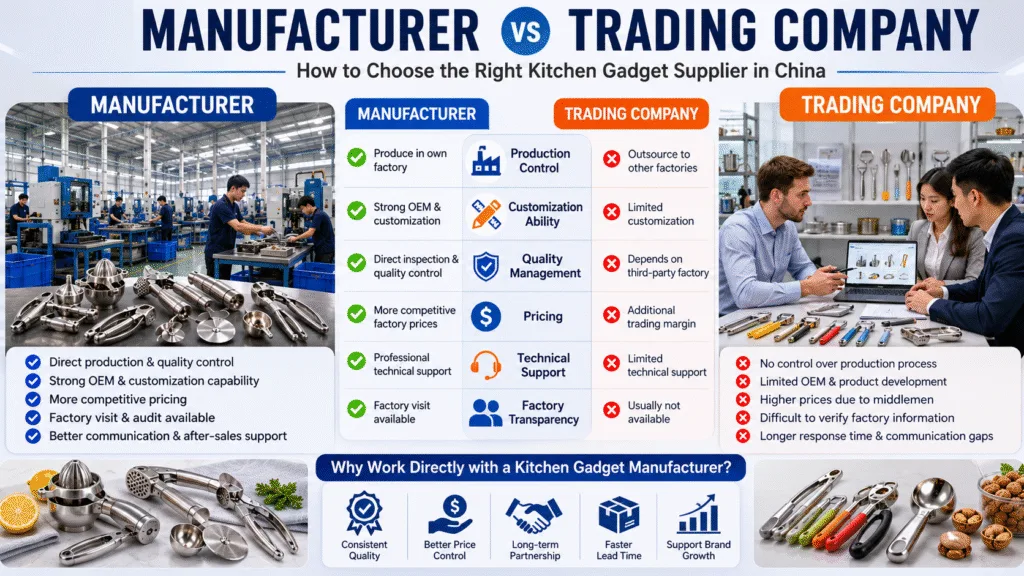
One of the first challenges buyers face is determining whether they are dealing with a manufacturer or a trading company.
| Factor | Manufacturer | Trading Company |
|---|---|---|
| Production Control | Direct | Outsourced |
| Customization | Strong | Limited |
| Quality Management | Direct Control | Depends on Factory |
| Pricing | More Competitive | Additional Margin |
| Technical Support | Better | Limited |
| Factory Visits | Available | Usually Not Available |
For buyers looking for OEM kitchen gadgets, working directly with a manufacturer often provides greater flexibility and better cost control.
Key Factors to Evaluate Before Choosing a Supplier
Production Capacity
A reliable kitchen gadget manufacturer should be able to handle both current orders and future business growth.
Ask suppliers about:
- Monthly production capacity
- Number of production lines
- Lead times
- Peak season capabilities
Manufacturers with stable production systems are generally more reliable for long-term cooperation.
OEM and Customization Capabilities
Many wholesalers and retailers require customized products to differentiate themselves from competitors.
Evaluate whether the supplier can provide:
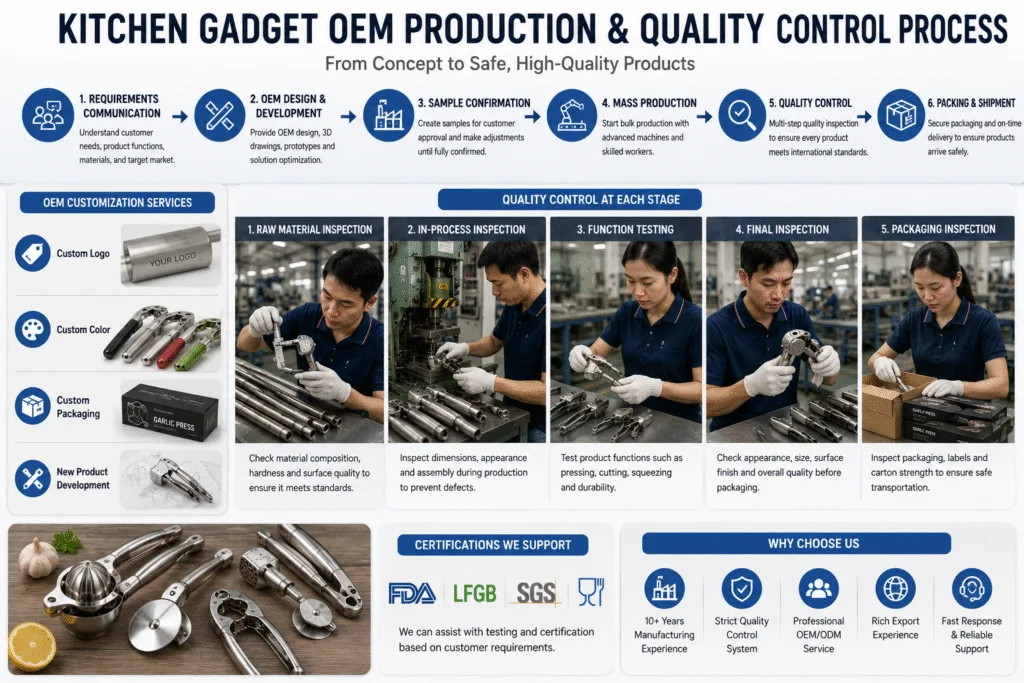
- Custom logos
- Customized packaging
- Product color options
- Private label solutions
- New product development support
A strong OEM partner can help brands create unique products and improve market competitiveness.
Quality Control System
Quality issues can lead to customer complaints, returns, and damage to brand reputation.
Before selecting a supplier, ask about:
- Incoming material inspection
- In-process quality checks
- Finished product inspection
- Packaging inspection procedures
A structured quality control system demonstrates that the manufacturer takes product consistency seriously.
Export Experience
Exporting kitchen gadgets requires familiarity with international standards and shipping requirements.
Experienced exporters often provide:
- Export documentation support
- Product testing reports
- Compliance assistance
- Efficient logistics coordination
Suppliers with extensive export experience typically understand the requirements of different global markets.
Communication Efficiency
Communication plays a critical role in successful sourcing projects.
Pay attention to:
- Response speed
- Technical knowledge
- Problem-solving ability
- Project management skills
A responsive supplier can significantly reduce misunderstandings and production delays.
Questions Buyers Should Ask Before Placing an Order
Before moving forward with production, buyers should ask:
Factory Capability Questions
- Are you a manufacturer or trading company?
- How many years have you been producing kitchen gadgets?
- What are your main export markets?
Quality Questions
- What quality inspections do you perform?
- Can you provide product testing reports?
- How do you handle defective products?
OEM Questions
- Can you add custom logos?
- Do you support custom packaging?
- What is the minimum order quantity for OEM projects?
These questions help buyers evaluate professionalism and reduce sourcing risks.
Warning Signs When Evaluating Suppliers
Not every supplier is a good fit for long-term cooperation.
Watch for these warning signs:
Unrealistically Low Prices
If a quotation is significantly lower than competitors, quality or service may be compromised.
Limited Factory Information
Reliable manufacturers are usually willing to provide factory photos, videos, and production details.
Poor Communication
Slow responses and unclear answers often indicate future project management issues.
Lack of Quality Documentation
Professional suppliers should be able to provide quality inspection procedures and relevant certifications when required.
Why Long-Term Supplier Relationships Create Better Results
Many successful brands work with the same manufacturing partners for years.
Long-term cooperation often results in:
- Better pricing stability
- Improved production efficiency
- Faster product development
- Priority production scheduling
- Consistent product quality
Strong supplier relationships can become a competitive advantage in global sourcing.
Frequently Asked Questions
What is the difference between a kitchen gadget manufacturer and a trading company?
Manufacturers produce products directly, while trading companies source products from multiple factories and resell them.
Why should I choose a Chinese kitchen gadget manufacturer?
Chinese manufacturers offer competitive pricing, mature supply chains, and strong OEM capabilities.
How can I verify a supplier’s manufacturing capabilities?
Request factory information, production photos, samples, and details about quality control systems.
What certifications may be required for kitchen gadgets?
Depending on the market, buyers may require FDA, LFGB, SGS, or other food-contact safety certifications.
How important is quality control in kitchen gadget manufacturing?
Quality control is essential for maintaining product consistency, reducing defects, and protecting brand reputation.