In the demanding world of professional food service, every piece of equipment must withstand incredible challenges. Commercial kitchens operate under extreme conditions that include high temperatures, sharp tools, corrosive substances, and relentless cleaning schedules. Among all material choices, one stands out for its exceptional performance: stainless steel kitchen equipment. This alloy has become the undisputed champion in restaurants, hotels, and catering facilities worldwide. But what exactly makes this material so uniquely suited to these challenging environments? The answer lies in a powerful combination of durability and cleanability that other materials simply cannot match.
The Science Behind Stainless Steel
To understand why stainless steel kitchen equipment performs so well, we must first examine its composition. Stainless steel is not a single material but an alloy primarily composed of iron, carbon, and a crucial ingredient: chromium. The magic begins when the chromium content reaches at least 10.5 percent. At this level, chromium reacts with oxygen to form an invisible, protective layer of chromium oxide on the metal’s surface .
This protective layer is the secret to stainless steel’s remarkable properties. It acts as a shield that continuously repairs itself when damaged. Even if the surface is scratched, the chromium oxide layer reforms, maintaining protection against corrosion. Different grades of stainless steel offer varying levels of performance. The most common in commercial kitchens are:
1. Grade 304: This is the workhorse of food service, offering excellent corrosion resistance for most applications like workbenches, sinks, and shelving.
2. Grade 316: Enhanced with molybdenum, this grade provides superior resistance to chlorides and is ideal for high-moisture or salty environments.
The specific composition of stainless steel kitchen equipment can be tailored to meet the demands of different kitchen zones, ensuring optimal performance wherever it is used.
Unmatched Durability in Demanding Environments
The durability of stainless steel kitchen equipment is its most celebrated attribute. In a commercial kitchen, equipment faces a constant assault from physical impacts, extreme temperatures, and corrosive substances.
1. Resistance to Physical Damage
Commercial kitchens operate at a pace and intensity far beyond home environments. Pots clash, knives slip, and heavy equipment is moved frequently. Stainless steel kitchen equipment is built to withstand this daily punishment. Its inherent strength makes it highly resistant to dents, scratches, and deformation that would ruin lesser materials . This resilience ensures that stainless steel work surfaces and equipment maintain their structural integrity and professional appearance for years, even under heavy use.
2. Tolerance to Extreme Temperatures
The temperature range in a commercial kitchen can swing dramatically. A stove top may reach blistering temperatures while a refrigeration unit operates below freezing. Stainless steel kitchen equipment handles these extremes with ease. It can withstand temperatures up to 600 degrees Celsius without compromising its structure . This heat resistance makes it ideal for commercial ovens, cooktops, and other cooking equipment. Similarly, when used in walk-in coolers or freezers, stainless steel does not become brittle or crack under cold stress . This thermal stability is crucial for safety and longevity in professional food service settings.
3. Corrosion and Rust Resistance
Perhaps the most significant durability advantage of stainless steel kitchen equipment is its resistance to corrosion. Kitchen environments constantly expose equipment to moisture, acidic foods, and salty conditions that would cause other metals to rust quickly. The chromium oxide layer in stainless steel prevents oxygen from reaching the underlying iron, effectively stopping the rusting process . This corrosion resistance ensures that stainless steel kitchen equipment maintains its integrity and appearance despite constant exposure to water, cleaning agents, and food acids.
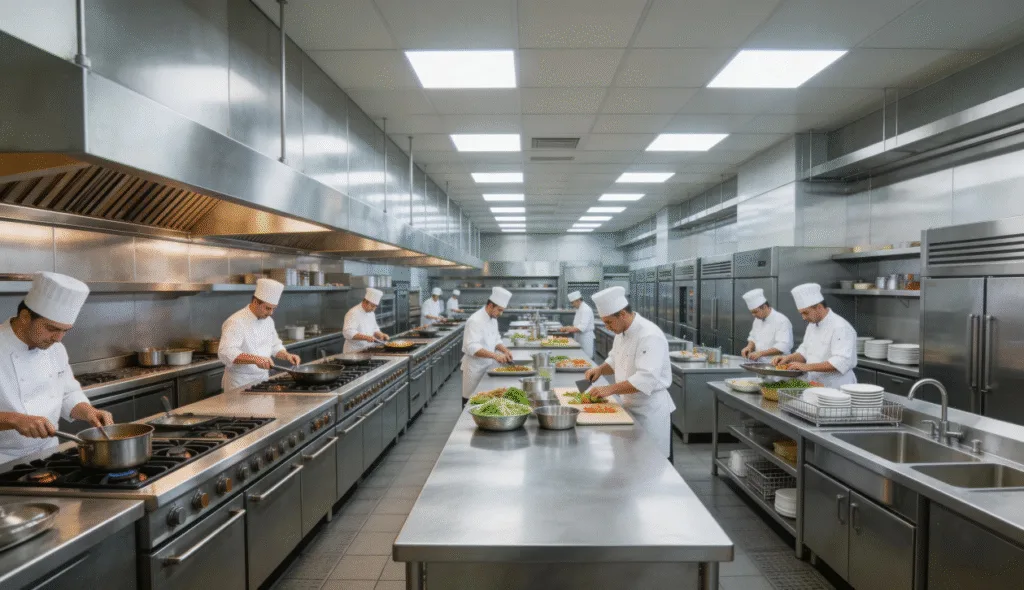
Superior Cleanability and Hygiene
In food service, cleanliness is not just about appearance—it is a critical public health requirement. Stainless steel kitchen equipment excels in this area, offering hygiene benefits that surpass other materials.
1. Non-Porous Surface
Unlike wood, plastic, or some other metals, stainless steel has a non-porous surface. This means it has no microscopic holes or cracks where bacteria, odors, or moisture can hide . This seamless surface makes stainless steel kitchen equipment easy to sanitize completely. A simple cleaning with appropriate detergents removes all visible soil and invisible pathogens, meeting the strict hygiene standards required in commercial food preparation .
2. Ease of Cleaning and Maintenance
The smooth surface of stainless steel kitchen equipment allows for quick and effective cleaning. Most routine cleaning requires only mild soap and water, followed by drying with a clean cloth . For more thorough sanitation, stainless steel can withstand stronger cleaning agents without degrading. However, proper technique is essential. Cleaning should always follow the metal’s grain, and abrasive tools like steel wool should be avoided as they can damage the protective surface layer . With proper care, stainless steel kitchen equipment maintains its hygienic properties indefinitely.
3. Compliance with Food Safety Standards
The hygiene advantages of stainless steel make it the preferred material for meeting food safety regulations. Organizations like the NSF (National Sanitation Foundation) and international food safety standards recognize stainless steel as appropriate for food contact surfaces . The material’s non-porous nature supports HACCP (Hazard Analysis Critical Control Point) protocols by allowing for effective cleaning between different food preparation stages, reducing the risk of cross-contamination . This regulatory approval makes stainless steel kitchen equipment the safest choice for operations serious about food safety.
Economic Value Over Time
While the initial cost of stainless steel kitchen equipment may be higher than alternatives, its long-term economic benefits are significant.
1. Lifecycle Cost Efficiency
The durability of stainless steel kitchen equipment translates directly to economic value. Where other materials might need frequent replacement or repair, high-quality stainless steel equipment can last for decades with proper care . This longevity makes it a cost-effective investment despite the higher upfront cost. The reduced need for repairs and replacements also means less kitchen downtime, a critical factor in high-volume food service operations where equipment failure can disrupt service and impact revenue .
2. Sustainability and Environmental Benefits
As environmental concerns become increasingly important, stainless steel kitchen equipment offers notable sustainability advantages. Stainless steel is 100% recyclable without loss of quality, and a significant percentage of new stainless steel contains recycled material . At the end of its long service life, stainless steel equipment can be recycled again, minimizing waste and supporting a circular economy. This environmental profile makes stainless steel kitchen equipment a responsible choice for operations committed to sustainability .
Versatility Across Kitchen Applications
The usefulness of stainless steel kitchen equipment extends throughout the commercial kitchen, demonstrating remarkable versatility.
1. Comprehensive Kitchen Integration
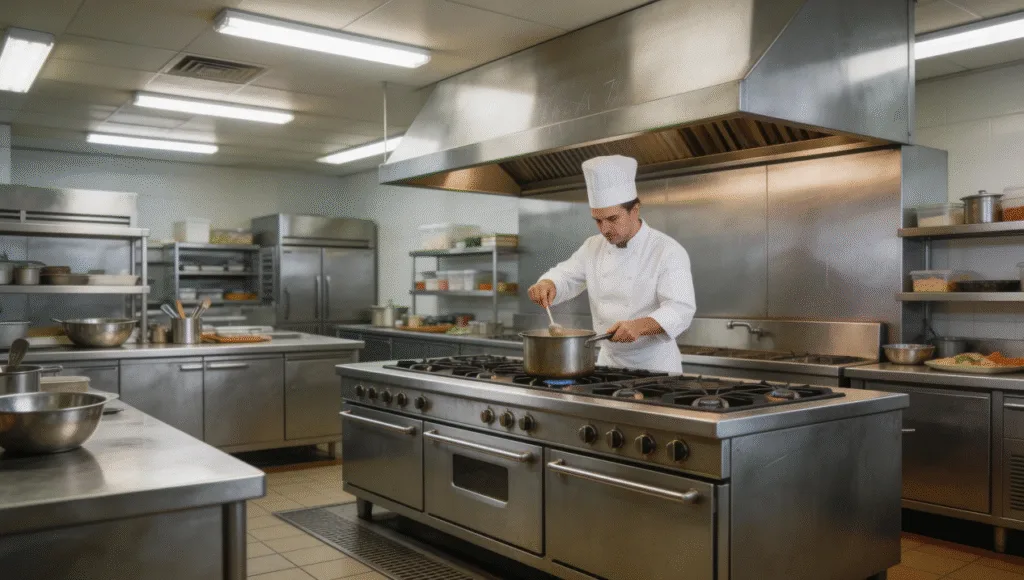
From preparation areas to cooking stations to storage facilities, stainless steel serves every kitchen function. Worktables, sinks, and shelving benefit from stainless steel’s durability and cleanability . Cooking equipment like oven exteriors, fryer tanks, and range hoods leverage its heat resistance . Refrigeration units use stainless steel for both structural and hygienic advantages . This consistency of material across different kitchen zones creates a cohesive, professional environment that is both efficient and safe.
2. Customization and Adaptability
Stainless steel kitchen equipment offers remarkable flexibility in design. The material can be welded, formed, and fabricated into custom shapes to fit specific kitchen layouts and workflows . This welding capability has an additional hygiene benefit: seamless joints eliminate cracks and crevices where bacteria could accumulate . This adaptability allows kitchen designers to create optimized workflows with stainless steel equipment that fits the exact needs of the operation, enhancing efficiency while maintaining the highest hygiene standards.
Proper Care and Maintenance
To maximize the benefits of stainless steel kitchen equipment, proper care is essential. While stainless steel is durable, it is not indestructible.
1. Cleaning Best Practices
Effective cleaning of stainless steel kitchen equipment requires the right techniques. Harsh cleaners containing chlorides should be avoided as they can damage the protective oxide layer . Abrasive tools should be replaced with soft cloths or non-scratch pads. For stubborn stains, specialized stainless steel cleaners or simple solutions like vinegar and water can be effective . After cleaning, thorough drying prevents water spots and maintains the equipment’s appearance .
2. Preventing Damage
Though stainless steel kitchen equipment is resistant to many forms of damage, it can be scratched by sharp objects or abused by improper tools . Understanding its limitations helps kitchen staff use and maintain it properly. Regular inspection and prompt attention to any damage helps preserve both the appearance and functionality of stainless steel equipment over its long service life.
In the challenging world of commercial food service, stainless steel kitchen equipment stands as the material of choice for compelling reasons. Its exceptional durability withstands the physical and chemical challenges of professional kitchens, while its unparalleled cleanability supports the rigorous hygiene standards essential for food safety. The initial investment in quality stainless steel kitchen equipment pays dividends through years of reliable service, minimal maintenance requirements, and consistent performance. From its scientific properties to its practical benefits, stainless steel demonstrates why it remains the gold standard for commercial kitchens worldwide. For operations seeking equipment that combines strength, sanitation, and long-term value, stainless steel kitchen equipment continues to be the intelligent choice. Please contact us if you need anything. Also you can know more about Leeyuen Kitchenware.