Finding the right pizza cutter supplier is about more than comparing unit prices. For wholesalers, restaurant suppliers, kitchenware distributors, and private label brands, the supplier needs to deliver consistent product quality, reliable production, suitable packaging, and the ability to support repeat orders.
Pizza cutters are relatively simple products, but small differences in blade quality, handle design, assembly, and finishing can have a direct effect on how the product performs in daily use. For B2B buyers, these details become even more important when ordering hundreds or thousands of units.
This guide explains what buyers should look for when sourcing pizza cutters, how to compare materials and designs, how custom production works, and how to evaluate a supplier before placing a bulk order.
Why Choosing the Right Pizza Cutter Supplier Matters
A pizza cutter may look like a straightforward kitchen utensil, but its performance depends on several components working together.
A reliable product should provide:
- Consistent cutting performance
- Comfortable handling
- Reliable blade or cutting wheel alignment
- Durable construction
- Smooth and safe edges
- Consistent surface finishing
- Suitable packaging
- Stable quality across production batches
For retailers, appearance and packaging may be major selling points. For restaurants, durability and ease of use may matter more. Private label brands may need additional customization, including logos, colors, product dimensions, and retail packaging.
The right supplier should therefore be able to meet the specific requirements of the buyer’s sales channel rather than simply offering the lowest quotation.
What Types of Pizza Cutters Can Suppliers Provide?
B2B suppliers may offer several pizza cutter designs. The right option depends on the target market, price positioning, and intended application.
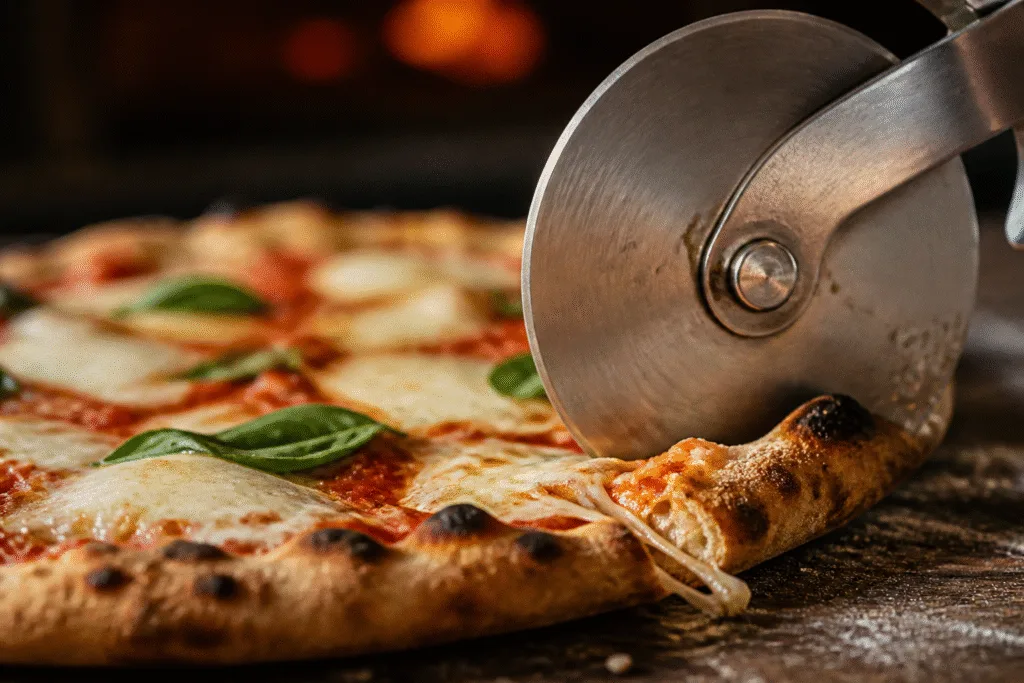
Wheel Pizza Cutters
The wheel-style pizza cutter is one of the most familiar designs.
A rotating circular blade allows users to cut through pizza with a rolling motion. For retail kitchenware, the design is easy for consumers to understand and can be produced in a wide range of handle materials and finishes.
When sourcing wheel pizza cutters, buyers should check:
- Blade diameter
- Blade material
- Blade sharpness
- Wheel alignment
- Handle construction
- Rotation smoothness
- Overall weight
Rocker Pizza Cutters
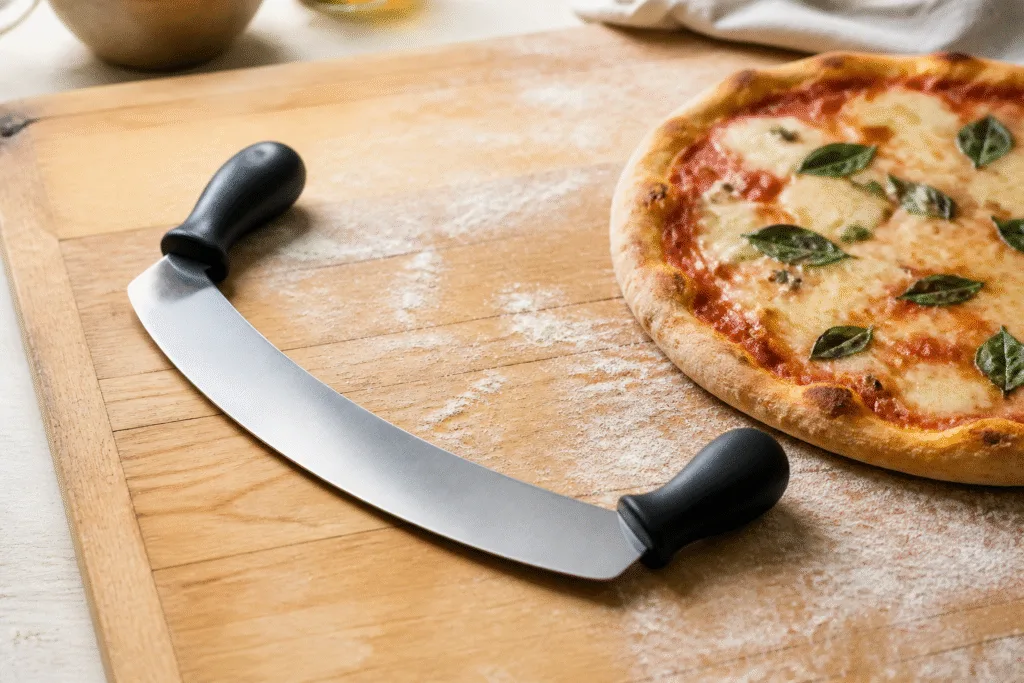
A rocker cutter uses a long curved blade that is moved across the pizza rather than rolled.
This design can appeal to professional or specialty kitchen markets. Buyers should pay particular attention to blade geometry, handle structure, and safe handling.
Aluminum Pizza Cutters
Aluminum alloy can be used for the body or handle of a pizza cutter, depending on the product design.
For B2B buyers, aluminum can provide a useful combination of relatively low weight, casting flexibility, and a metallic appearance.
The quality of an aluminum pizza cutter depends not only on the alloy but also on casting, trimming, machining, surface finishing, and assembly.
Stainless Steel Pizza Cutters
Stainless steel is commonly used for cutting components because of its corrosion resistance and durable metallic characteristics.
When sourcing stainless steel models, buyers should verify the grade and thickness required for the intended application rather than evaluating the product only by its appearance.
Commercial Pizza Cutters
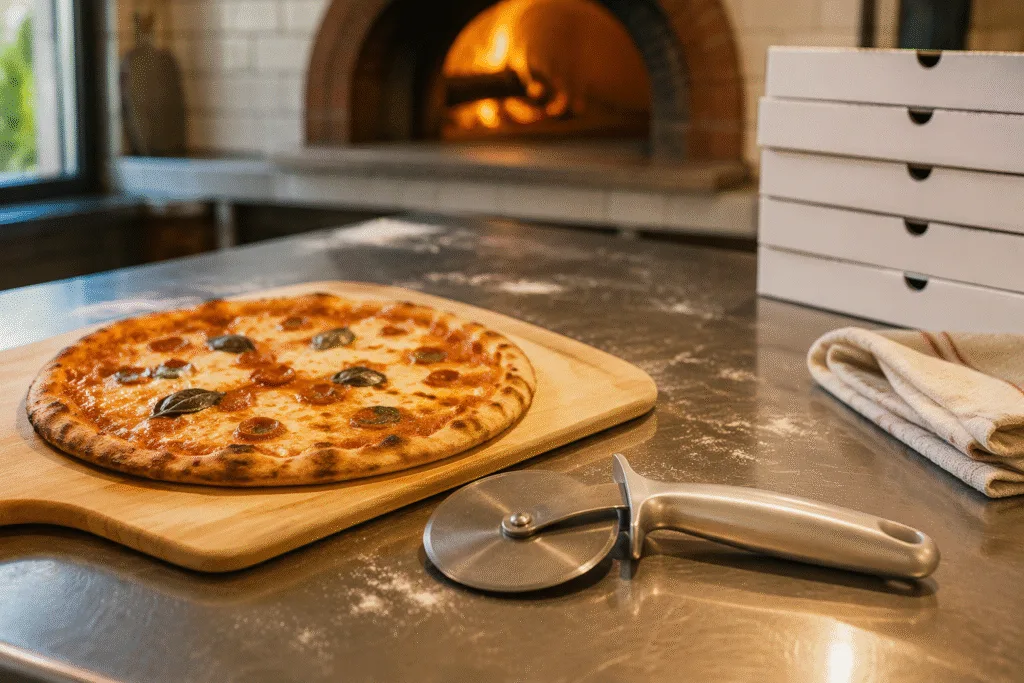
Commercial users such as restaurants, cafés, catering businesses, and foodservice suppliers may require products that can withstand repeated operation.
For these applications, buyers should place greater emphasis on:
- Structural durability
- Cutting efficiency
- Handle ergonomics
- Cleaning
- Assembly quality
- Long-term consistency
What Materials Are Used for Pizza Cutters?
Material selection affects durability, weight, appearance, production cost, and product positioning.
| Material | Main Advantages | B2B Considerations |
|---|---|---|
| Aluminum alloy | Lightweight and suitable for cast designs | Casting and surface finishing quality |
| Stainless steel | Corrosion resistance and durable appearance | Grade, thickness, weight, and cost |
| Zinc alloy | Good casting flexibility and detailed shapes | Weight and finishing requirements |
| Plastic | Lightweight and economical | Durability and market positioning |
There is no universal best material for every pizza cutter.
A restaurant supplier may prioritize durability, while a retail brand may place greater importance on appearance and packaging. The material should therefore be selected according to the product’s intended use and target market.
What Should Buyers Check When Choosing a Pizza Cutter Supplier?
A supplier should be evaluated across several areas rather than by price alone.
Cutting Performance
The cutter should provide consistent cutting performance across samples.
For wheel cutters, the wheel should rotate smoothly and remain properly aligned. For rocker-style cutters, the blade should provide consistent contact across the cutting surface.
Blade Quality
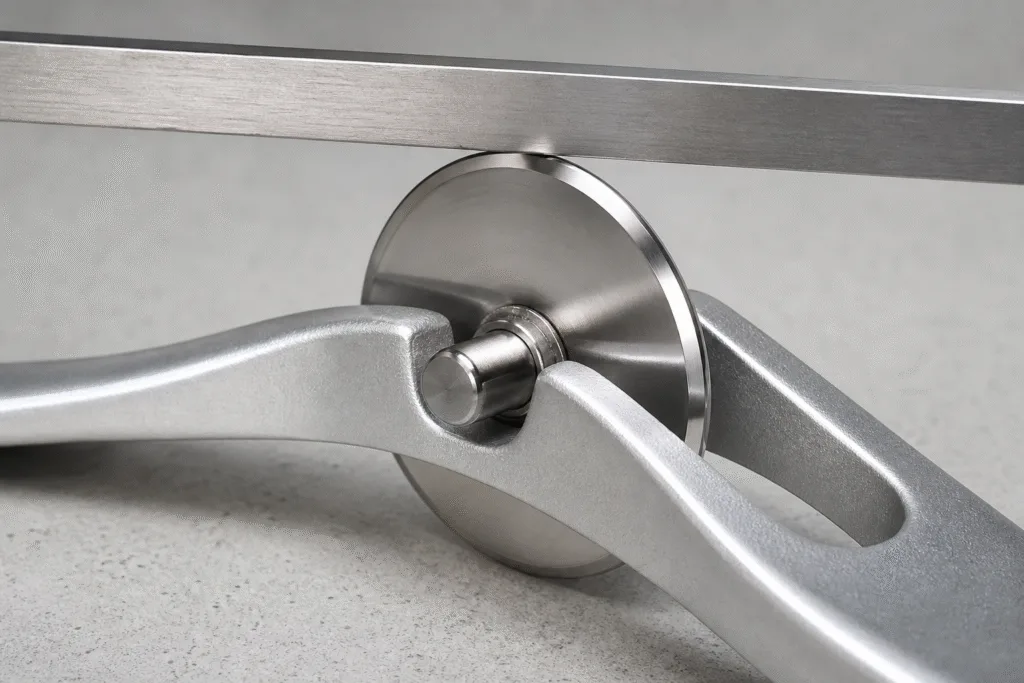
The cutting component should be appropriate for the intended application.
Buyers should confirm:
- Material
- Thickness
- Edge quality
- Sharpness
- Corrosion resistance
- Alignment
A sharp blade is not enough. The blade must also be properly assembled and supported by the rest of the product.
Handle Design
The handle affects comfort, control, and product positioning.
For products intended for frequent use, buyers should evaluate grip shape, weight distribution, surface finish, and overall ergonomics.
Product Weight
Weight can influence both perceived quality and user experience.
A very light product may appeal to some retail customers, while a heavier metal product may be positioned as a more durable premium item.
The correct weight depends on the target market.
Surface Finish
Surface finishing affects both appearance and durability.
For metal pizza cutters, buyers should inspect the surface for:
- Scratches
- Rough areas
- Uneven polishing
- Casting marks
- Coating defects
- Sharp edges
Samples should be evaluated under normal lighting before approving mass production.
Assembly Quality
Moving components require consistent assembly.
For wheel cutters, the wheel should rotate without excessive looseness or resistance. Handles should remain secure during repeated use.
Small assembly problems can become significant quality issues in large orders.
Pizza Cutter Supplier vs Manufacturer: What Is the Difference?
B2B buyers may encounter both suppliers and direct manufacturers when searching for pizza cutters.
A supplier may offer products from several factories, which can be useful when buyers want to source different product categories from one company.
A direct manufacturer may provide greater control over specific production stages and customization.
Working With a Supplier
Potential advantages include:
- Broader product selection
- Easier multi-product sourcing
- Convenient communication
- Lower product-development requirements
However, buyers should confirm where the products are actually manufactured and how quality is controlled.
Working With a Direct Manufacturer
A direct manufacturer may provide:
- Product development
- Mold development
- Manufacturing
- Assembly
- Quality inspection
- Packaging
- OEM/ODM services
This can be particularly useful for private label brands or buyers requiring product modifications.
The right choice depends on the buyer’s order size, customization requirements, product range, and sourcing strategy.
How Are Aluminum Pizza Cutters Manufactured?
For buyers sourcing cast aluminum pizza cutters, understanding the production process can make supplier evaluation easier.
Product Design
The process begins with the product structure, dimensions, handle design, and functional requirements.
Manufacturers need to consider factors such as material flow, wall thickness, assembly points, and finishing requirements during product development.
Mold Development
For die-cast components, the mold directly affects production consistency and surface quality.
A well-developed mold should support stable dimensions and efficient production.
Aluminum Alloy Die Casting
Molten aluminum alloy is injected into the mold under controlled conditions to form the required component.
Process control is important because casting problems can affect appearance, structural integrity, and subsequent machining.
Trimming and Deburring
After casting, excess material and flash are removed.
This stage helps create cleaner edges and prepares the component for further processing.
CNC Machining
Some products require precision machining after casting.
Machining can be used for specific dimensions, holes, connection points, or other areas requiring tighter tolerances.
Surface Finishing
Depending on the product, manufacturers may use polishing, coating, anodizing, or other suitable finishing methods.
The selected finish should match the product design and target market.
Assembly
Components such as handles, blades, wheels, shafts, or other parts are assembled according to the approved specification.
Quality Inspection
The finished product should be inspected for appearance, dimensions, assembly, function, and packaging requirements.
For B2B buyers, this final stage is particularly important because quality problems become much more expensive after the products have been shipped.
Custom Pizza Cutter Options for Private Label Brands
Private label buyers often need more than an existing catalog model.
Depending on the supplier’s capabilities, customization may include:
- Logo
- Handle design
- Product color
- Surface finish
- Blade specifications
- Product dimensions
- Packaging
- Retail box
- Barcode labeling
- Product inserts
A private label project should begin with a clear product specification.
The buyer should define the intended market, target price, expected order quantity, branding requirements, packaging, and any product-performance requirements before requesting a final quotation.
How to Evaluate Pizza Cutter Samples
Sample evaluation is one of the most important steps before placing a large order.
A practical checklist includes:
| Item | What to Check |
|---|---|
| Appearance | Surface defects, scratches, finishing consistency |
| Blade | Sharpness, alignment, material |
| Handle | Comfort, strength, grip |
| Moving parts | Smooth operation and stability |
| Weight | Consistency with specification |
| Assembly | Loose or misaligned components |
| Function | Cutting performance |
| Packaging | Protection and presentation |
The approved sample should become the reference standard for mass production.
If a buyer has multiple suppliers, testing the same specifications from each supplier can make comparisons more meaningful.
What Affects Pizza Cutter Wholesale Pricing?
The cost of a pizza cutter depends on more than its material.
Major cost factors include:
Material + Product Weight + Design + Blade + Manufacturing Process + Surface Finish + Customization + Packaging + Order Quantity
For example, two aluminum pizza cutters may look similar but have different production costs because one uses more material, a more complicated mold, additional machining, a more expensive surface finish, or custom retail packaging.
For this reason, B2B buyers should request quotations based on an identical specification.
Comparing only the lowest unit price can create problems later if additional costs appear during packaging, customization, or production.
Common Quality Problems in Pizza Cutters
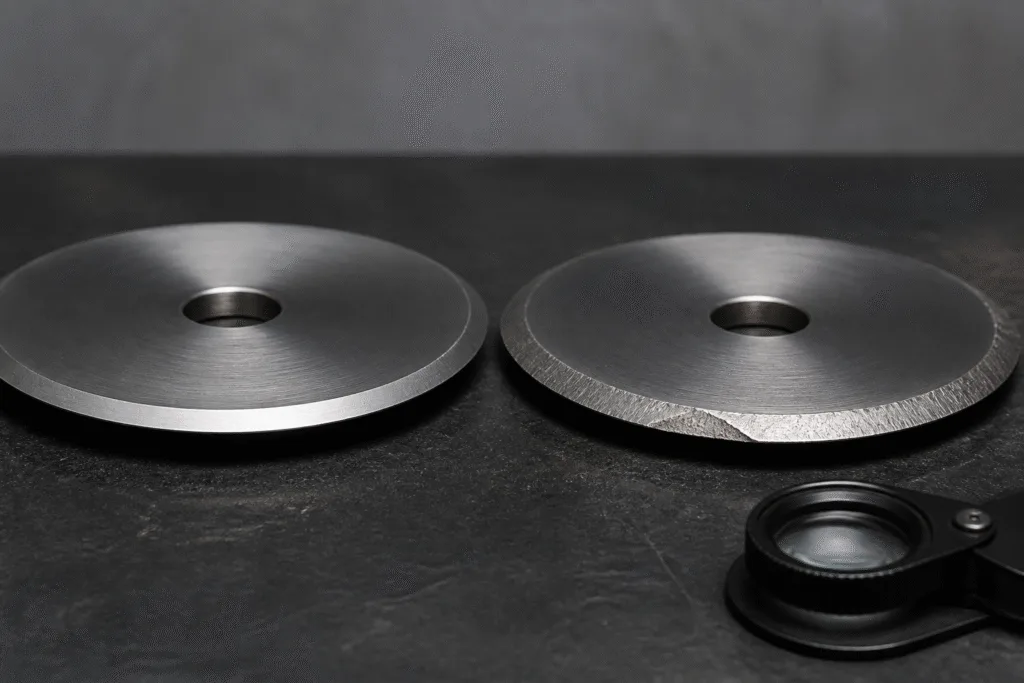
Several quality issues can occur when production and inspection are not properly controlled.
Dull Cutting Edge
A poorly finished blade may require excessive force and provide inconsistent cutting performance.
Blade Misalignment
Incorrect alignment can affect both function and user experience.
Loose Handle
A handle that moves during use can reduce control and create a poor customer experience.
Rough Edges
Improper trimming or finishing can leave uncomfortable or unsafe edges.
Uneven Surface Finish
Inconsistent polishing, coating, or other treatment can make products from the same order look different.
Poor Assembly
Loose wheels, shafts, screws, or other components may indicate inadequate assembly control.
Packaging Damage
Even a high-quality product can arrive damaged if the packaging is not designed for international transportation.
How to Choose a Pizza Cutter Supplier for Long-Term Orders
A long-term B2B supplier relationship should be based on more than the first quotation.
A practical evaluation process is:
1. Define the Product Specification
Confirm material, dimensions, weight, blade, finish, packaging, and customization.
2. Request Samples
Evaluate the actual product rather than relying only on catalog images.
3. Check Production Capability
Understand which production stages are handled internally and which are outsourced.
4. Confirm MOQ
Make sure the minimum order quantity fits your sales plan and inventory strategy.
5. Verify Customization
Confirm whether the supplier can support your logo, packaging, colors, or product modifications.
6. Review Quality Control
Ask how the supplier checks dimensions, appearance, assembly, function, and packaging.
7. Confirm Lead Time
Production schedules should be agreed before the purchase order is finalized.
8. Test a Small Order
For a new supplier, a smaller initial order can provide useful information about production consistency and shipping performance.
9. Evaluate Repeat Orders
For long-term sourcing, consistency between different production batches is more important than the quality of one isolated sample.
How LeeYuen Supports B2B Pizza Cutter Sourcing
LeeYuen Kitchenware specializes in aluminum and zinc alloy products and supports OEM/ODM projects for international buyers.
Its production capabilities include mold development, die casting, machining, finishing, assembly, quality inspection, and packaging.
For buyers developing metal pizza cutters or related kitchen tools, this type of integrated manufacturing capability can help simplify communication between product development and mass production.
A project can begin with an existing product concept and then be developed around the buyer’s required specifications, branding, finishing, and packaging.
For private label and wholesale buyers, the objective is not simply to purchase a large quantity of pizza cutters. It is to establish a repeatable specification and production process that can support future orders.
FAQ
What should I look for in a pizza cutter supplier?
Look at product quality, manufacturing capability, sample performance, MOQ, customization options, quality control, packaging, lead time, and communication.
What is the best material for a pizza cutter?
The appropriate material depends on the design and application. Stainless steel is commonly used for cutting components, while aluminum and zinc alloys can be used for structural or handle components in suitable designs.
Can pizza cutters be customized with a logo?
Yes. Depending on the product and surface, suppliers may offer different logo and branding methods, along with customized packaging.
What is the MOQ for custom pizza cutters?
MOQ varies by supplier, product design, mold requirements, customization, and packaging. Buyers should confirm MOQ when requesting a quotation.
Are aluminum pizza cutters suitable for commercial use?
They can be suitable when the product is correctly designed and manufactured for the intended application. Commercial buyers should evaluate structural strength, cutting performance, assembly, and surface finishing before placing a large order.
Should I buy from a supplier or a direct manufacturer?
The choice depends on the sourcing requirements. Suppliers may offer broader product selection, while direct manufacturers can provide greater control over manufacturing and customization. Buyers should evaluate the actual capabilities of each company.